Who Was Jatayu?
Ramayana
Prajapati Kashyapa's wife Vinata had two sons—Garuda and Aruna. Garuda became the vehicle of Lord Vishnu, while Aruna became the charioteer of Surya, the Sun. Aruna and Shyeni had two sons: the elder Sampati and the younger Jatayu. The brothers were therefore nephews of Garuda and belonged to a mighty lineage of vulture-kings capable of flying across great distances.
In their youth, Sampati and Jatayu flew upward to discover which brother could rise higher. They climbed until they came dangerously close to the Sun. As the fierce light and heat weakened the younger Jatayu, Sampati spread his enormous wings over his brother and shielded him. Jatayu survived, but the heat scorched Sampati's wings, and he fell upon the Vindhya mountain.
Years later, Sampati told this story to the sage Nishakara. The sage gave Sampati courage and foretold that vanaras searching for Sita would one day come to him. By helping them, Sampati would recover strength and hope. Many years later, the prophecy was fulfilled: Sampati pointed the search party toward Lanka and carried forward the unfinished service of his younger brother Jatayu.
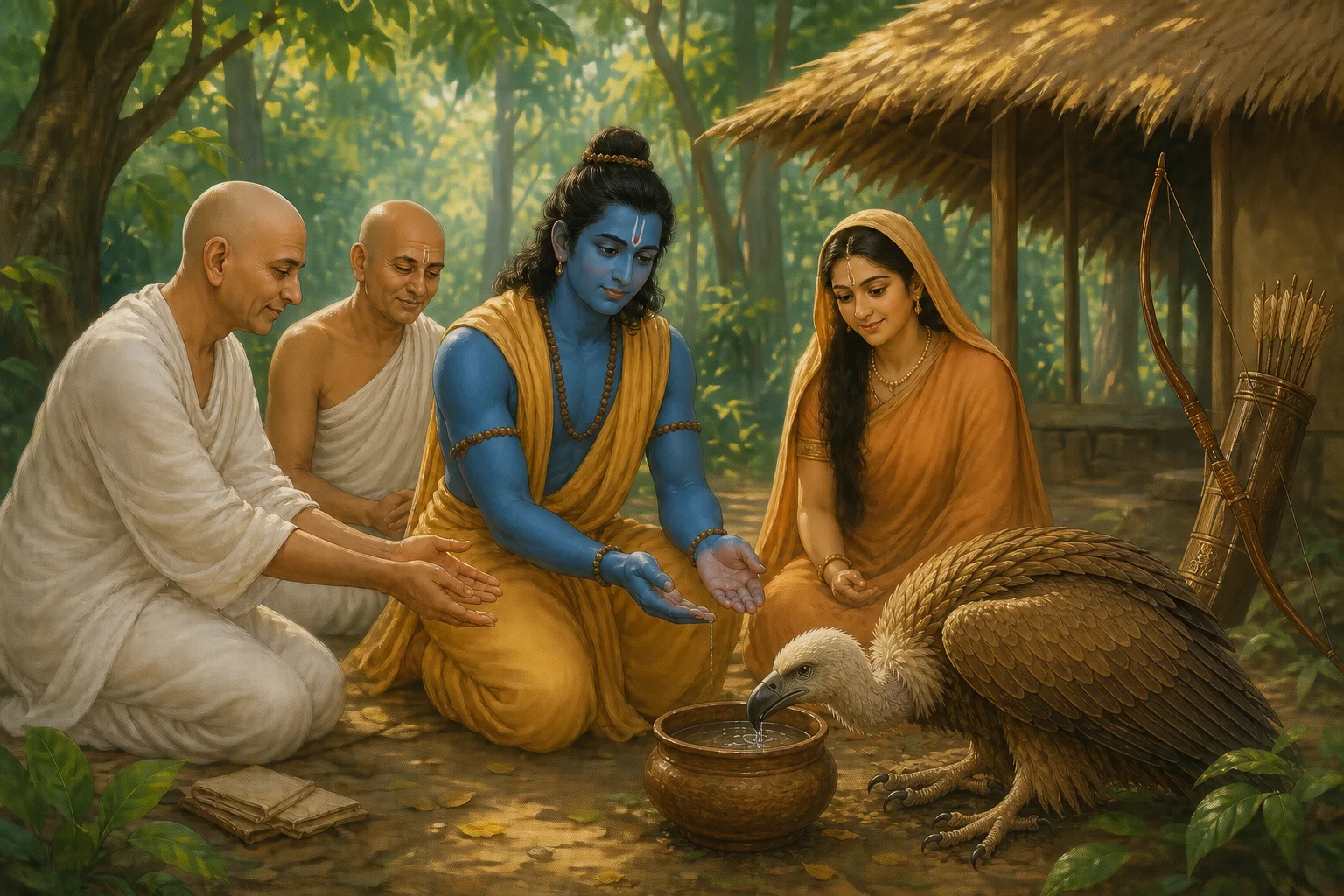
Jatayu in the Jain Tradition
The ancient Jain Ram narrative Paumacariya tells Jatayu's meeting in a different way. On the bank of the Karnarava River in Dandakaranya, Ram, Sita, and Lakshman respectfully welcomed two monks named Trigupta and Sugupta. At that moment, a sick and weakened vulture fell nearby. The monks entrusted his nourishment, treatment, and protection especially to Sita. Ram, Sita, and Lakshman began caring for him as a member of their family.
The monks also related an old story of that forest connected with a king named Dandaka. The king had suspected a wandering ascetic and punished innocent shramanas. When a shramana who had been away returned and heard the news, his terrible anger burned through the region and left it desolate. The forest came to be called Dandakaranya after King Dandaka. The monks taught the vulture about dharma, compassion, and nonviolence. In the Jain tradition, a jewel-like crest of feathers appeared upon his head, and he became known as Jatayu.
“An elder brother's shelter can shape a life long after the moment has passed.”
New stories in your inbox
One story every week, and a special tale on festivals. Free, always.
Your email goes to our newsletter provider (beehiiv) so we can send you stories. It is not linked to any child's reading on this site. Unsubscribe any time from the email footer.