Sita's Question
Ramayana
In the hermitages of the Dandaka forest, Ram never set down his bow. Sita watched him carry it even among the quiet fire-altars and the deer that came without fear to the sages' feet, and one evening she asked him, gently, whether he meant to use it there.
"Three faults draw the mind away from dharma," she said: speaking falsehood, desiring another man's wife, and cruelty without cause. "You are far from the first two. But a weapon that never leaves your hand could open the door to the third." She told him, too, the old story of an ascetic who had once been given weapons by Indra for his protection, and who never set them down again. Little by little his discipline turned into a love of arms, until he himself became the kind of man other people feared in that forest — the very thing his weapons had been given to guard against. "Fuel kept beside a fire catches quickly," she said. "A weapon kept just as close can feed anger and suspicion the same way."
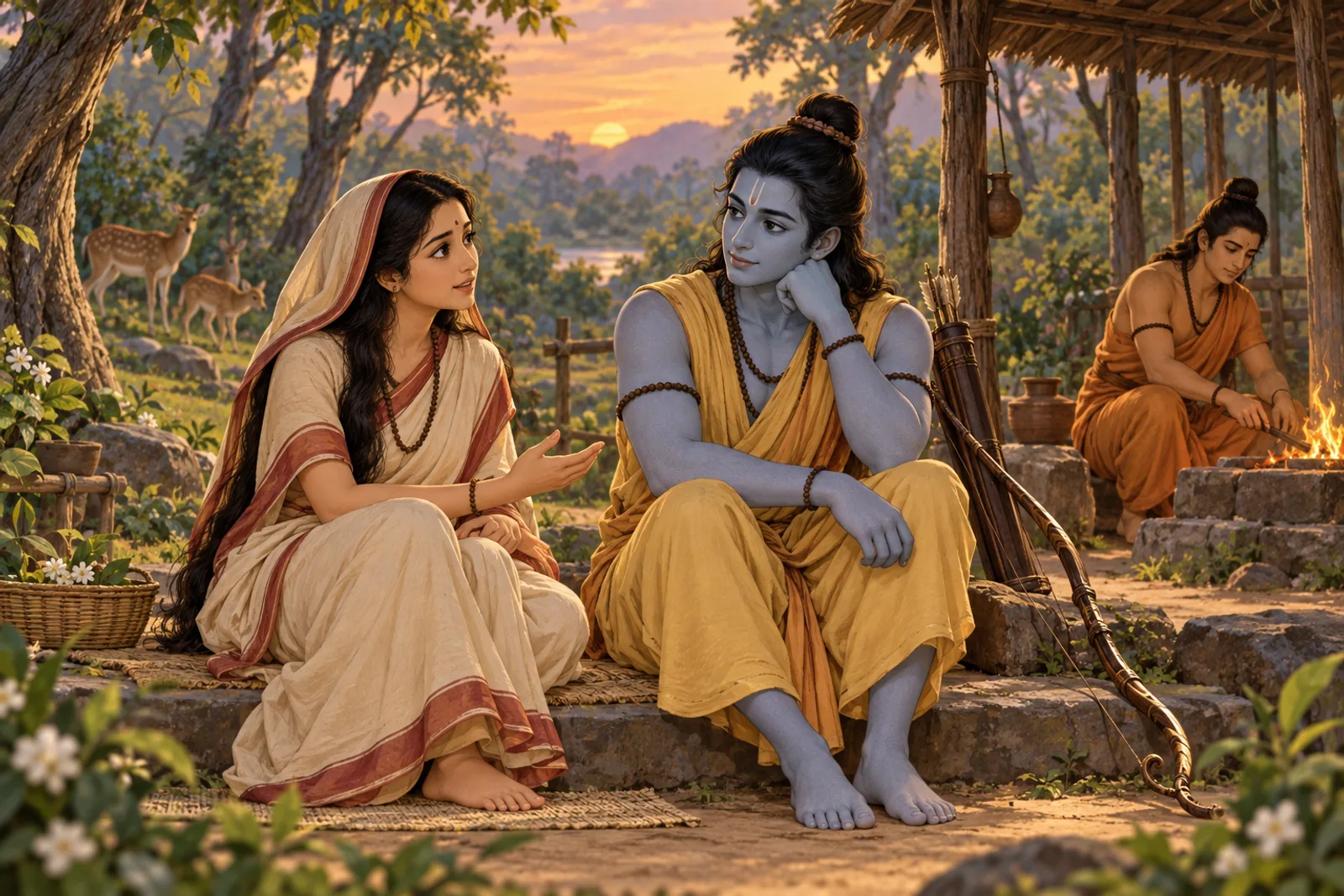
Ram heard her out fully before he answered. He told her he carried the bow not for hunting or for anger, but because the sages of these forests had themselves asked for protection from the rakshasas who tormented them at their rites. He would not raise it against anyone who had done no harm. But where the innocent were already under threat, to refuse the bow would be its own kind of wrong. Sita said nothing more against it, but she did not forget her caution, and neither did he.
They travelled on, from one hermitage to the next, for the better part of ten years, welcomed wherever they went and never staying long enough to become a burden. Near one hermitage they came upon a lake so still and lovely that the sages called it Panchapsara, and it was said that on certain nights music could be heard rising from its quiet water, though no one could say from where.
At last they came close to the hermitage of the great sage Agastya, and on the way his elder brother told them why every rakshasa in that country feared his name. Long ago two rakshasa brothers, Ilvala and Vatapi, had preyed on wandering brahmins with a cruel trick: Vatapi would take the form of a goat, be cooked and offered as a guest's meal, and once the guest had eaten and given thanks, Ilvala would call out, "Vatapi, come forth!" — and Vatapi would tear his way back out of the dead man's body, alive again. It had gone on for years, until the brothers tried it on Agastya himself. The sage ate the goat, and before Ilvala could call his brother home, Agastya said quietly that Vatapi had already been digested, and could not answer. Ilvala fell at his feet in fear rather than lose his own life as well.
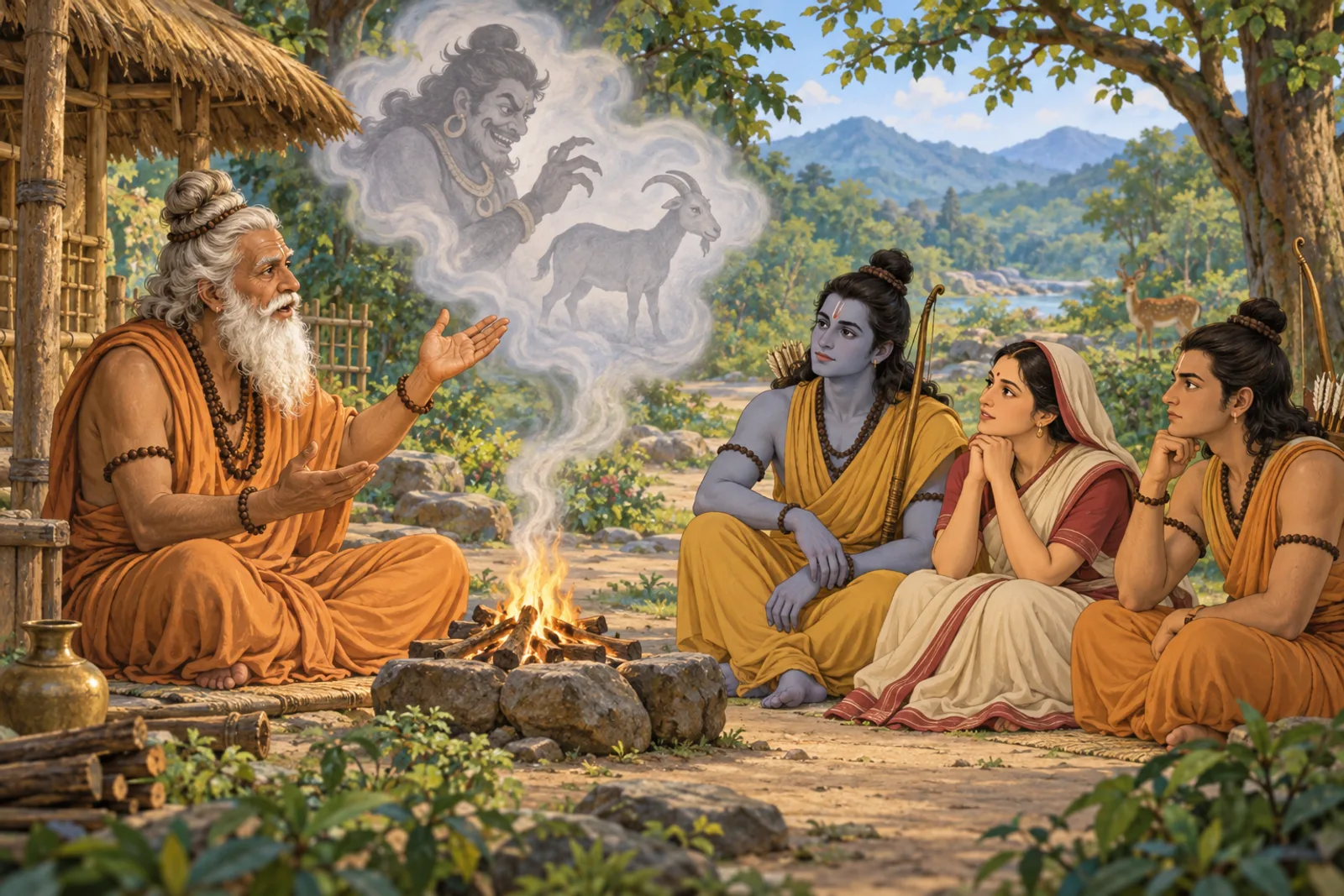
Lakshman went ahead to ask leave to enter, and Agastya received them himself, warmly, and without any of the caution his name inspired in demons. He set before Ram a bow that had once been Vishnu's own, arrows that never missed their mark, a sword, and a quiver that never ran empty — gifts other gods had left in his keeping, he said, for exactly this purpose. Then he turned to Sita and praised her for following her husband into exile with nothing asked in return, and told them both of a place not far off, on the bank of the Godavari, thick with fruit trees and clean water and gentle enough for a long stay.
He named it Panchavati.
“A weapon kept too close at hand can tempt the mind to reach for it before reason does.”
New stories in your inbox
One story every week, and a special tale on festivals. Free, always.
Your email goes to our newsletter provider (beehiiv) so we can send you stories. It is not linked to any child's reading on this site. Unsubscribe any time from the email footer.