Ram and Parashurama's Challenge
Ramayana
After the weddings, Dasharatha's company left Mithila for Ayodhya. The four new couples travelled with relatives, teachers, attendants, and gifts. King Janaka accompanied them for part of the road before offering blessings and returning home.
Soon the travellers noticed troubling signs. Birds cried sharply, animals moved across the path, and the air grew heavy. Vashishtha read the signs carefully: danger was near, but the movement of the animals also suggested that it could be survived.
A fierce wind rose. Dust covered the road. Then a powerful ascetic warrior appeared carrying an axe and a great bow. He was Parashurama, son of Jamadagni, whose earlier wars against warrior rulers were remembered with fear.
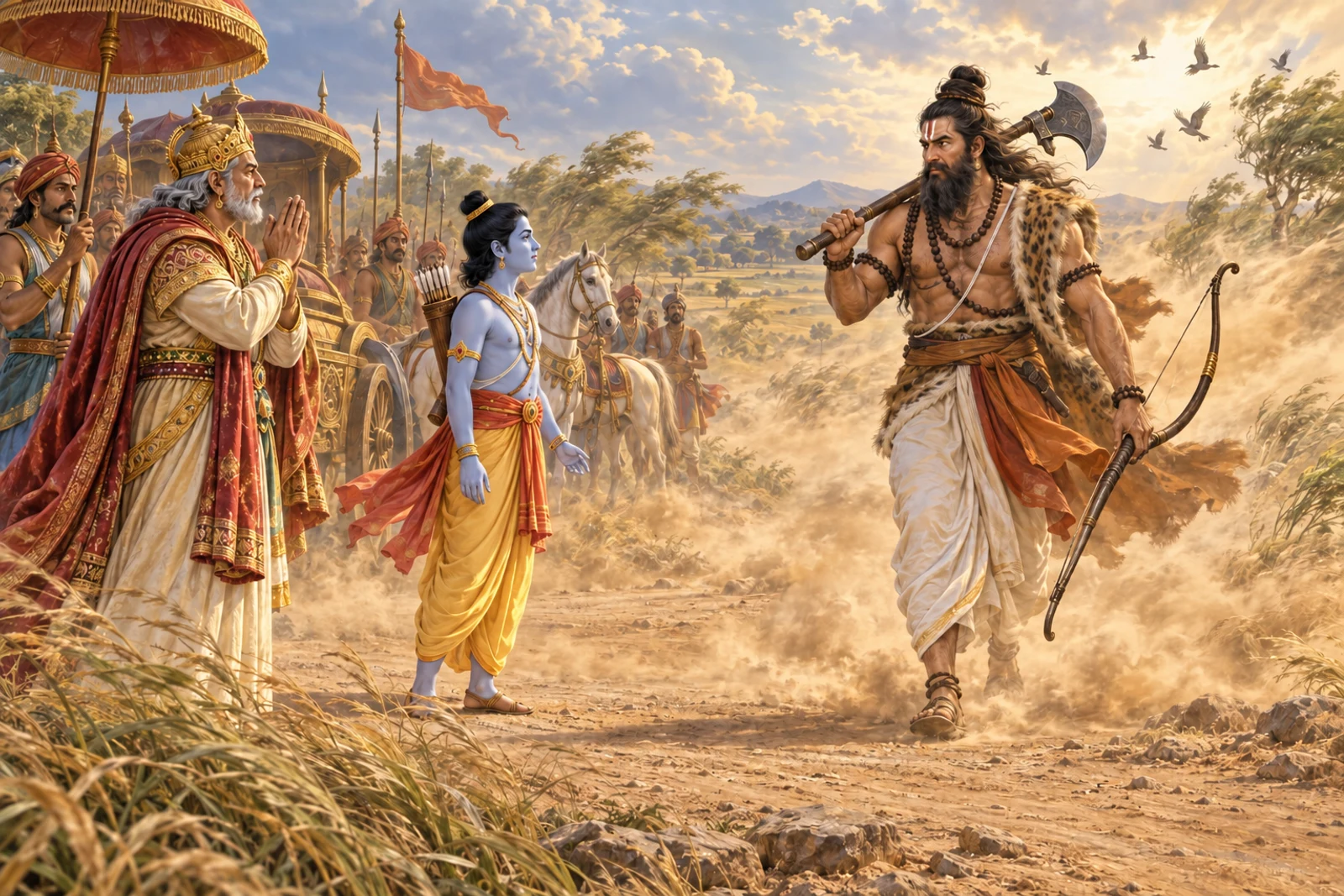
Dasharatha greeted him respectfully and tried to prevent a confrontation. Parashurama, however, addressed the younger Ram. He had heard that Shiva's bow had broken in Mithila. He carried another ancient bow associated with Vishnu and demanded that Ram string it. Only then, he said, would he accept that the feat in Janaka's hall proved real strength.
The challenge turned a joyful homeward journey into a public test. Dasharatha pleaded for his son, but Parashurama continued. Ram listened without insulting the older warrior or ignoring the threat.
He accepted the bow.
With controlled ease Ram strung it and placed an arrow upon it. At once the balance of the encounter changed. A weapon once prepared could not be released without consequence. Ram told Parashurama that he would not take his life because of the respect due to his lineage and discipline. But the arrow must have a target. Ram could remove Parashurama's freedom to travel swiftly or the spiritual worlds his austerities had earned.
Parashurama's anger gave way to recognition. He understood that the younger Ram's power was connected with Vishnu and that the age of his own campaigns was ending. He asked to retain the ability to travel to Mount Mahendra and offered the merit of his attained worlds as the arrow's destination.
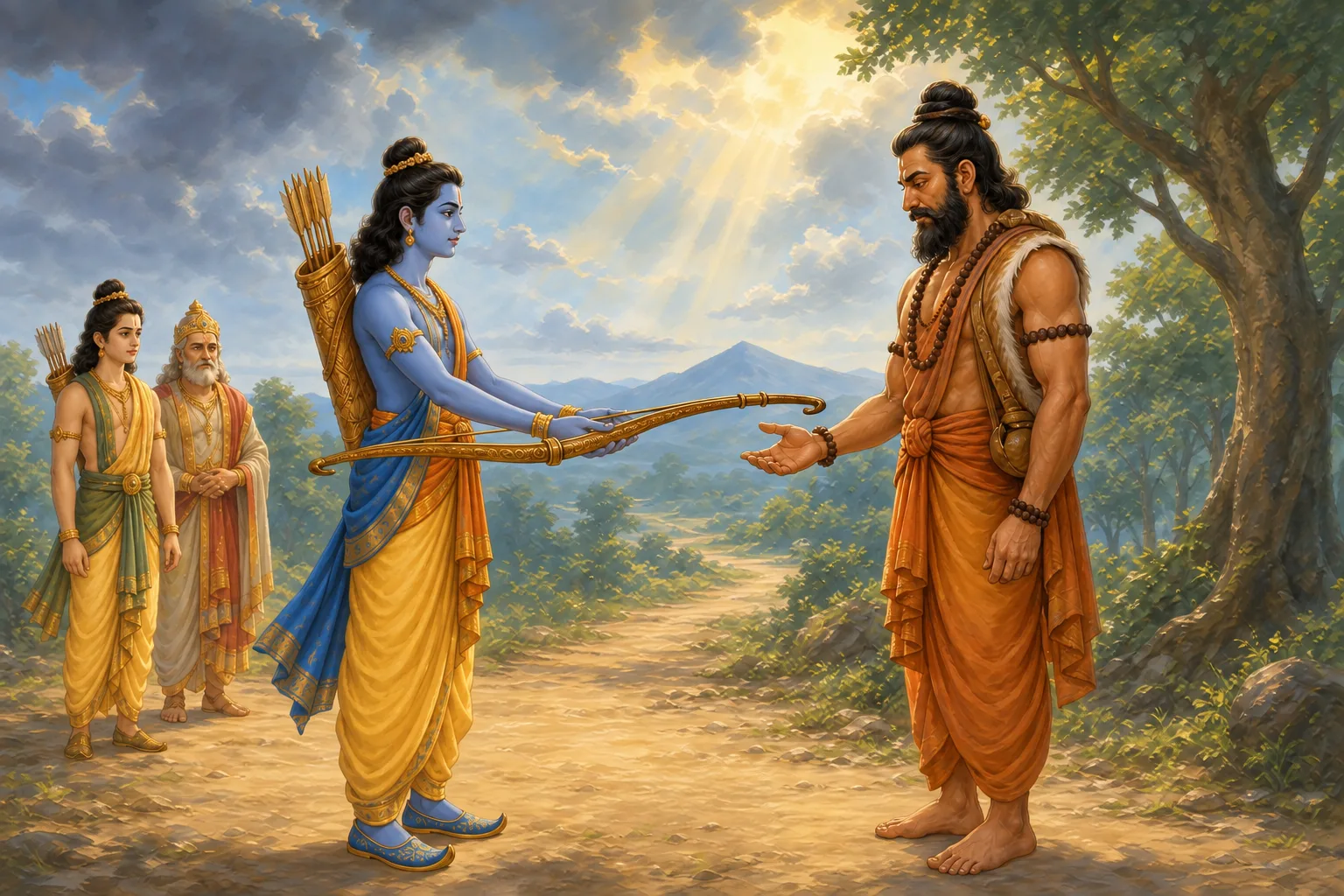
Ram released the arrow. The conflict ended without killing Parashurama. The older warrior walked respectfully around Ram and departed for the mountain.
The dust cleared. The travellers saw one another again, and Dasharatha embraced his son with relief. The company resumed its road to Ayodhya.
“True strength does not need endless rivalry; it can set a boundary, honour what deserves respect, and let conflict end.”
New stories in your inbox
One story every week, and a special tale on festivals. Free, always.
Your email goes to our newsletter provider (beehiiv) so we can send you stories. It is not linked to any child's reading on this site. Unsubscribe any time from the email footer.