Hanuman Meets Ram and Lakshman
Ramayana
The slopes near Lake Pampa were bright with flowering trees, but Ram barely noticed their beauty. He and Lakshman were searching for Sita, and every path that ended without news made the forest feel larger.
High on Rishyamuka, Sugriva saw the two strangers approaching. They wore simple forest clothes, yet both carried bows and swords. Their shoulders were strong, their steps disciplined, and their eyes searched the land carefully.
Sugriva had been driven from his kingdom by his powerful brother Vali. He lived in fear that Vali might send warriors to find him.
"Who are these men?" he asked his companions. "They dress like forest-dwellers but carry a warrior's weapons. Perhaps they have been sent against me."
Hanuman studied the strangers from a distance. Fear could make every unknown person look like an enemy, but guessing would not reveal the truth.
"Let me speak with them," he said. "Their words and conduct will tell us why they have come."
Sugriva agreed. Hanuman set aside anything that might make his approach seem threatening and went down the mountain in the appearance of a peaceful seeker.
He did not rush toward the brothers or demand their names. He stopped at a respectful distance, greeted them, and spoke gently.
"You look like royal warriors," Hanuman said, "yet you travel through the forest dressed as ascetics. You carry fine bows, but your faces show compassion rather than cruelty. The animals grow quiet as you pass, and still you seem burdened by sorrow. Who are you, and what brings you to this place?"
Ram listened closely. Hanuman's speech was clear and thoughtful. He had chosen every word with care—neither flattering the strangers foolishly nor accusing them without cause.
Ram turned to Lakshman. "A messenger who speaks so well must have studied deeply and learned to govern his thoughts," he said quietly. "No careless word escapes him. A king would be fortunate to have such an envoy."
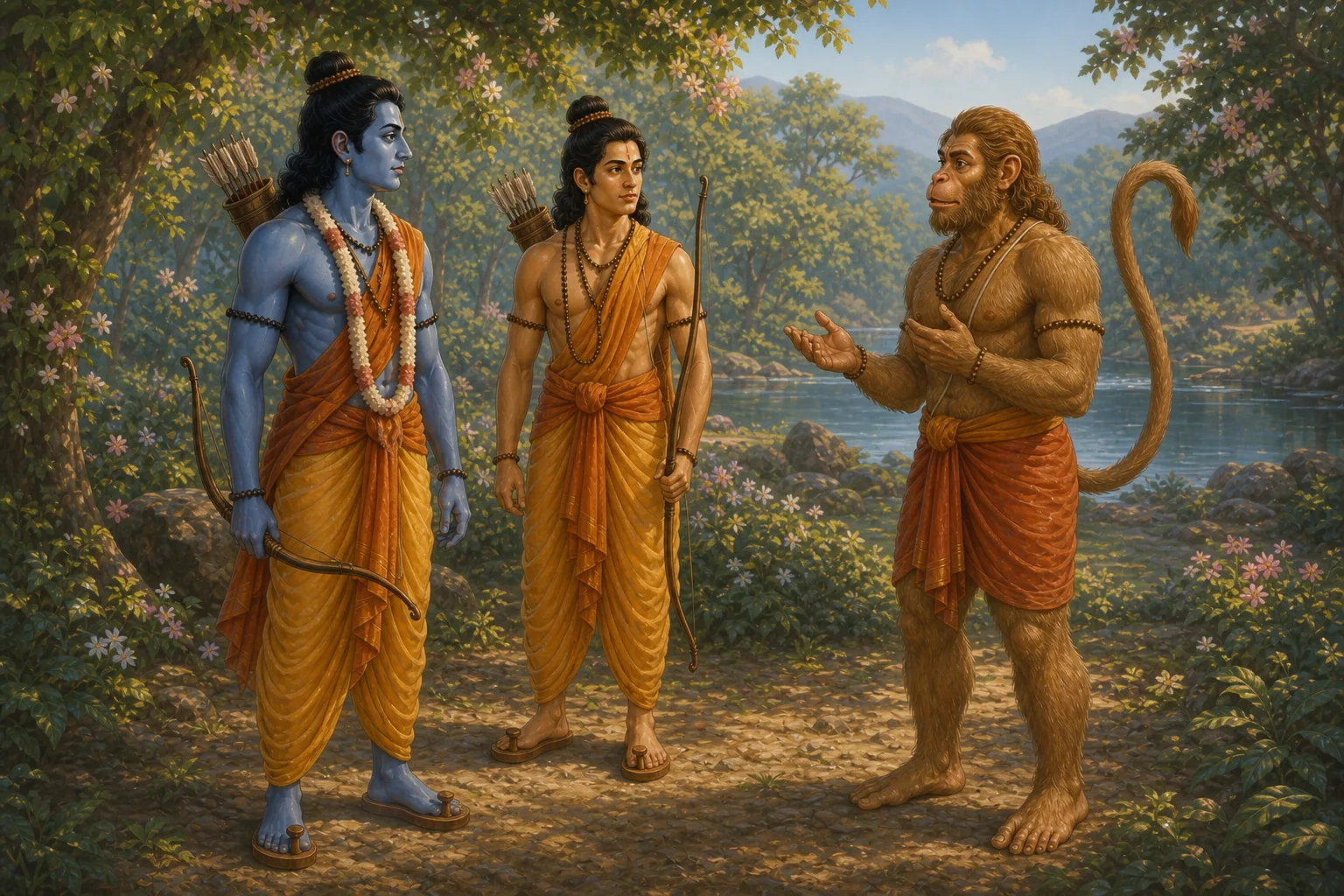
Lakshman then answered Hanuman.
"This is Ram, eldest son of King Dasharatha of Ayodhya, and I am his brother Lakshman. Ram left the kingdom to honour our father's word. His wife, Sita, came to the forest with us, but she has been taken away. We are searching for her."
Lakshman explained that a forest being named Kabandha had directed them toward Sugriva. Kabandha had said that Sugriva also knew what it meant to lose his home and live separated from someone he loved.
Hanuman's caution gave way to hope.
"I serve Sugriva," he said. "He too has been driven from his kingdom and longs for justice. He has seen signs that may be connected with the woman you seek. He needs trustworthy allies, and you need a friend who knows these forests and the lands beyond them."
Hanuman now revealed himself openly as Sugriva's minister. The uncertainty between them disappeared. Ram's expression, clouded for so long by grief, showed the first light of a new possibility.
"Please come with me," Hanuman said. "Let Sugriva hear your story, and you may hear his."
The path up the mountain was difficult. Hanuman took the brothers with him and moved swiftly toward Sugriva's refuge. When they arrived, he did not simply announce that he had found powerful warriors. He explained why he trusted them: they had answered honestly, they sought help rather than conquest, and their purpose matched Sugriva's need for a just ally.
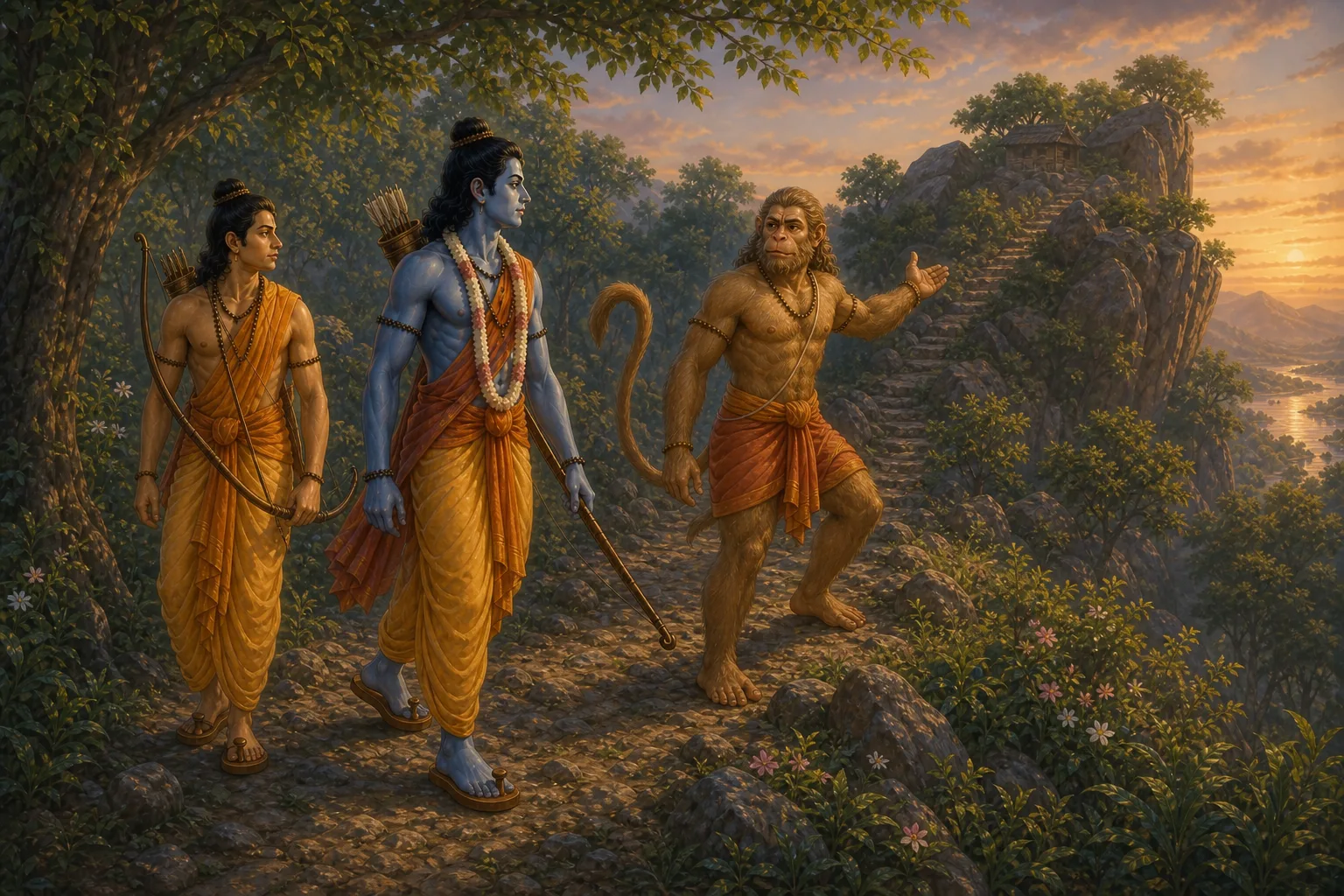
Hanuman then helped Ram and Sugriva speak directly. The two listened to one another before making promises. Sugriva would help search for Sita. Ram would help Sugriva face the wrong that had separated him from his kingdom.
“Respectful questions can turn uncertainty into understanding.”
New stories in your inbox
One story every week, and a special tale on festivals. Free, always.
Your email goes to our newsletter provider (beehiiv) so we can send you stories. It is not linked to any child's reading on this site. Unsubscribe any time from the email footer.