Ramayana · Chapter 8

Ahalya's Seclusion and Restoration

·Ramayana·3 min read
From the series
Ramayana
Text size

After leaving King Sumati's city, the travellers came within sight of Mithila. Near the road stood an old hermitage. Its paths were overgrown, and no voices greeted the arriving company.

Ram asked why the place was empty.

Vishvamitra said that Sage Gautama and Ahalya had once lived there. In the ancient account, Indra desired Ahalya and entered the hermitage in Gautama's form while the sage was away. The surviving Sanskrit traditions and later retellings have been interpreted differently about what Ahalya recognized, understood, or chose. What remains unmistakable is that Indra used another person's identity and that the encounter was followed by anger and punishment.

Gautama returned and saw what had happened. He cursed Indra and condemned Ahalya to live apart, unseen and sustained by air, ash, and long discipline. He declared that when Ram entered the hermitage and received her hospitality, the isolation would end. Gautama then departed for the mountains.

Years passed. Dust covered the paths. Seasons changed around a person whom the world had stopped seeing.

Vishvamitra did not tell Ram to hunt for a stone. In Valmiki's Bala Kanda, Ahalya is not introduced as a rock waiting to become human again. She is present but hidden from ordinary sight, living through a long period of seclusion. The famous stone transformation belongs to later and popular tellings and should be named when used.

Ram and Lakshmana entered respectfully. They did not arrive to stare at Ahalya or demand that she defend every moment of the past. They recognized the disciplined woman before them and bowed.

Ahalya welcomed the travellers according to the customs of hospitality. She offered water and the simple honours available in the hermitage. By accepting her welcome, Ram acknowledged her again as a person with a place in the moral and social world.
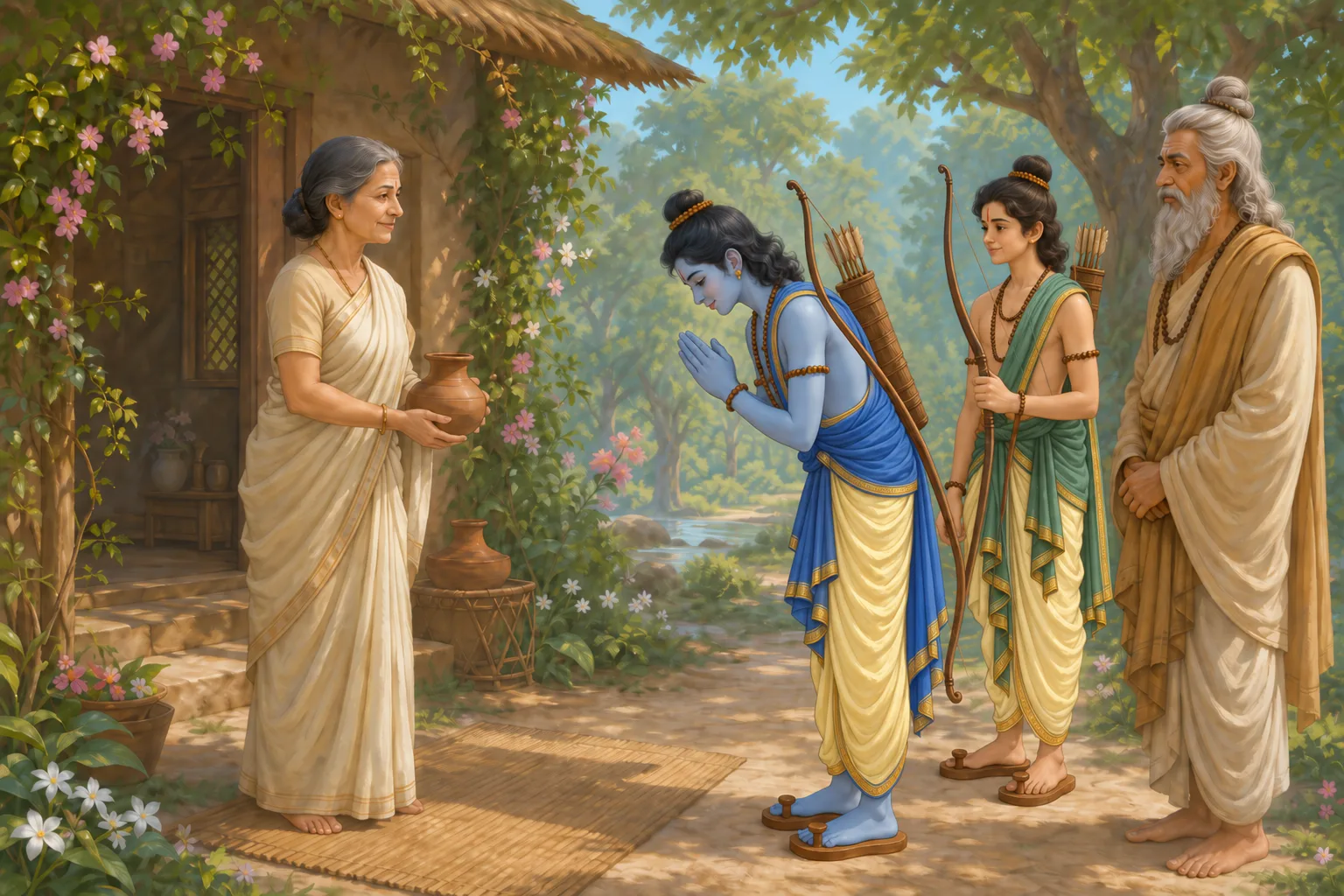
Ahalya welcomes Ram, Lakshmana, and Vishvamitra at the hermitage

The poem describes celestial signs of joy. Gautama learned that the appointed moment had arrived and returned. Ahalya's isolation ended, and she rejoined the life of the hermitage.

Restoration does not erase the questions raised by the punishment. A child-facing story should not suggest that deception is the victim's fault, that one angry judgment settles every question, or that suffering automatically proves guilt. The episode has lived for centuries precisely because communities have continued to ask what happened, who was responsible, and what justice should mean.

Ram, Lakshmana, and Vishvamitra then continued to Mithila. Behind them, the old hermitage was no longer silent.

How other traditions tell it

Valmiki's account, later Sanskrit works, Tulsidas, Kamban, regional Ramayanas, performance traditions, and modern retellings differ materially about Ahalya's awareness, Indra's deception, Gautama's punishment, Ram's role, and whether Ahalya becomes stone. This adaptation follows the Valmiki Bala Kanda frame, avoids deciding a disputed question of consent for the reader, rejects victim-blaming, and keeps restoration central. Senior cultural and gender-aware editorial review is required before publication.

Source

Primary story based on the Valmiki Ramayana, Bala Kanda, Sargas 48–49. This is a newly written adaptation for children, not a direct translation.

References used for the series record

The moral of the tale

Deception and anger can isolate people, while truth, welcome, and careful compassion can reopen a path toward dignity.