The Cave of Svayamprabha
Ramayana
The southern search party had crossed the Vindhya hills and searched every riverbank and settlement they could reach, with nothing to show for it. Supplies were running low, and the one-month deadline Sugriva had set was closing in.
In a dry stretch of country they came upon a vast opening in the earth, with birds flying out of it whose wings were wet — a sign, surely, of water somewhere inside. Hoping the hidden place might hold either Sita or a path onward, they went in. Darkness closed over the entrance almost at once. Afraid of losing one another, they joined hands and walked that way for a long distance before any light returned.
What they found inside was Rikshabila — trees, clear pools, ripe fruit, and structures that seemed to glow faintly on their own. Its beauty did not make it safe to wander uninvited, and an elderly ascetic named Svayamprabha, who kept the place, met them at once with a question: who were they, and why had an armed, exhausted company come into her world?
Hanuman told her everything, plainly. Ram's exile, Sita's abduction, Sugriva's promise, the deadline they were already close to missing — he hid none of it. Svayamprabha did not ask anything more of them until she had set water and fruit in front of every one of them first. Only once they had eaten did she let them speak of what came next.
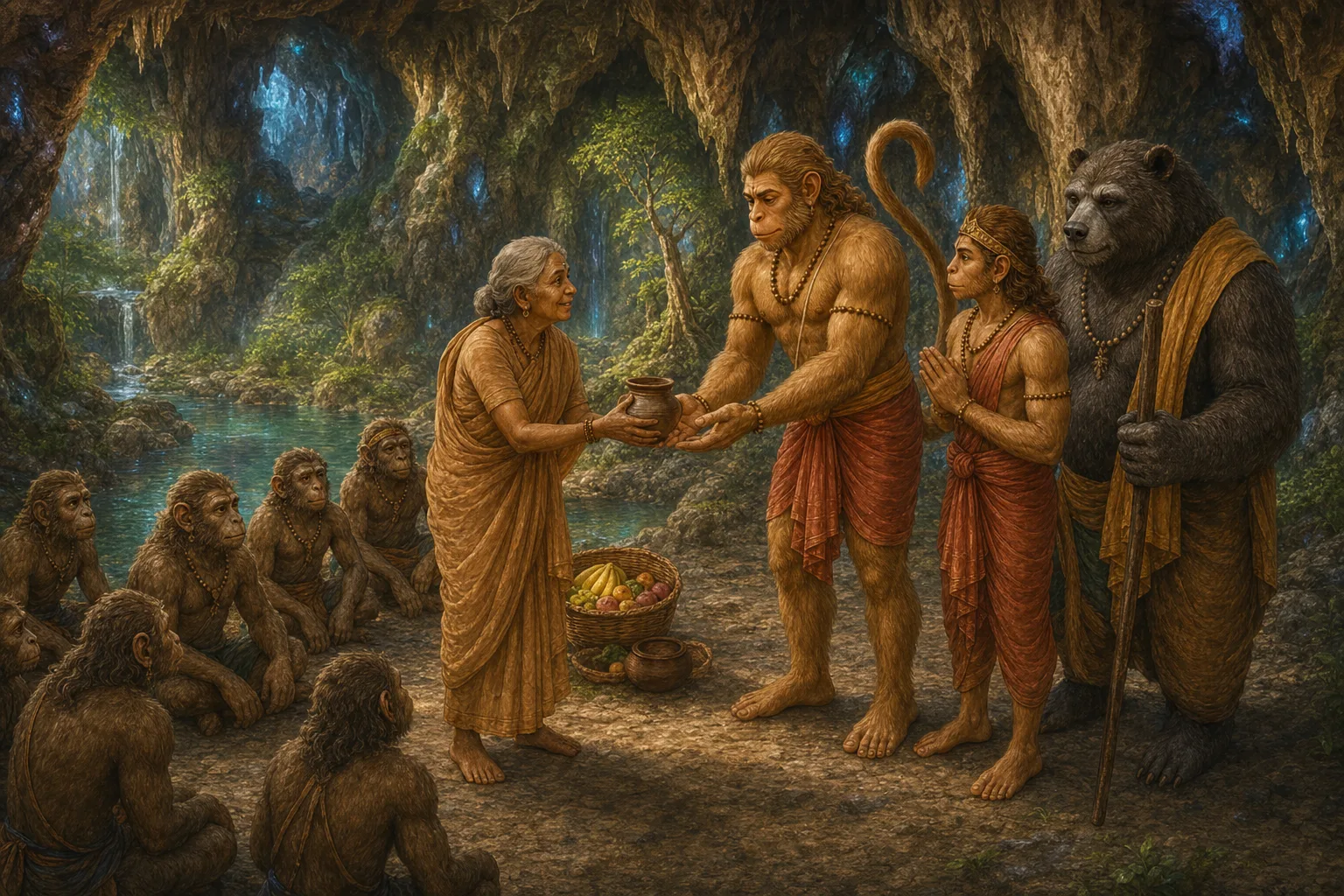
There was no way back out the way they had come, she told them — the cave did not open twice by the same path. Using a power built over long years of discipline, she offered to carry them safely outside herself. She asked only that they close their eyes for the passage. When they opened them again, the Vindhya hills stood behind them and an endless sea lay ahead.
The relief of standing under open sky again did not last. More time had passed inside the cave than any of them had realised. Their month was already over.
Angada, Vali's son, was the first to say what the others were thinking. He was certain Sugriva would remember exactly whose son he was and punish him for the failure. In his despair he proposed staying right there on the shore, refusing food, and waiting for death rather than going back to face the king. A few of the most exhausted among them agreed with him.
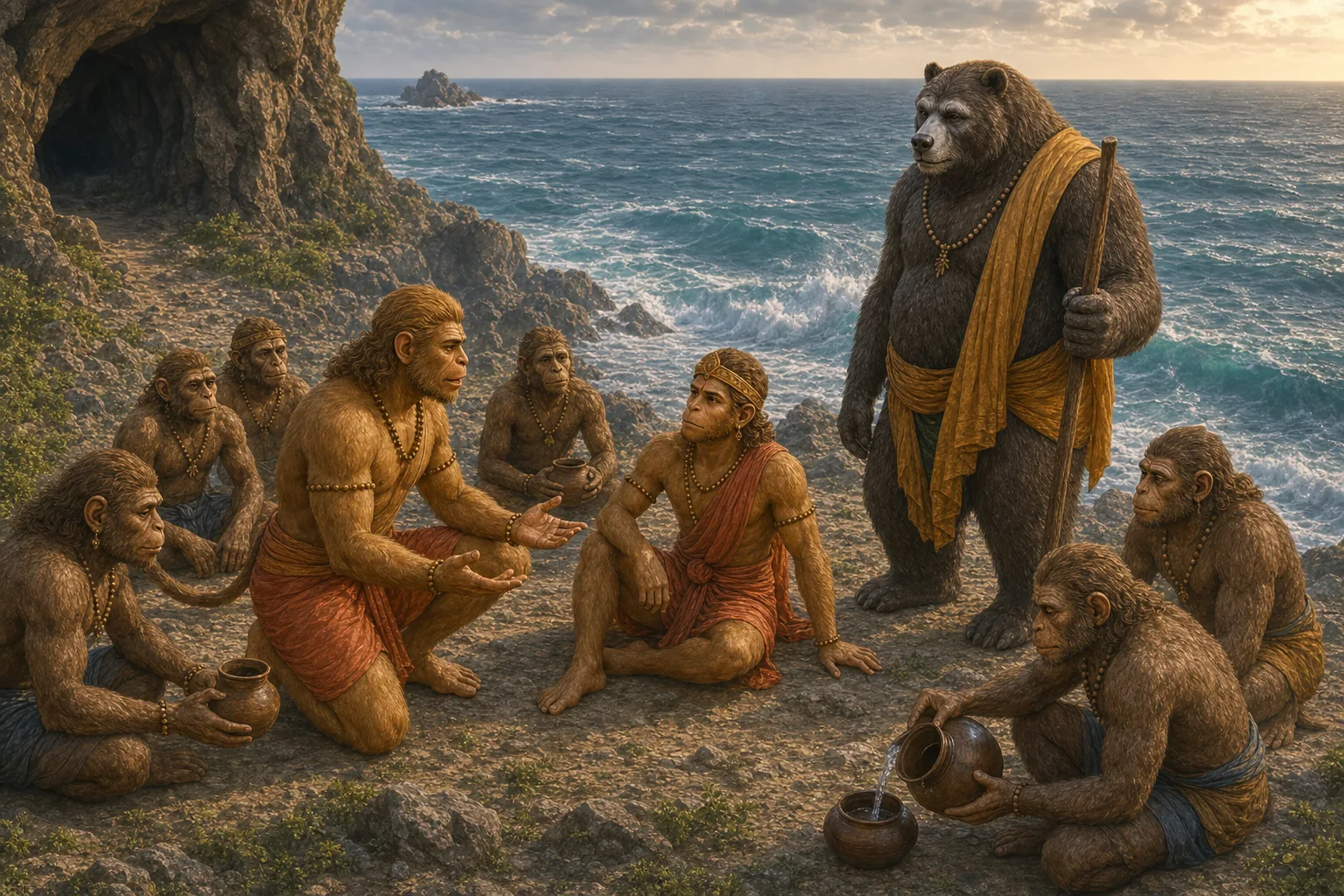
Hunger and fear had made the world look smaller than it was. Hanuman and Jambavant would not let it stay that way. A missed deadline did not mean every road was closed, they told him — they could still report the truth honestly, search for a way across the water, or learn something new from this unfamiliar coast. No one moved to leave Angada alone with his despair. They shared what water they had and stayed together on the sand.
They were still talking — of Jatayu, of the impossible distance still ahead — when a shadow crossed the cliff above them. The vanaras startled at the size of it, ready for danger. Then a voice, old and rough with disuse, came down from the rocks.
"Jatayu," it said. "You spoke his name. He was my brother."
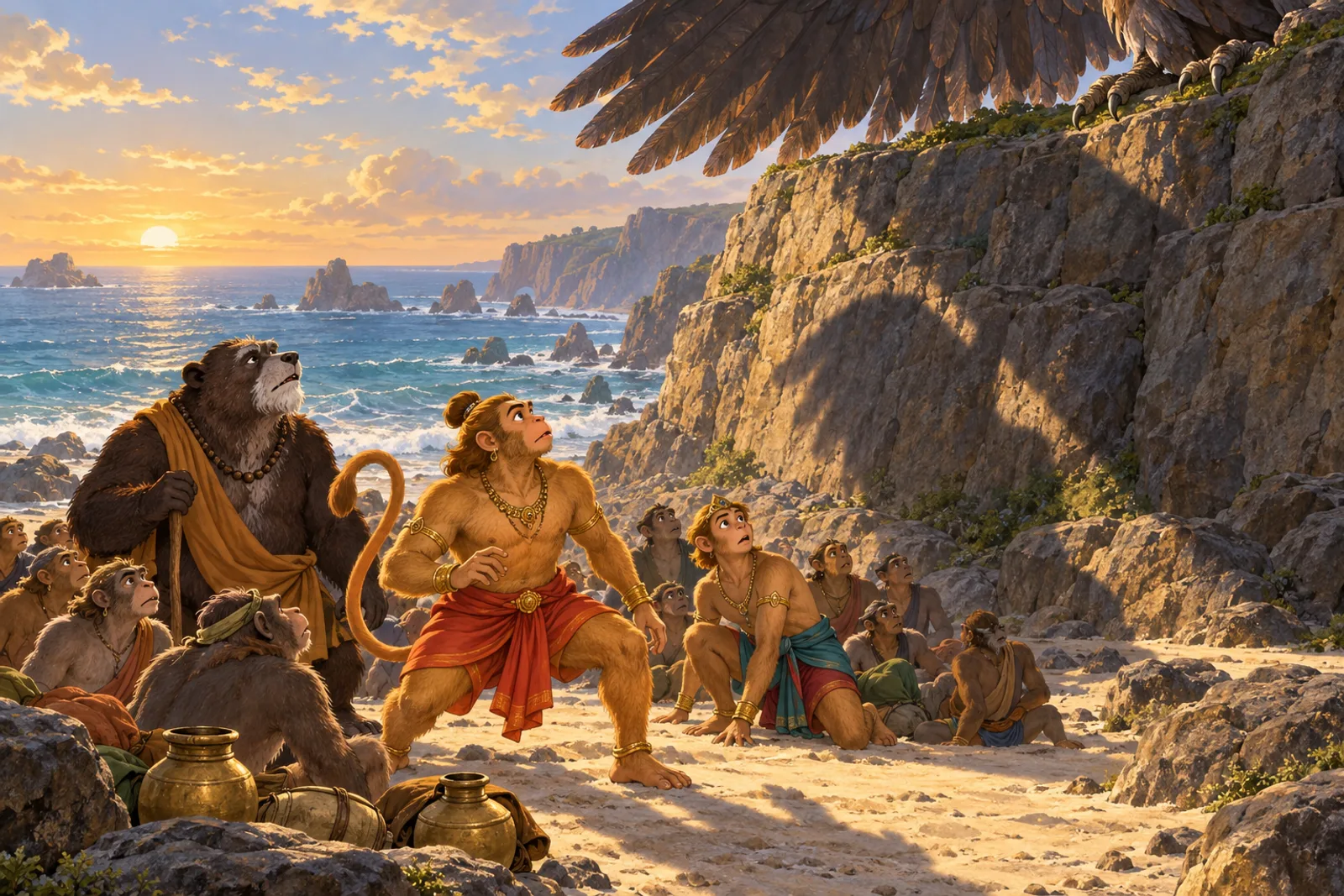
It was Sampati, and he had been listening long enough to hear exactly the one name that would make this stranger worth trusting.
“A missed deadline is not proof that every road is closed, so long as no one is left alone with their despair.”
New stories in your inbox
One story every week, and a special tale on festivals. Free, always.
Your email goes to our newsletter provider (beehiiv) so we can send you stories. It is not linked to any child's reading on this site. Unsubscribe any time from the email footer.