The Search and Jatayu's Final Message
Ramayana
Ram hurried toward Panchavati. Maricha's recovered form and false cry had revealed that someone had planned to leave the cottage unprotected. Ram met Lakshman on the path and, driven by fear and anger, spoke harshly to him. Lakshman explained what Sita had believed after hearing the cry and how she had compelled him to leave. The brothers did not prolong their argument. They ran together.
The cottage was empty. Sita's basket, flowers, and familiar tools remained, but Sita was gone. Ram questioned the trees, the Godavari, the deer, and the birds. Receiving no answer, he rushed from place to place—sometimes hoping Sita might be hiding nearby, sometimes fearing the worst.
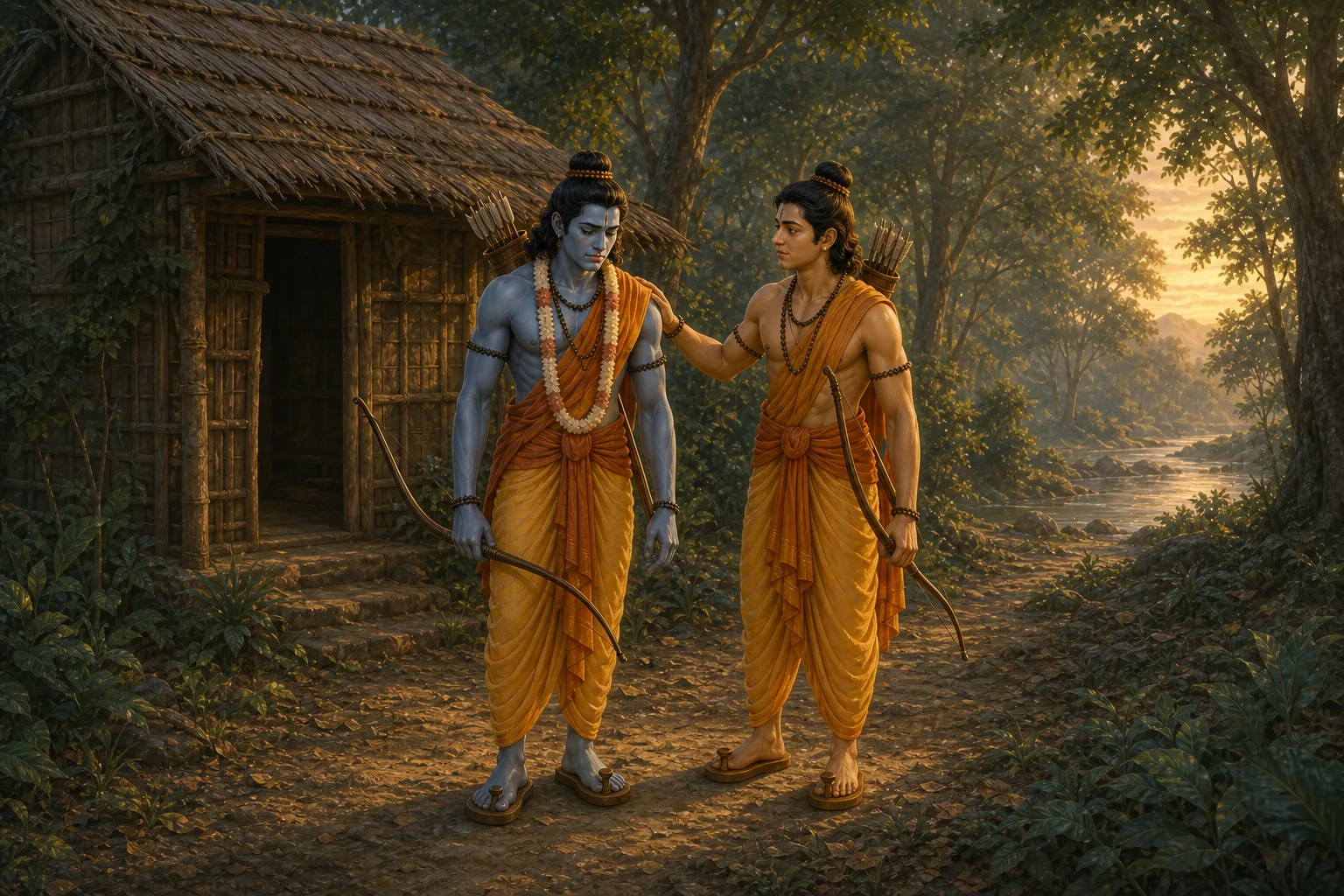
Grief shook Ram's judgment. He threatened even the mountain, river, and forest if they would not answer him. Lakshman urged him to pause and examine the signs. Ram listened, and together they made their search more careful.
They found flowers Sita had dropped, which Ram recognized. Farther on were large and small footprints, a broken bow, pieces of a chariot, scattered armour, and signs of a struggle. Ram first feared that many attackers had come, but Lakshman studied the trail and suggested that one powerful person in a chariot might be responsible. They followed the signs south.
A little farther on, an enormous bird lay upon the earth. His wings were injured, and his breath came slowly. In his distress Ram first mistook him for an enemy, but Jatayu called weakly, "The one you seek was carried south by Ravana." Ram immediately knelt beside him. This was Dasharatha's elderly friend, who had promised to help them when they first came to Panchavati.
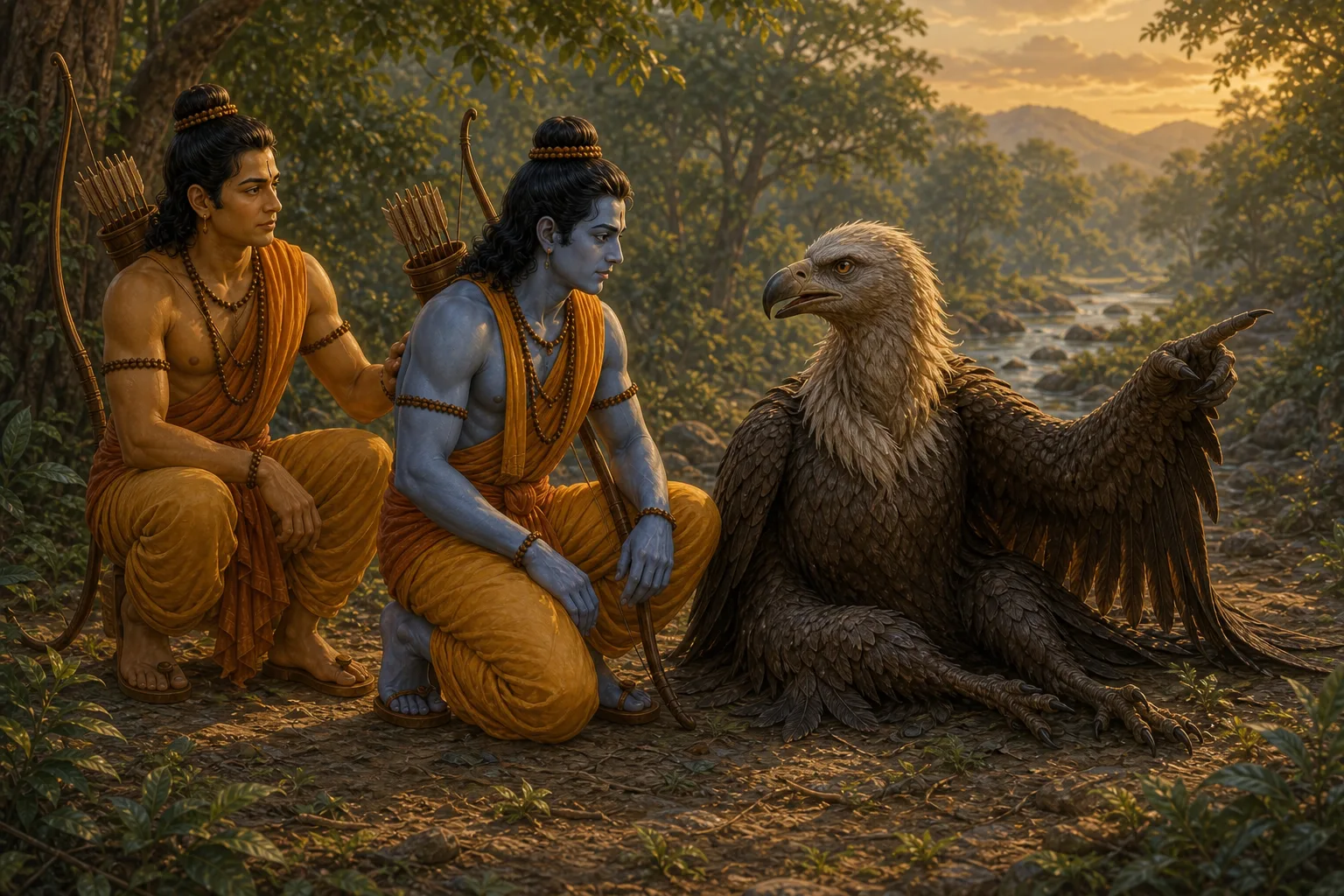
Jatayu explained that Sita had cried for help. He had blocked Ravana's path, broken his bow and chariot, and forced him to descend. His aged body eventually tired, and Ravana wounded his wings with a sword. Ravana then continued south with Sita. Jatayu offered hope by naming a traditional moment called vinda, in which stolen property was believed to return to its owner while the thief could not keep it.
Ram held Jatayu in his arms. Having lost his father, he felt that he was now losing a father's friend. Jatayu repeated Ravana's name and direction one final time, and then his breathing ceased.
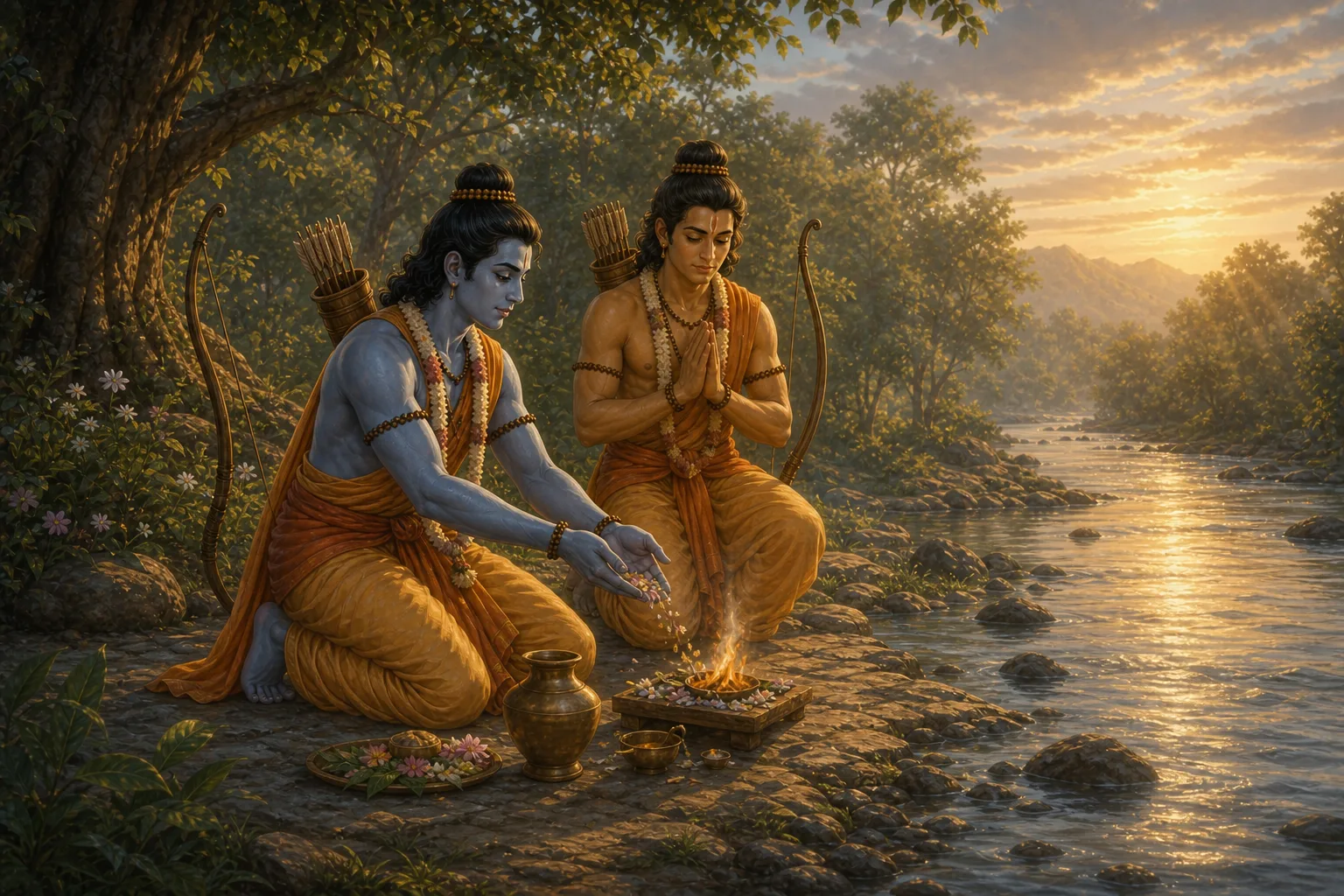
The brothers honoured Jatayu as a beloved elder. They gathered wood, performed his final rites, offered water from the Godavari, and placed food for the creatures of the forest. Ram declared that Jatayu would be remembered for courage and friendship, not merely for birth or appearance.
They then continued south. The forest became denser. At one point a rakshasi named Ayomukhi seized Lakshman and tried to claim him as her companion. Lakshman freed himself by injuring her.
Ahead lay a deep cave and a strange being whose long arms reached through the forest. Sita was still far away, but Jatayu had given the search a direction and a certain name. Ram was no longer circling an empty cottage without knowledge. Grief travelled with him, and so did Lakshman.
“Grief needs companionship, and courage can leave a path for others even when it cannot finish the rescue alone.”
New stories in your inbox
One story every week, and a special tale on festivals. Free, always.
Your email goes to our newsletter provider (beehiiv) so we can send you stories. It is not linked to any child's reading on this site. Unsubscribe any time from the email footer.