The Birth of Ram and His Brothers
Ramayana
The fire on the Sarayu bank was still burning when, far above it, the devas came before Brahma with a trouble of their own.
Ravana, ruler of Lanka, had gained extraordinary protection through a boon. Secure in his power, he oppressed beings in many realms and disrupted sacred observances. The devas asked how his violence could be stopped.
Brahma remembered the limit within Ravana's own request. Ravana had sought protection from powerful celestial and supernatural beings, but in his pride he had not asked to be invulnerable to human beings. He had dismissed them as too weak to matter.
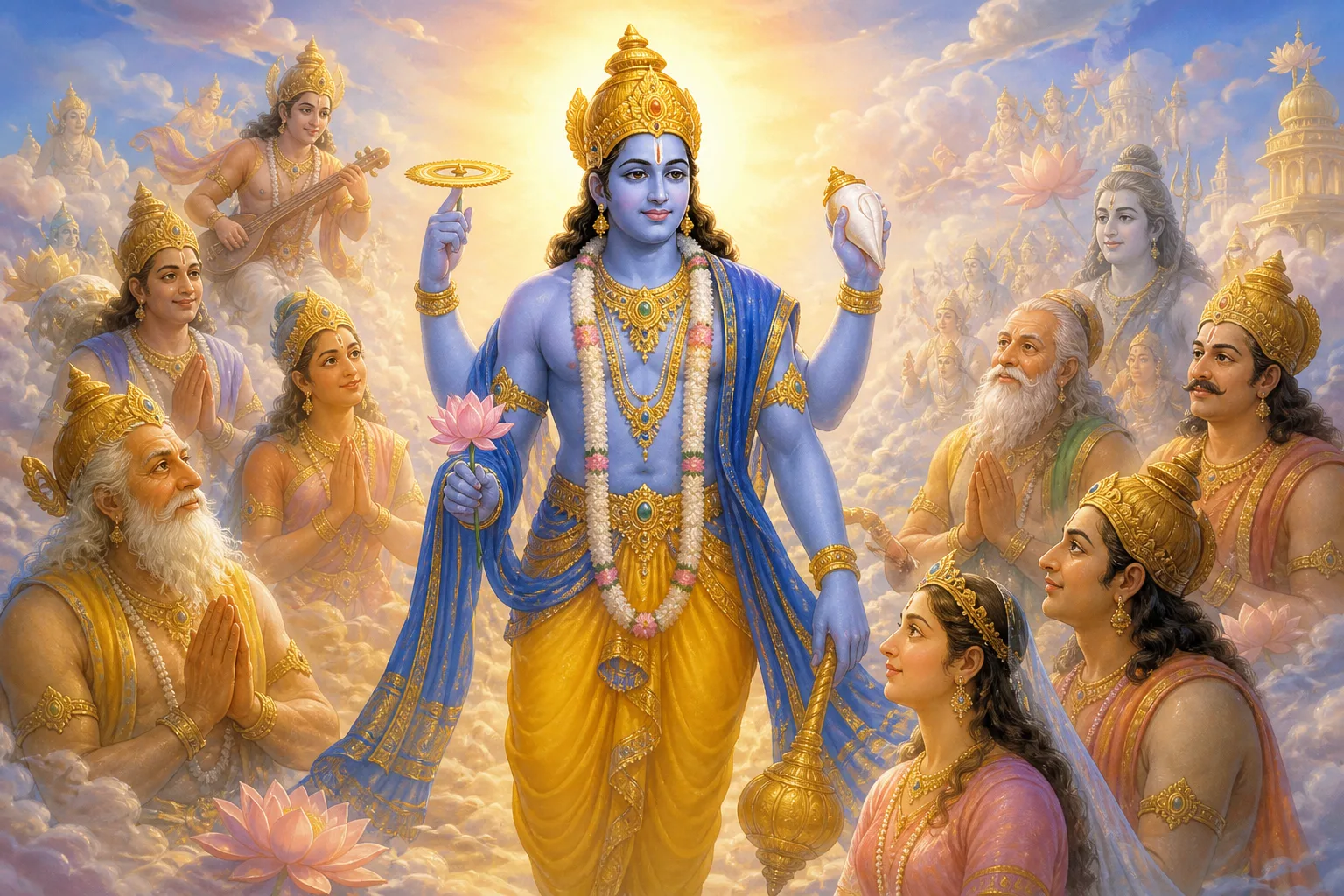
The devas then appealed to Vishnu. They asked him to enter the human world as the sons of Dasharatha and bring Ravana's unchecked power to an end.
Vishnu agreed. The birth of the princes would therefore answer two needs at once: the sorrow of a family without children and the wider world's need for courage against oppression.
Back in Ayodhya, the concluding rite was underway when a radiant being rose from the sacrificial fire. He appeared dark and powerful, dressed in red, holding a golden vessel covered with silver. Inside was payasa, a sacred sweet preparation.
"The gods have sent this," he told Dasharatha. "Give it to your queens. Through it, the sons you have hoped for will be born."
Dasharatha received the vessel reverently. He did not give all of it to one person. He divided it with care.
He gave half to Kaushalya. From the portion that remained, he gave half to Sumitra. He gave half of what then remained to Kaikeyi. The final portion he gave again to Sumitra.
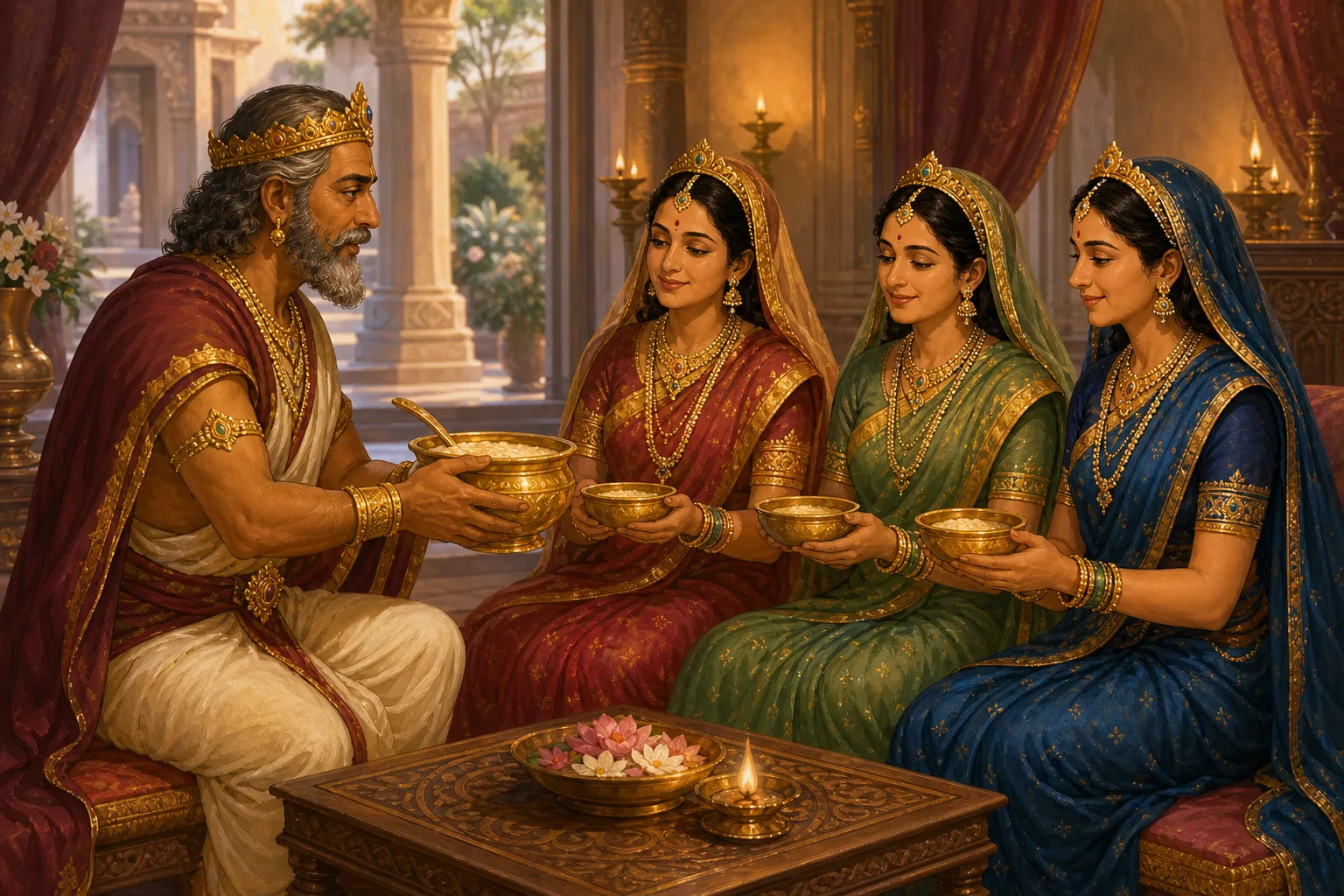
The three queens received their shares with joy. In time, signs appeared that children were on the way, and the palace's long waiting turned into preparation.
Beyond Ayodhya, the devas also prepared helpers for the work ahead. They caused powerful vanara and bear heroes to be born, each carrying some measure of celestial strength. Among them were Vali, Sugriva, Nala, Nila, Tara, Gandhamadana, Mainda, Dvivida, Sushena, Sharabha, and others. Brahma had already brought forth the ancient Jambavant. The wind-god became the father of Hanuman, whose speed, intelligence, and courage would one day become essential to Ram's search for Sita.
The world into which Ram would be born was already gathering the companions his journey would require.
After the passing of the appointed months, the palace filled with celebration.
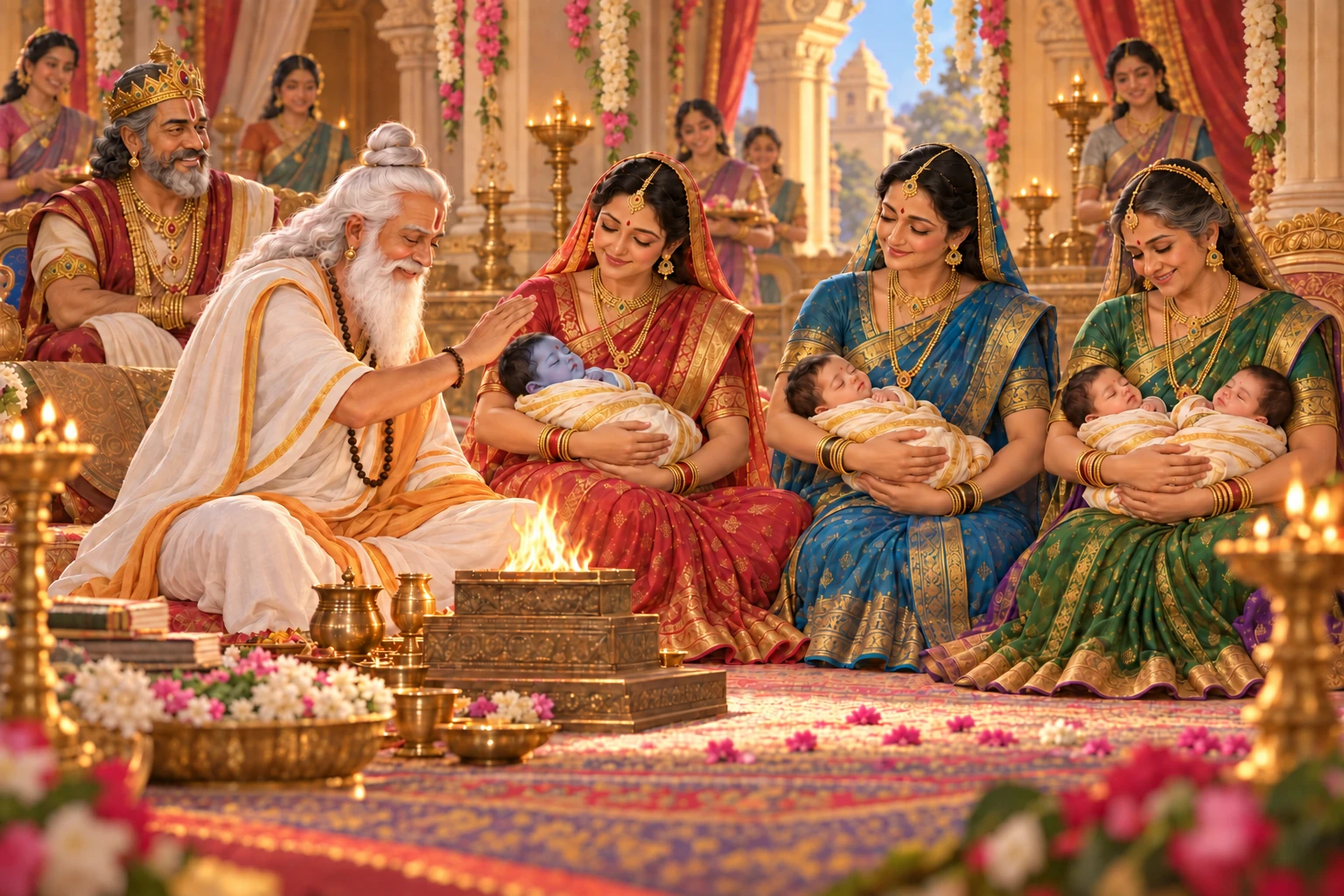
Kaushalya gave birth to Ram. Kaikeyi gave birth to Bharat. Sumitra gave birth to two sons, Lakshman and Shatrughna.
Each prince carried something of Vishnu, and each had his own place in the family. Ram was the eldest. Bharat would grow into a man unwilling to take a kingdom through injustice. Lakshman would become deeply devoted to Ram, and Shatrughna would share a close bond with Bharat.
On the proper day, the family priest Vashishtha gave the children their names. Gifts were distributed. Musicians performed, and people throughout Ayodhya celebrated.
As the boys grew, they studied sacred learning, statecraft, the use of weapons, and the responsibilities of their family. Dasharatha loved all four sons. The alliances most familiar from the later story began to appear early: Lakshman delighted in being near Ram, while Shatrughna was especially attached to Bharat.
No one celebrating in the palace could yet see every forest path, friendship, separation, or trial ahead. For that moment, the long-awaited children were simply held, named, taught, and loved.
And Ayodhya, which had waited so long for its next generation, rang with the news of four births.
“Hope grows when people accept help, prepare with care, and share what they receive.”
New stories in your inbox
One story every week, and a special tale on festivals. Free, always.
Your email goes to our newsletter provider (beehiiv) so we can send you stories. It is not linked to any child's reading on this site. Unsubscribe any time from the email footer.