The Brothers and Ram's Khadau
Ramayana
When Bharat saw Ram at Chitrakuta, courtly formality disappeared and the brothers embraced. Relief at reunion stood beside grief: Bharat also brought news of Dasharatha's death. Ram, Sita, and Lakshman mourned and honoured his memory beside the river.
Bharat said that he had never wanted the exile and would not accept the throne gained through it. He begged Ram to return. Vashishtha, Jabali, ministers, and relatives also spoke. Ram listened, but maintained that their father's promise must be completed. Bharat answered that repairing an unjust situation was also a duty. Neither brother wanted power for himself; they disagreed about the right form of responsibility.
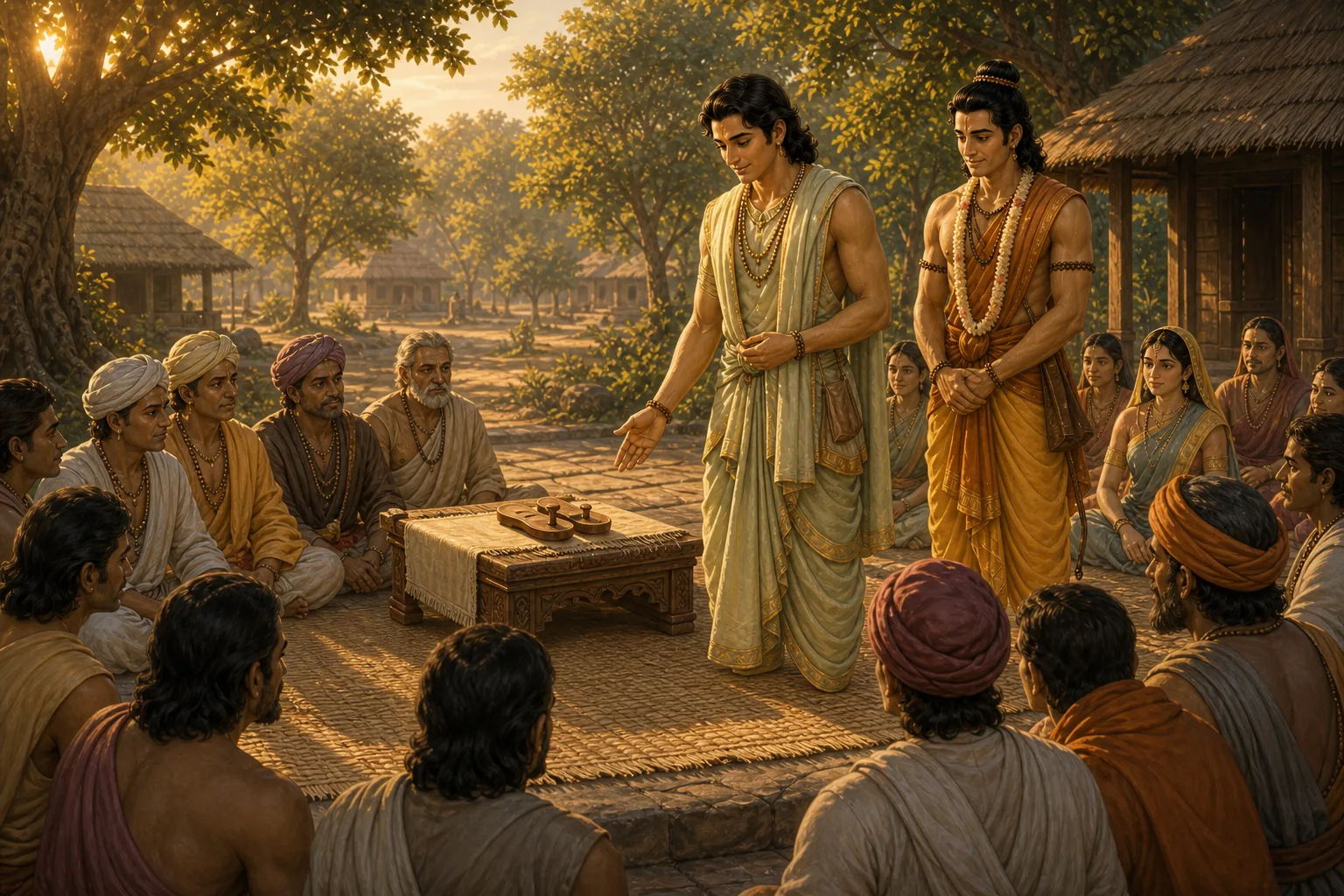
At last they found a path forward. Bharat would take Ram's wooden khadau back toward Ayodhya. He would not occupy the throne as king, but would care for the kingdom until Ram returned. The sandals were a sign: authority stayed with the absent brother, and Bharat held the kingdom only in trust.
At Nandigrama, Bharat placed the khadau upon a modest raised seat. He consulted ministers and residents while living with restraint, and Shatrughna helped administer the kingdom.
“Love can disagree honestly while still protecting a promise and the people who depend upon it.”
New stories in your inbox
One story every week, and a special tale on festivals. Free, always.
Your email goes to our newsletter provider (beehiiv) so we can send you stories. It is not linked to any child's reading on this site. Unsubscribe any time from the email footer.