Kabandha's Release and Counsel
Ramayana
After performing Jatayu's final rites, Ram and Lakshman travelled southwest. The forest grew so dense that sunlight barely reached the ground. Their worry for Sita and grief for Jatayu travelled with them. Then the strange being they had glimpsed ahead was suddenly upon them: two extraordinarily long arms reached beyond the bushes and seized both brothers.
The arms belonged to Kabandha. He had no visible head or neck, and his mouth was upon his torso.
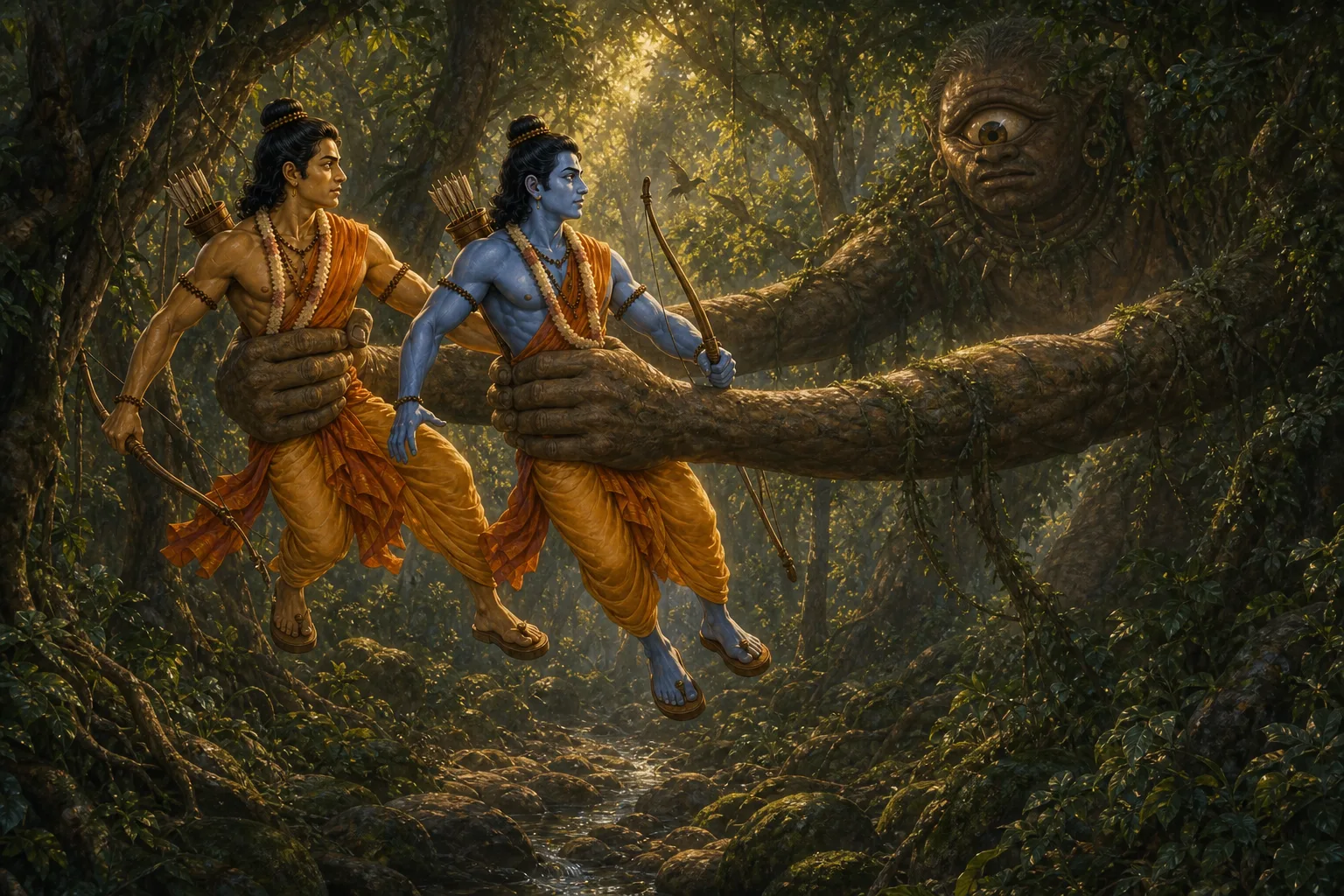
Lakshman briefly despaired and asked Ram to leave him and escape. Ram steadied him. They saw that Kabandha's power depended upon arms that reached from far away. As he pulled them closer, the brothers drew their swords and cut the arms, freeing themselves.
Unable to attack again, Kabandha asked who they were. Lakshman briefly described their exile and search for Sita. Hearing Ram's name, Kabandha remembered his earlier history. He had once been a radiant celestial being named Danu. Pride led him to frighten ascetics and later challenge Indra. A curse and Indra's thunderbolt confined him to this form. He had been told that when Ram performed his funeral rite, his former form would return.
Kabandha asked the brothers to perform that rite and promised in return to guide their search. Ram and Lakshman prepared wood in a pit and lit the traditional fire. Afterward Kabandha appeared above them in a radiant, released form.
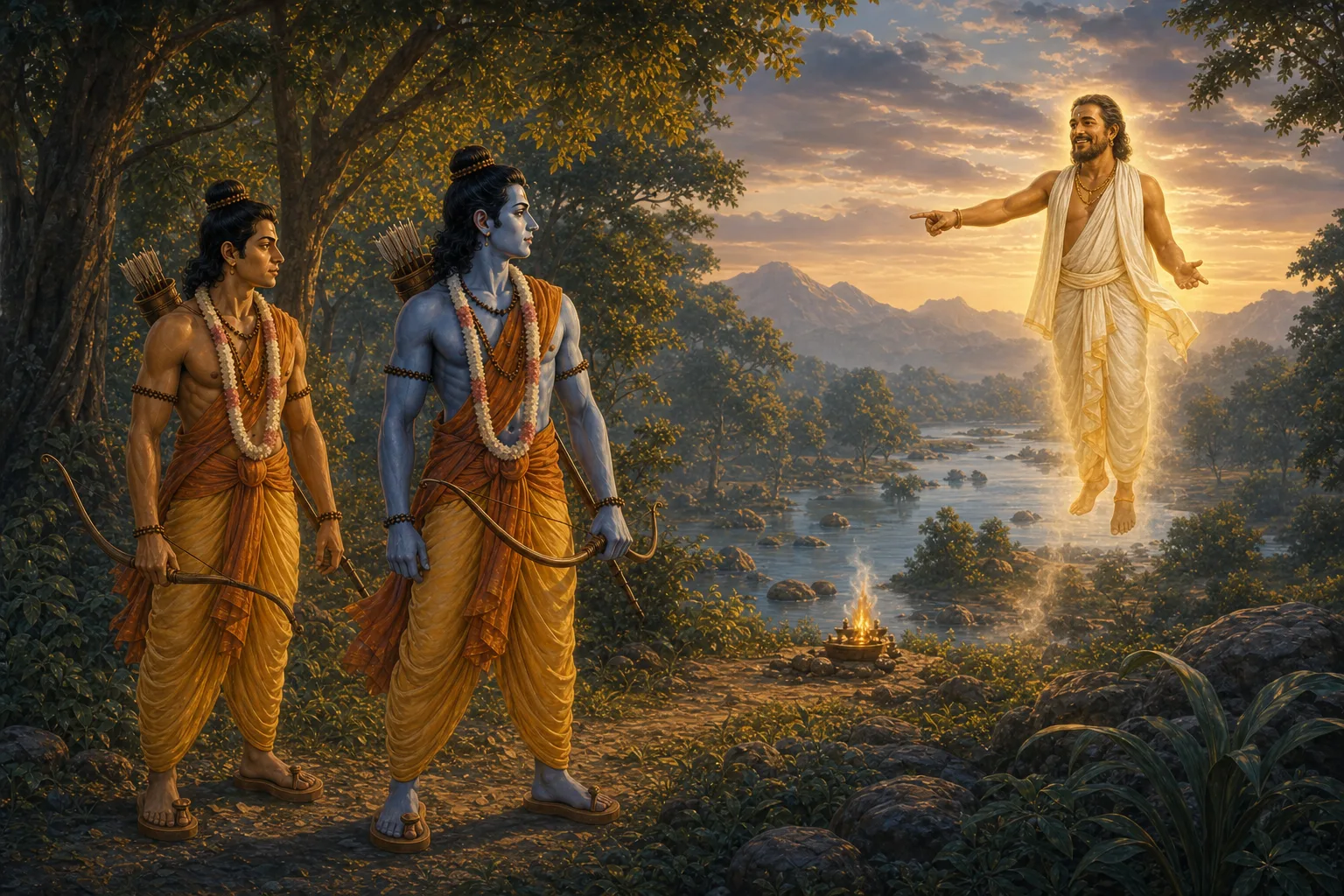
Kabandha advised that someone suffering misfortune needed an ally who understood misfortune too. On Mount Rishyamuka lived a vanara named Sugriva, separated from his brother Vali and accompanied by four trusted companions. Sugriva could help Ram because vanaras could search across distant lands. Ram, in return, could listen to Sugriva's trouble and help him.
Kabandha described the road to Pampa carefully. The brothers should travel west through forests filled with fruit-bearing trees. They could eat the fruit along the way, taking only what they needed. Ahead lay the clear Lake Pampa, alive with lotuses, fish, and waterbirds. Near it stood the old hermitage of Sage Matanga's disciples. An elderly seeker named Shabari had waited there a long time to welcome a promised guest.
Ram repeated the directions carefully—Pampa, Matanga's hermitage, Rishyamuka, and Sugriva. The search now held more than a southern direction and Ravana's name; it held a route toward a possible ally. As Kabandha departed through the sky, he urged them to continue without delay.
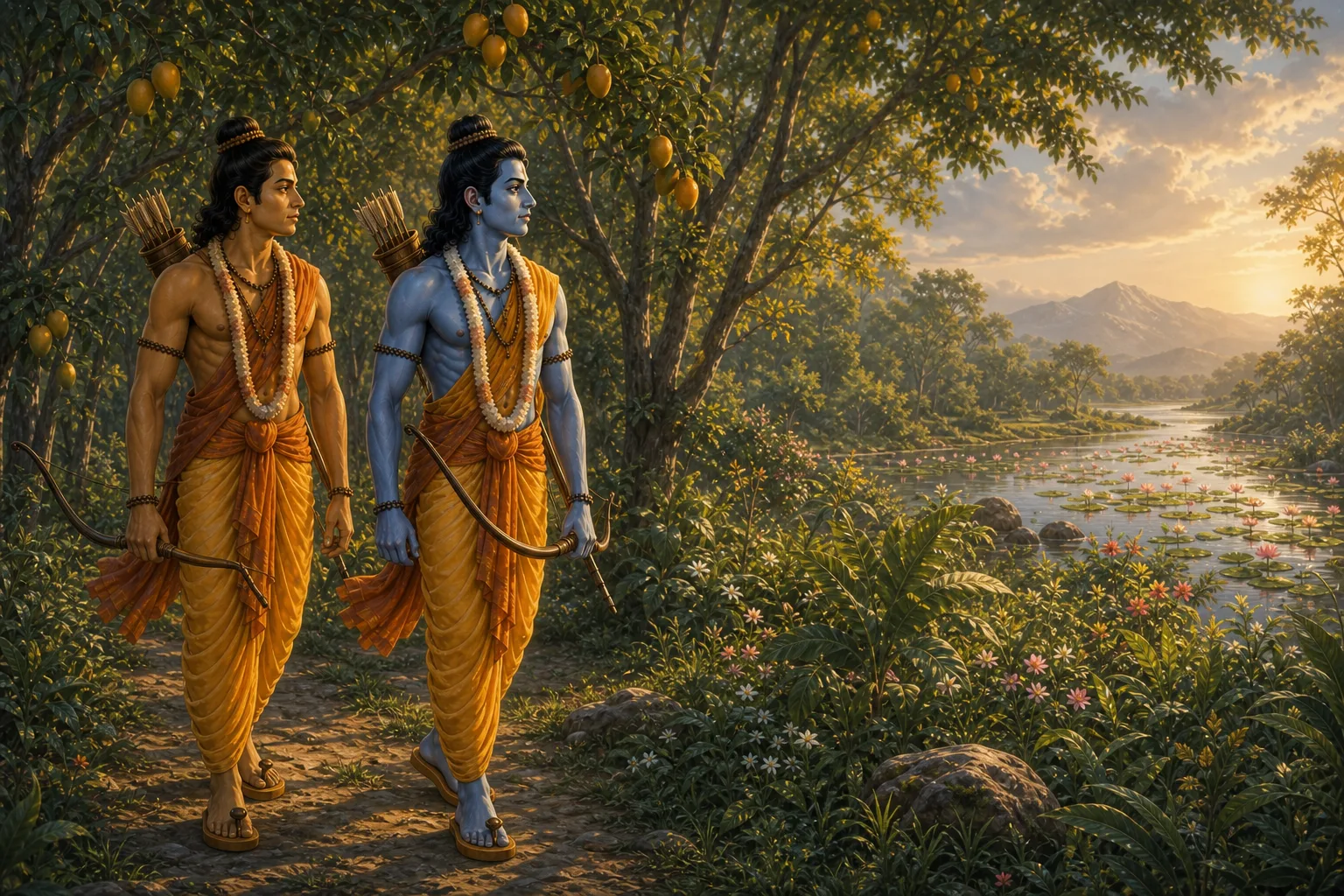
The brothers set out again. Ahead waited Shabari's hermitage and the quiet water of Pampa.
“Help can emerge after conflict when people look beyond fear, listen carefully, and act on trustworthy counsel.”
New stories in your inbox
One story every week, and a special tale on festivals. Free, always.
Your email goes to our newsletter provider (beehiiv) so we can send you stories. It is not linked to any child's reading on this site. Unsubscribe any time from the email footer.