Ram Protects Vishvamitra's Ceremony
Ramayana
At Siddhashrama, Ram and Lakshman asked what they must do.
The hermits explained that Vishvamitra would begin his observance and remain silent for six days and nights. During that time the brothers must stay alert. The danger might come at any hour.
Ram and Lakshman did not treat guarding as a chance to display their weapons. They learned the paths through the hermitage, listened to the people who lived there, and watched the edges of the forest. They rested in turns and kept their bows ready without frightening those they had come to protect.
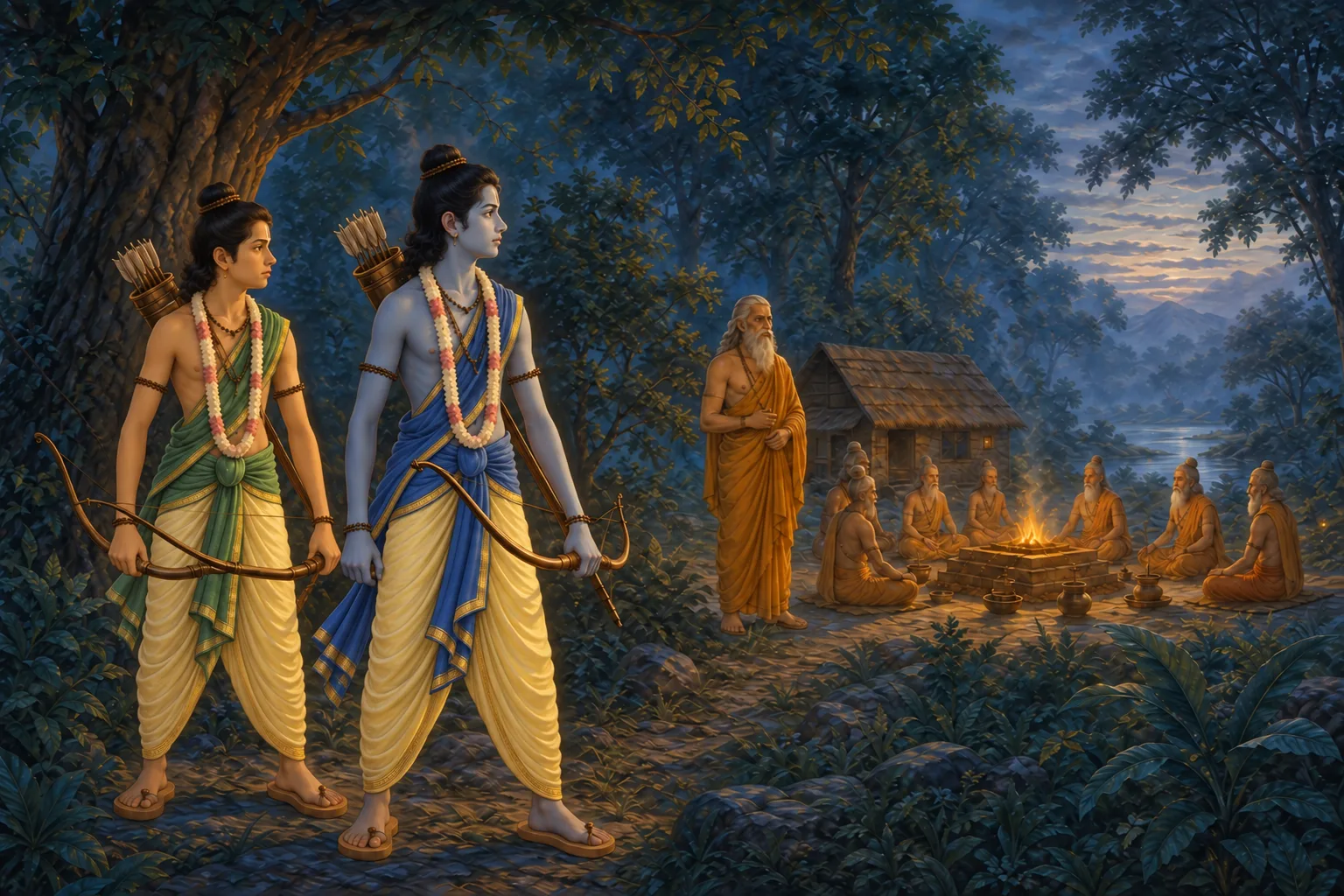
The first day passed. Then the second. Lamps burned, sacred fires were tended, and the recitations continued. Birds settled in the branches each evening and rose again at dawn.
By the sixth day, tiredness itself had become part of the test. Lakshman reminded Ram that danger often arrives when everyone begins to believe it will not come.
Then the sky changed.
A harsh sound rolled above the hermitage. Maricha and Subahu approached with a fierce company. They hurled foul substances toward the ceremonial ground, intending to ruin the work and terrify the people gathered there.
Ram remembered the weapons Vishvamitra had taught him. Against Maricha he chose the Manava weapon. Its force struck without killing him and carried him far away, throwing him into the sea many leagues from the hermitage.
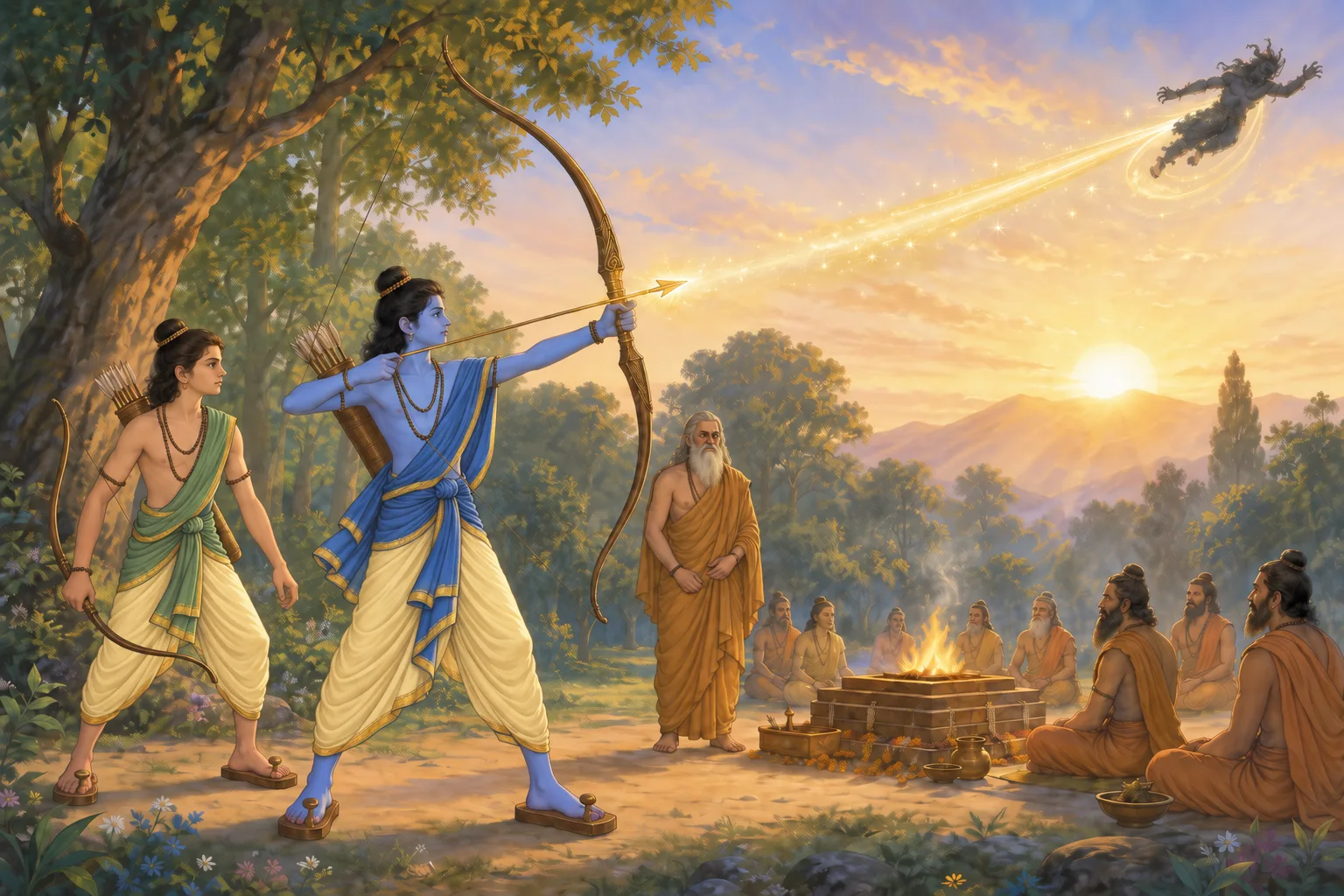
Ram then used a fiery weapon against Subahu, who was killed in the attack. Lakshman helped drive away the remaining assailants. The brothers kept their attention on the threatened ground instead of pursuing every fleeing opponent through the forest.
The violence ended as suddenly as it had begun. The fires remained alight. The observance reached completion.
Vishvamitra's silence ended, and the hermitage filled with relief. The sage praised the princes, but the lesson was larger than victory. Ram had used different force against different attackers. He had driven one far away, killed another who continued the assault, and stopped when the danger was over.
Maricha, though, had survived. Thrown far across the sea, he lived—and one day he would return.
With the observance complete, Vishvamitra told the brothers that King Janaka of Mithila was holding a great gathering. At his court rested an ancient bow associated with Shiva, so heavy that rulers had failed even to lift it. The sage invited Ram and Lakshman to travel with him and see it.
The hermits prepared to leave Siddhashrama.
“Preparation and restraint help courage protect what matters without causing needless harm.”
New stories in your inbox
One story every week, and a special tale on festivals. Free, always.
Your email goes to our newsletter provider (beehiiv) so we can send you stories. It is not linked to any child's reading on this site. Unsubscribe any time from the email footer.