Spies, Diplomacy, and the Armies Before Battle
Ramayana
After crossing the ocean, Ram's alliance camped near Lanka rather than charging its walls. Vibhishana helped identify gates, roads, fortifications, and commanders. Scouts watched Lanka while the vanara leaders organized their forces. Across the field, Ravana also sought information, but he continued to measure advice by whether it pleased him.
Ravana sent Shuka and Sarana to enter the allied camp in disguise. Vibhishana recognized them. The vanaras seized the two spies and brought them before Ram. A frightened spy might expect punishment, but Ram ordered that they not be harmed. He allowed them to look openly at the army and carry an accurate report back. Confidence did not require cruelty, and hiding the alliance's size was no longer its best defence.
Ram also gave them a message: Ravana could still return Sita and prevent the battle. If he refused, he would soon see the force assembled outside his city. Shuka and Sarana observed the commanders and the breadth of the camp, then returned safely to Lanka. They described what they had seen rather than offering the reassuring answer Ravana wanted.
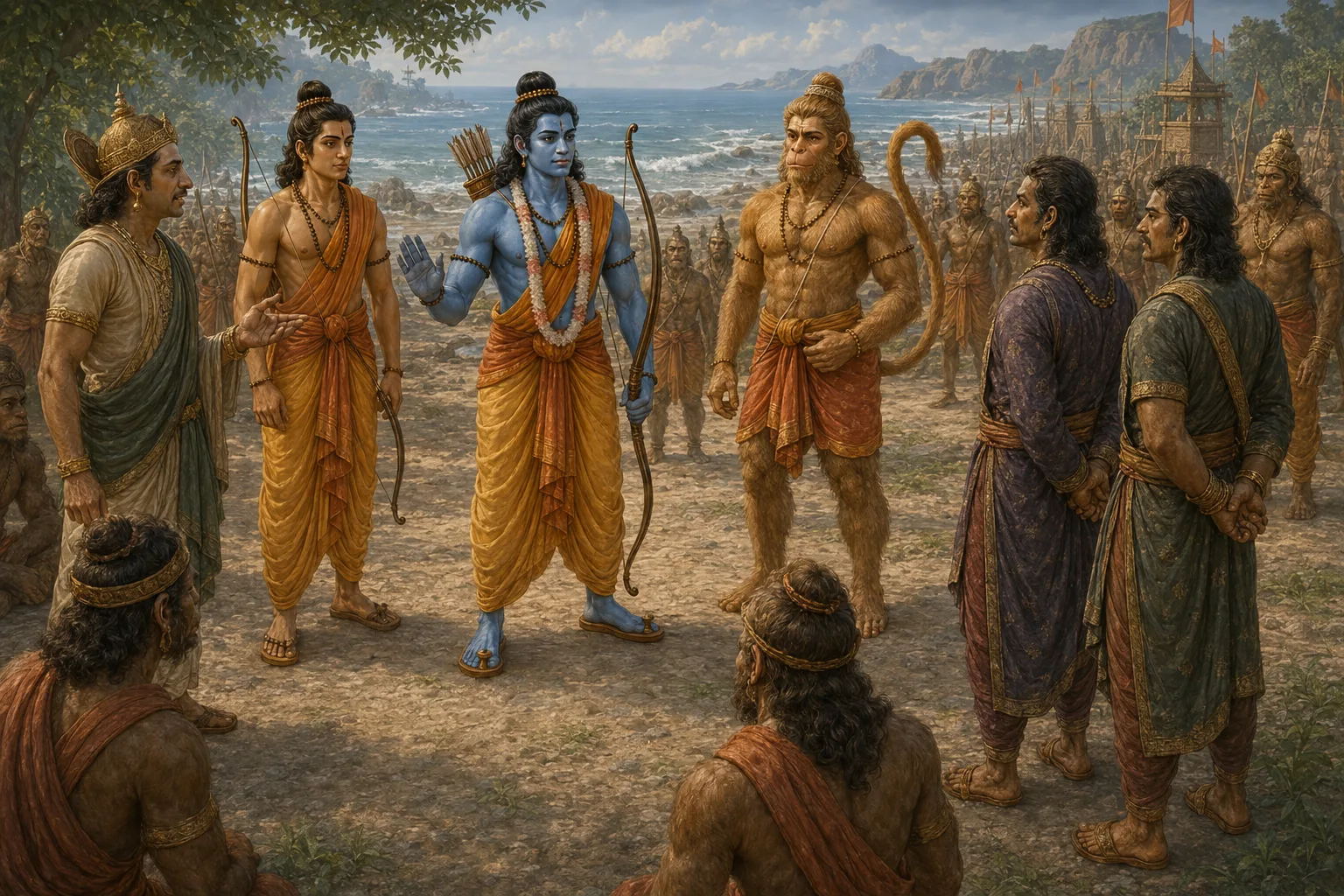
Ravana climbed to view the opposing forces. Sarana named Ram, Lakshman, Sugriva, Hanuman, Angada, Jambavant, Nala, Nila, and the other leaders. The report did not say victory was certain for either side; it made clear that the threat was real. Ravana rebuked the messengers for praising an enemy. Once again, truthful intelligence became unwelcome because it challenged his decision.
He then tried deception. Ravana had a false likeness of Ram's severed head and bow shown to Sita, claiming that the rescue had failed. The act was meant to destroy her hope before any battle began. Sita grieved, but the illusion disappeared when Ravana was called away. Sarama, a compassionate rakshasi who had watched over her, explained that it was a trick and secretly brought news that Ram's army was alive and near.
Within Lanka, older and wiser voices continued to speak. Ravana's grandfather Malyavan urged him to read the signs, respect the opposing force, return Sita, and make peace. Ravana treated caution as disloyalty. Authority had made it difficult for people around him to tell him what he most needed to hear. War was close now, and no wise voice inside Lanka had been able to stop it.
“Even when conflict seems near, truthful counsel and a final path to peace still matter.”
New stories in your inbox
One story every week, and a special tale on festivals. Free, always.
Your email goes to our newsletter provider (beehiiv) so we can send you stories. It is not linked to any child's reading on this site. Unsubscribe any time from the email footer.