The Rains and Sugriva's Delayed Promise
Ramayana
After Sugriva became king, the monsoon arrived. Clouds covered the mountains, streams rushed down every slope, and roads disappeared beneath water and mud. Armies could not travel safely across the flooded land. Ram and Sugriva therefore agreed that the search for Sita would begin when the four rainy months had passed.
Because his exile continued, Ram did not enter Kishkindha. He and Lakshman stayed in a cave on Mount Prasravana. From its entrance they watched lightning cross the sky, heard thunder roll between hills, and saw the forest become dark and green beneath unending rain.
Rivers swelled and ran toward the sea. Trees bent under water and flowers. Frogs called after the first showers; peacocks danced; clouds travelled like mountain ranges through the sky. For many creatures the rain brought renewal. For Ram it also deepened absence. Every cloud moving south made him wonder where Sita waited and whether she could see the same sky.
Lakshman did not demand that Ram stop grieving. He stayed beside him and reminded him that grief and preparation could exist together. They maintained their bows, watched the paths, counted the changing weeks, and held Sugriva to the agreed season rather than asking searchers to risk flooded rivers.
When the rain ended, the sky cleared. The white kasha grass flowered, rivers returned to their banks, and roads opened. Autumn—the promised time for action—had arrived. Yet no search party came to Prasravana.
Inside Kishkindha, Sugriva was learning to govern a kingdom damaged by conflict. He had recovered his home, reunited with Ruma, taken responsibility for Tara and Angada, and welcomed companions who had endured exile with him. Court ceremonies and the relief of safety filled his days. Slowly, comfort and celebration drew his attention away from the urgency of another person's suffering.
Hanuman noticed the danger before gratitude became neglect. He approached Sugriva respectfully but spoke without hiding the truth.
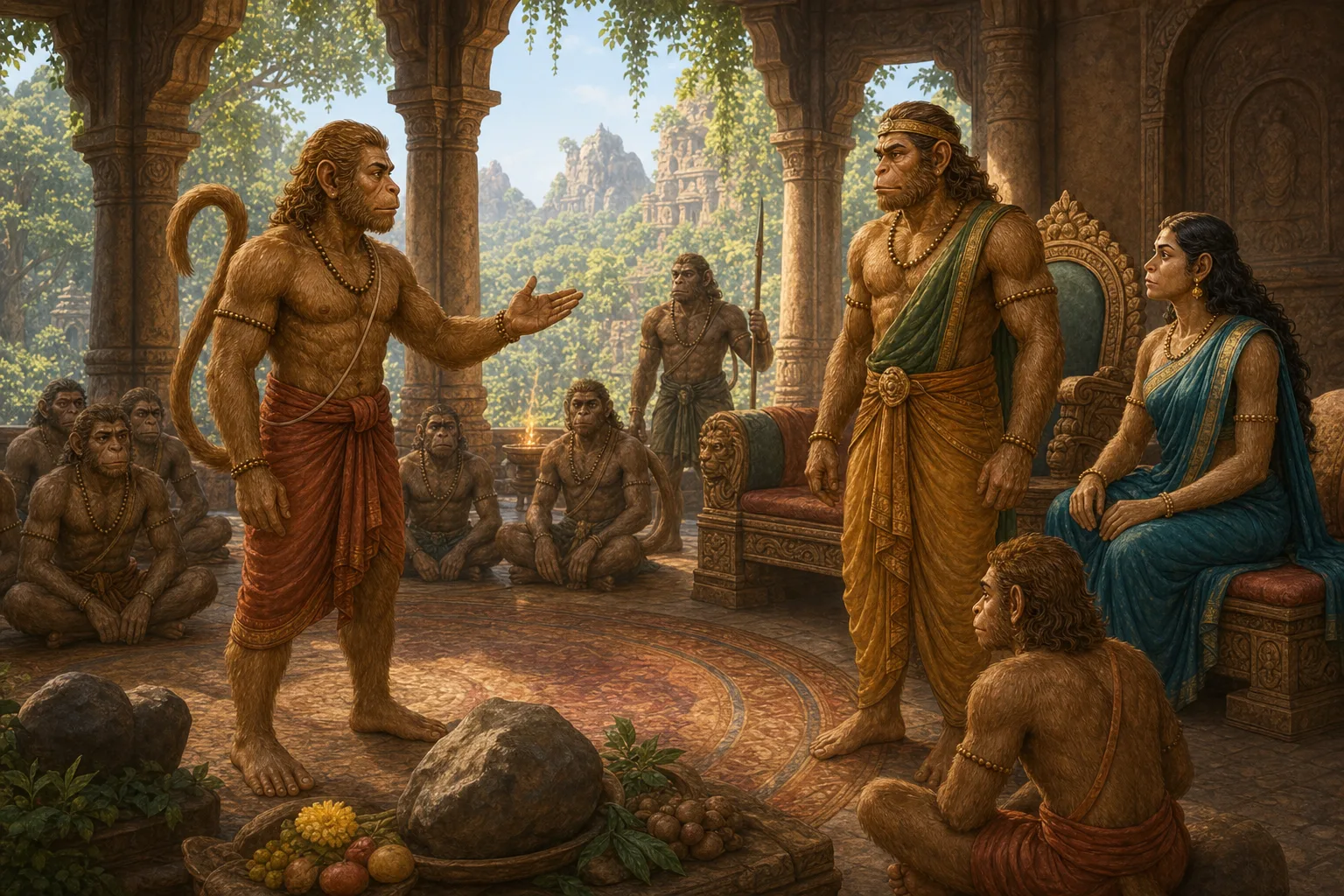
"Ram completed his promise when you needed him," Hanuman said. "The season you named has ended. A friend's work should not begin only after he arrives angry at the gate. Call the communities together now and send the search in every direction."
Sugriva accepted the reminder. He ordered messengers to summon vanara leaders from mountains, forests, caves, coasts, and islands. Gathering so many could not be done in a day. Still, Sugriva should have informed Ram that it had begun. Silence made the delay look like abandonment.
At Prasravana, Ram's patience gave way to anguish. He sent Lakshman to Kishkindha with a severe message. In anger, Ram referred to the path by which Vali had fallen, warning Sugriva not to become false to his word. Fear for Sita had sharpened his speech into a threat.
Lakshman approached the city with his bow. His anger was visible enough that guards fled and Angada hurried inside with the news. Before fear turned the meeting into another act of violence, Tara came to speak with him.
Tara did not deny the delay. She also did not allow Sugriva's whole character to be reduced to it. She explained that someone suddenly released from years of fear can become absorbed in recovered safety and family. That explained his lapse; it did not excuse it. She added that messengers had already gone out and that forces were gathering.
Lakshman listened. His bow remained lowered. Tara's words did not erase his urgency, but they turned the meeting from a punishment into an answer.
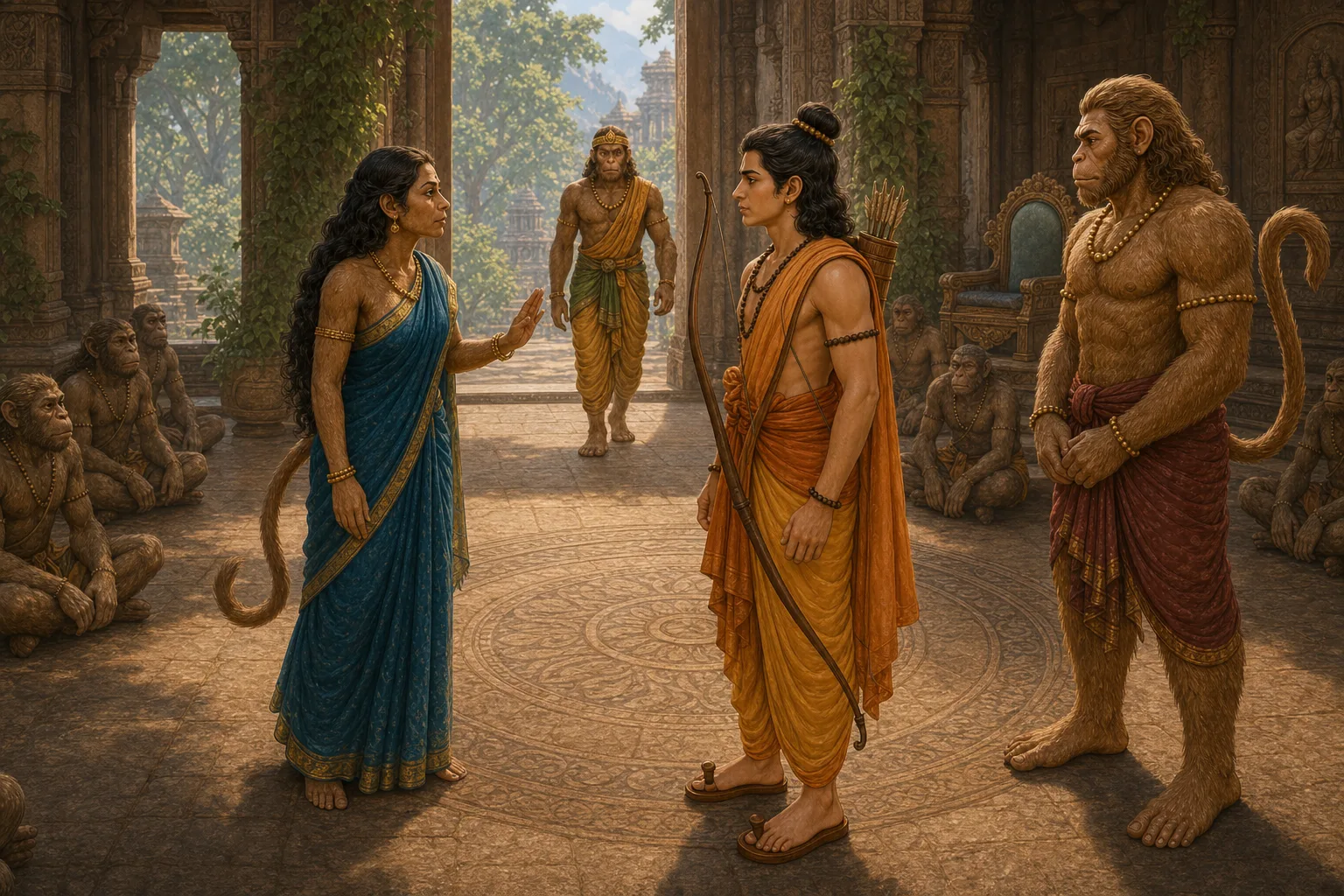
Sugriva then came forward. He did not claim that Ram was wrong to be distressed. He acknowledged the help Ram had given, accepted that his own attention had wandered, and promised to place the entire strength of Kishkindha behind the search. He said that any power he now possessed existed partly because Ram had trusted him, so it could not be withheld when Ram needed help.
As they spoke, vanara leaders began arriving in great numbers. Some came from high mountains, some from river valleys, some from islands, and some from forests far beyond Kishkindha. They came like clouds or waves covering the land. Sugriva's earlier promise was becoming an organized search larger than any one hero could perform alone.
Lakshman carried the renewed commitment back to Ram. Sugriva followed with the assembled leaders, ready to divide the world into directions and appoint responsible commanders.
“Gratitude becomes trustworthy when it is followed by timely work, honest apology, and a clear plan to repair delay.”
New stories in your inbox
One story every week, and a special tale on festivals. Free, always.
Your email goes to our newsletter provider (beehiiv) so we can send you stories. It is not linked to any child's reading on this site. Unsubscribe any time from the email footer.