Sagara, Bhagiratha, and the Descent of Ganga
Ramayana
Farther along the road, beside the Ganga herself, Vishvamitra told the river's long story.
Ganga and Uma were remembered as daughters of the mountain king Himavan and Queen Mena. The devas asked that Ganga serve a purpose beyond the mountains, while Uma's story became connected with Shiva and with the birth of the warrior Skanda. These histories explained why the river was imagined as both a celestial being and flowing water.
Then Vishvamitra spoke of King Sagara of Ayodhya. Sagara had two queens. One line continued through a single son, Asamanja; the other through a vast company of sons. When Sagara began an ashvamedha, the consecrated horse disappeared.
Sagara's sons searched with fierce determination. They dug through the earth, disturbing regions and beings in their path. At last they found the horse near Sage Kapila, who sat in meditation. Assuming he was the thief, they rushed toward him. Kapila opened his eyes, and the force released in that encounter reduced them to ashes.
Sagara sent his grandson Anshuman. Unlike the first searchers, Anshuman approached with humility. Garuda explained that ordinary water could not complete the rites for the dead princes; Ganga must descend from heaven. Anshuman recovered the horse, but bringing the river to Earth remained unfinished.
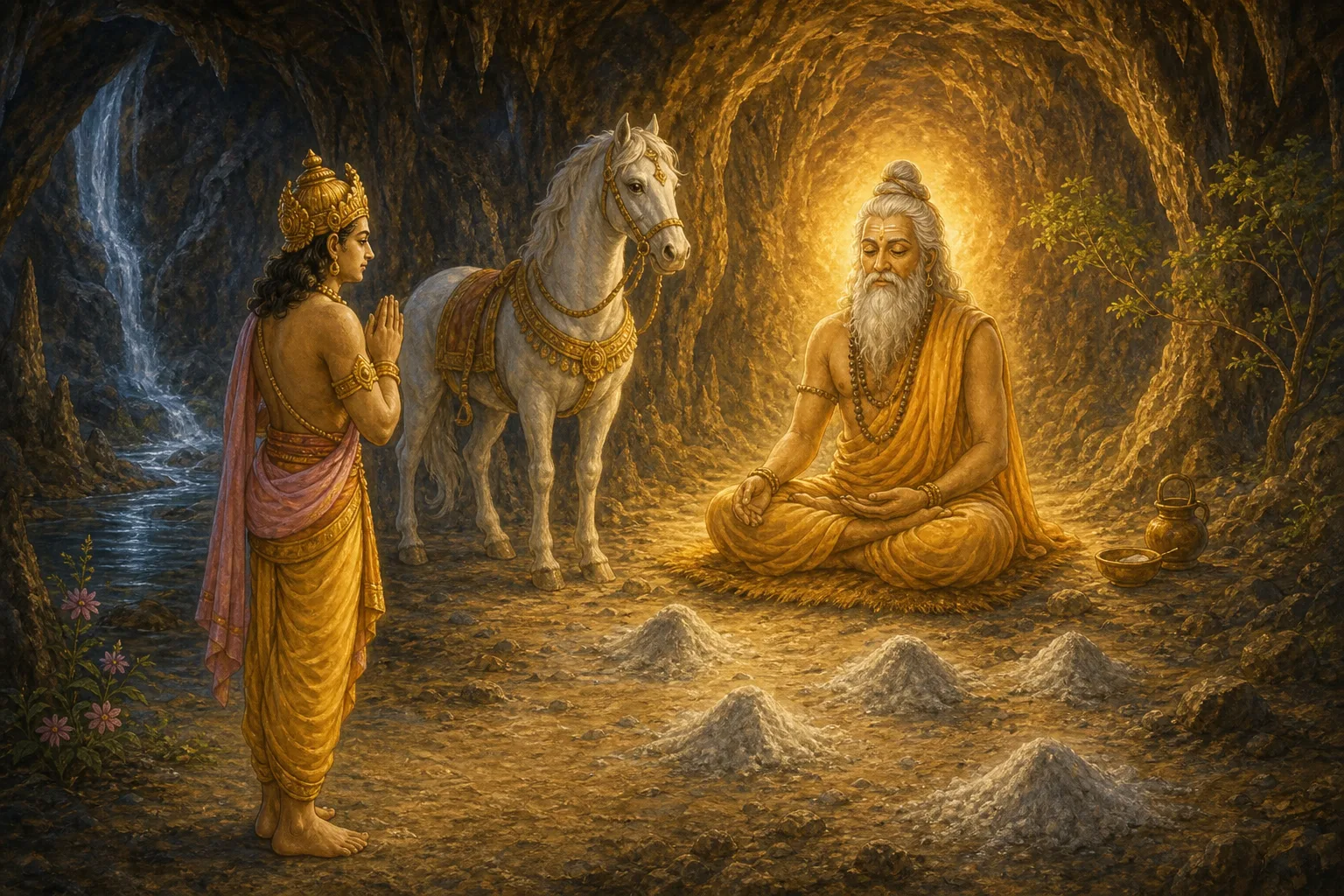
The task passed from Sagara to Anshuman and then to Dilipa. Each carried the hope, but none completed it. At last Dilipa's son Bhagiratha entrusted the kingdom to capable ministers and devoted himself to the work.
Bhagiratha's discipline won Brahma's attention. Brahma agreed that Ganga could descend, but warned that Earth could not bear the force of her fall. Only Shiva could receive her safely.
Bhagiratha therefore sought Shiva's help. Shiva agreed. When Ganga rushed downward with immense confidence, Shiva caught the whole torrent in his matted hair. The river could not find a path out until Shiva, satisfied that her force was restrained, released part of the water in several streams.
Bhagiratha led the way. Ganga followed across mountains and plains. Her waters filled channels, nourished the land, and drew the attention of everyone nearby. But the rushing river flooded Sage Jahnu's ceremonial ground. Jahnu drank up the water. Bhagiratha did not respond with accusation. He and the others appealed respectfully, and Jahnu released Ganga again. For this reason she also became known as Jahnavi, Jahnu's daughter.
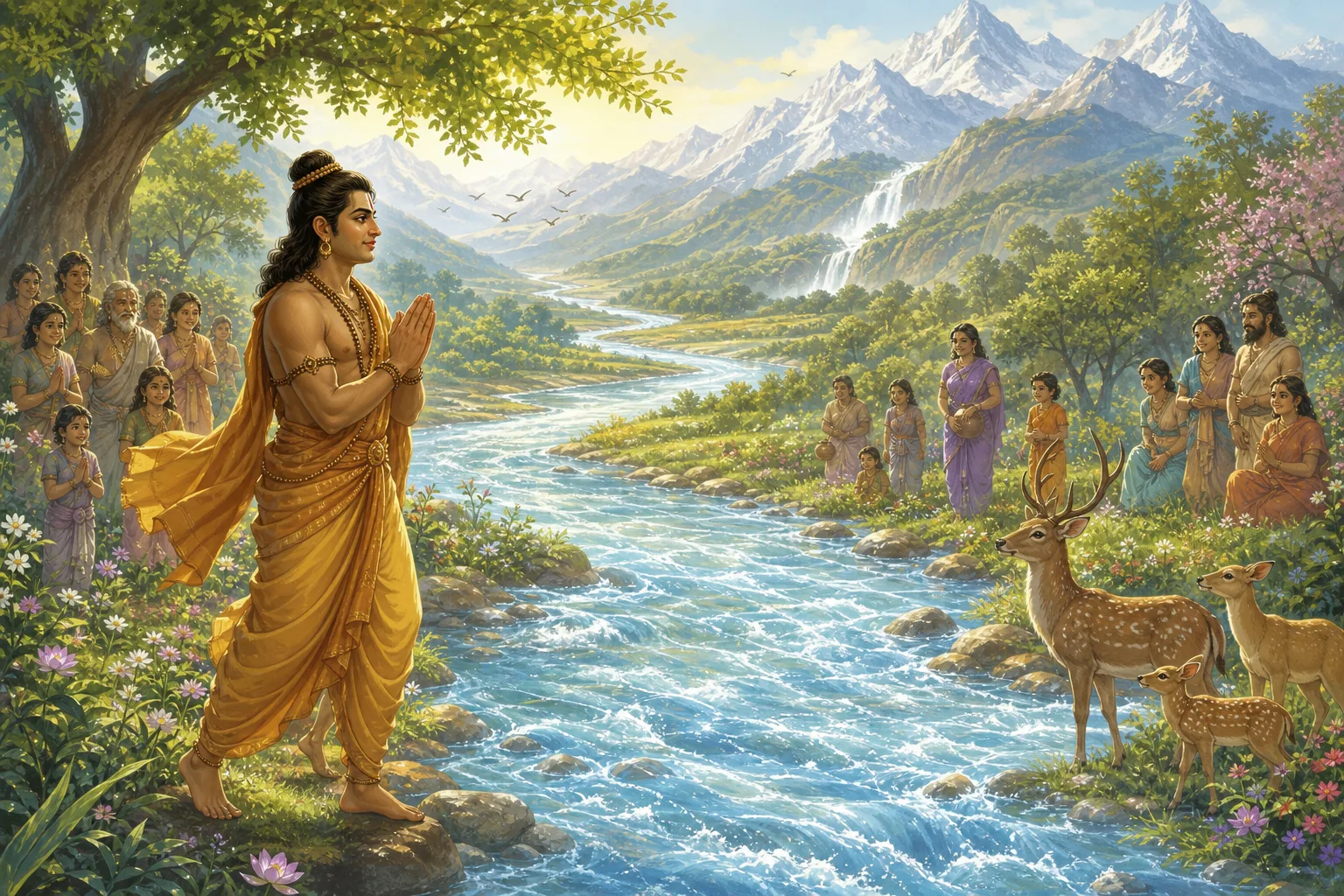
At last the river reached the ashes of Sagara's sons and continued to the ocean. The rites could be completed, and the long-separated ancestors found release.
Ram looked at the river beside them. A landscape could hold memory, he understood, and a task left unfinished was not necessarily a task lost.
“A worthy task may pass through many hands before patience, humility, and cooperation bring it to completion.”
New stories in your inbox
One story every week, and a special tale on festivals. Free, always.
Your email goes to our newsletter provider (beehiiv) so we can send you stories. It is not linked to any child's reading on this site. Unsubscribe any time from the email footer.