Shabari and the Road to Pampa
Ramayana
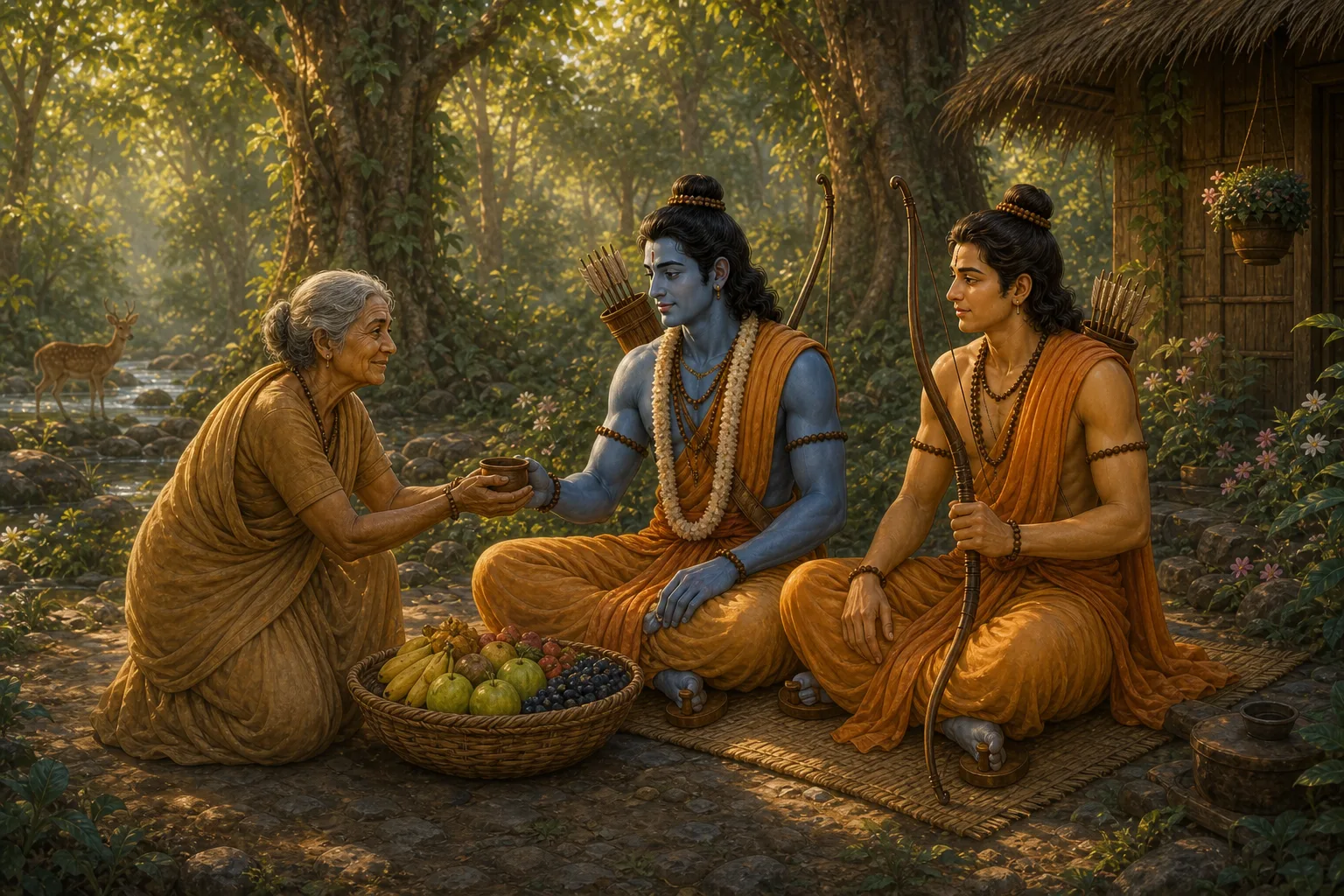
Following Kabandha's directions, Ram and Lakshman reached the old hermitage of Sage Matanga. Quiet paths wound between the trees, and places of worship and carefully preserved objects remained. An elderly seeker named Shabari cared for the hermitage. Her teachers and companions had left the world long before, but they had told her that Ram would one day arrive. Shabari carried that promise not as fear or compulsion but as hope and spiritual practice.
When she saw the brothers, she rose, joined her hands in welcome, and offered them seats. She brought water for their feet, water to drink, and roots and fruit gathered from the forest. Ram asked about her life of practice: Had obstacles become fewer? Was her mind peaceful? Had she performed her service with contentment? Shabari answered that her teachers' instruction and this welcome had brought her long labour to fulfilment.
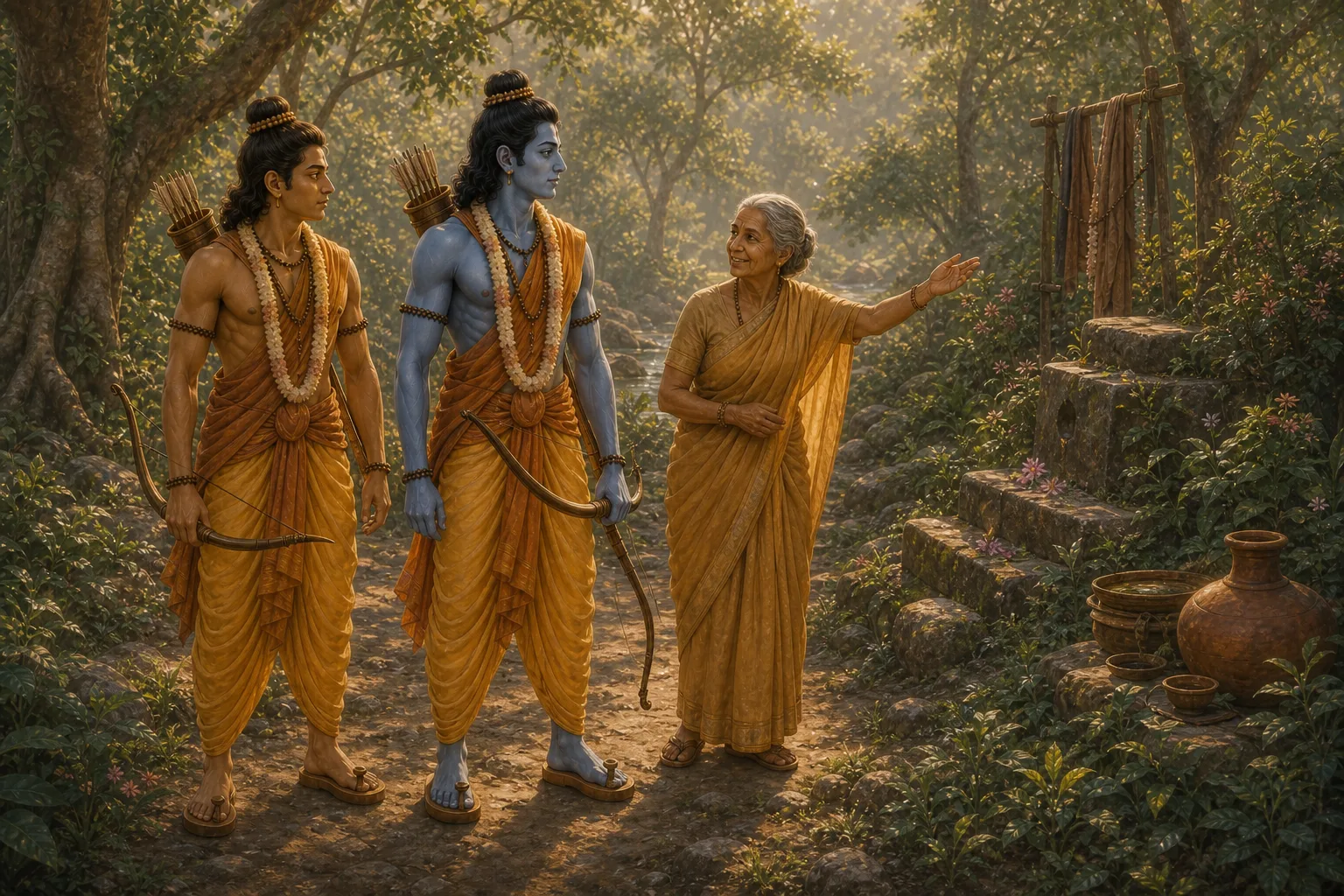
Shabari guided Ram and Lakshman around the hermitage. She showed them the altar where Matanga and his disciples had worshipped and the places where flowers once carried by the elderly teachers' trembling hands were still described as fresh. Water invoked from seven seas, blossoms that did not fade, and bark garments left upon trees belonged to the sacred memory of the place.
After showing them the hermitage, Shabari said that the purpose for which she had remained was complete. She asked Ram's permission to conclude her practice and join her teachers in their sacred world. She entered the ritual fire and rose in a celestial form, remembered for her accomplishment and her peaceful farewell.
Ram and Lakshman honoured her departure. For years she had tended a place, a memory, and hope for travellers yet to arrive. Her help transformed Kabandha's directions into a real road.
Beyond the hermitage, the brothers reached Lake Pampa. Its water was clear, filled with red, blue, and white lotuses. Swans and other waterbirds moved across it, flowering trees crowded its banks, and scented air travelled over the water. The scene was beautiful, yet every flower and bird reminded Ram of Sita. Beauty did not erase grief; it made absence more vivid.
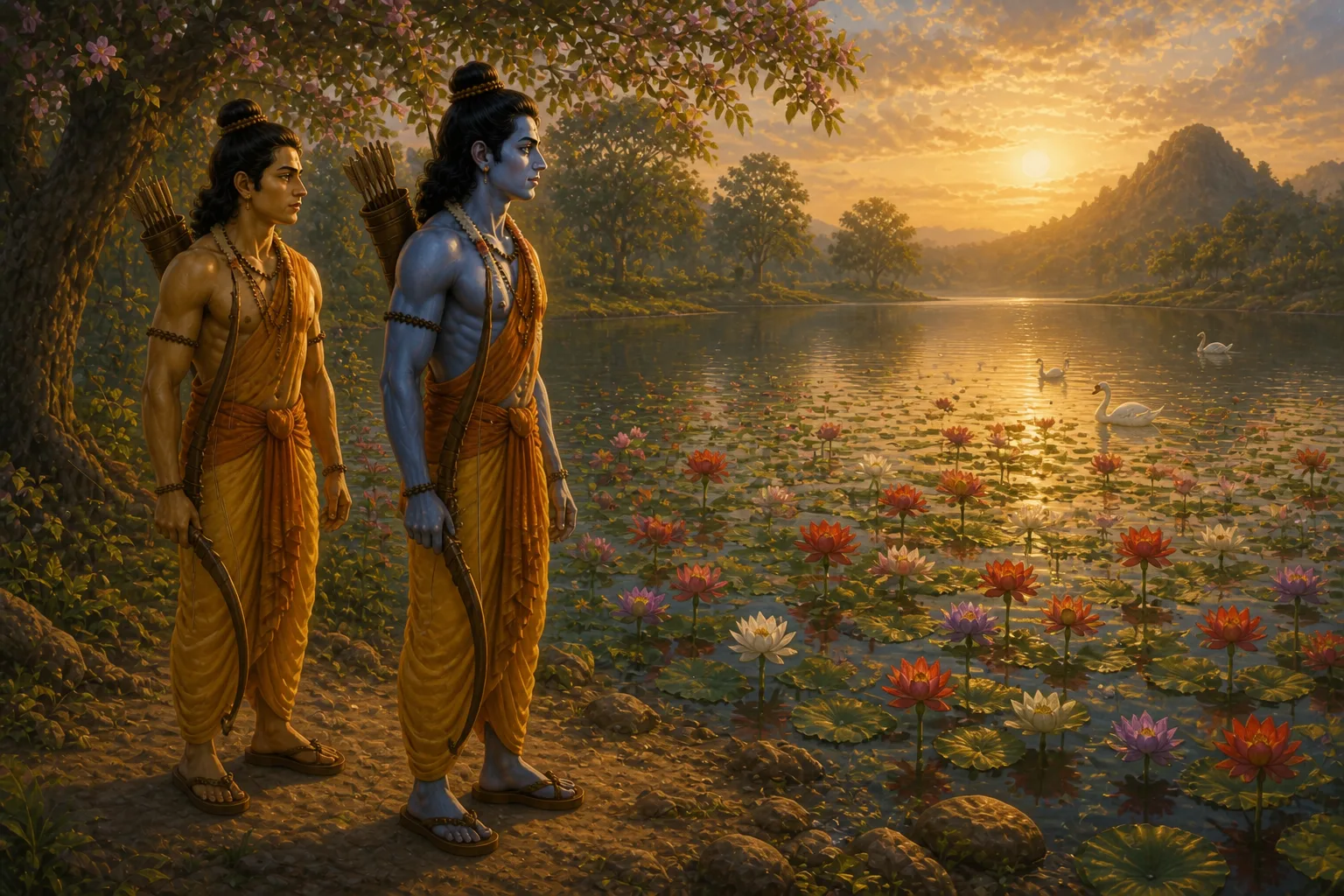
Lakshman reminded Ram that their next step in Sita's search was to reach Sugriva. Across Pampa rose Mount Rishyamuka, where Sugriva lived with his companions.
“Long preparation becomes meaningful when it is offered with dignity, care, and freedom rather than a wish for praise.”
New stories in your inbox
One story every week, and a special tale on festivals. Free, always.
Your email goes to our newsletter provider (beehiiv) so we can send you stories. It is not linked to any child's reading on this site. Unsubscribe any time from the email footer.