Dasharatha's Last Night
Ramayana
Ayodhya was several days into mourning Ram's departure for the forest. That night, unable to sleep, Dasharatha told Kaushalya about an event from his youth that he had carried within him for many years. He had once taken pride in being able to aim by sound. On a rainy night beside a river, he heard what he thought was an elephant drinking and released an arrow without seeing the target. The sound had not come from an animal. A young ascetic had been filling a water jar for his elderly parents, who could not see.
Dasharatha ran to him. The young man was mortally wounded, yet his first concern was for his thirsty parents. He asked Dasharatha to carry them the water and tell them the truth. The king did so. When the parents heard an unfamiliar step instead of their son's, they asked what had happened. Dasharatha admitted his terrible mistake. He could ask forgiveness and offer help, but he could not restore their child. Overcome by grief, the father said that as they would die separated from their son, Dasharatha would one day lose his life grieving for a beloved son.
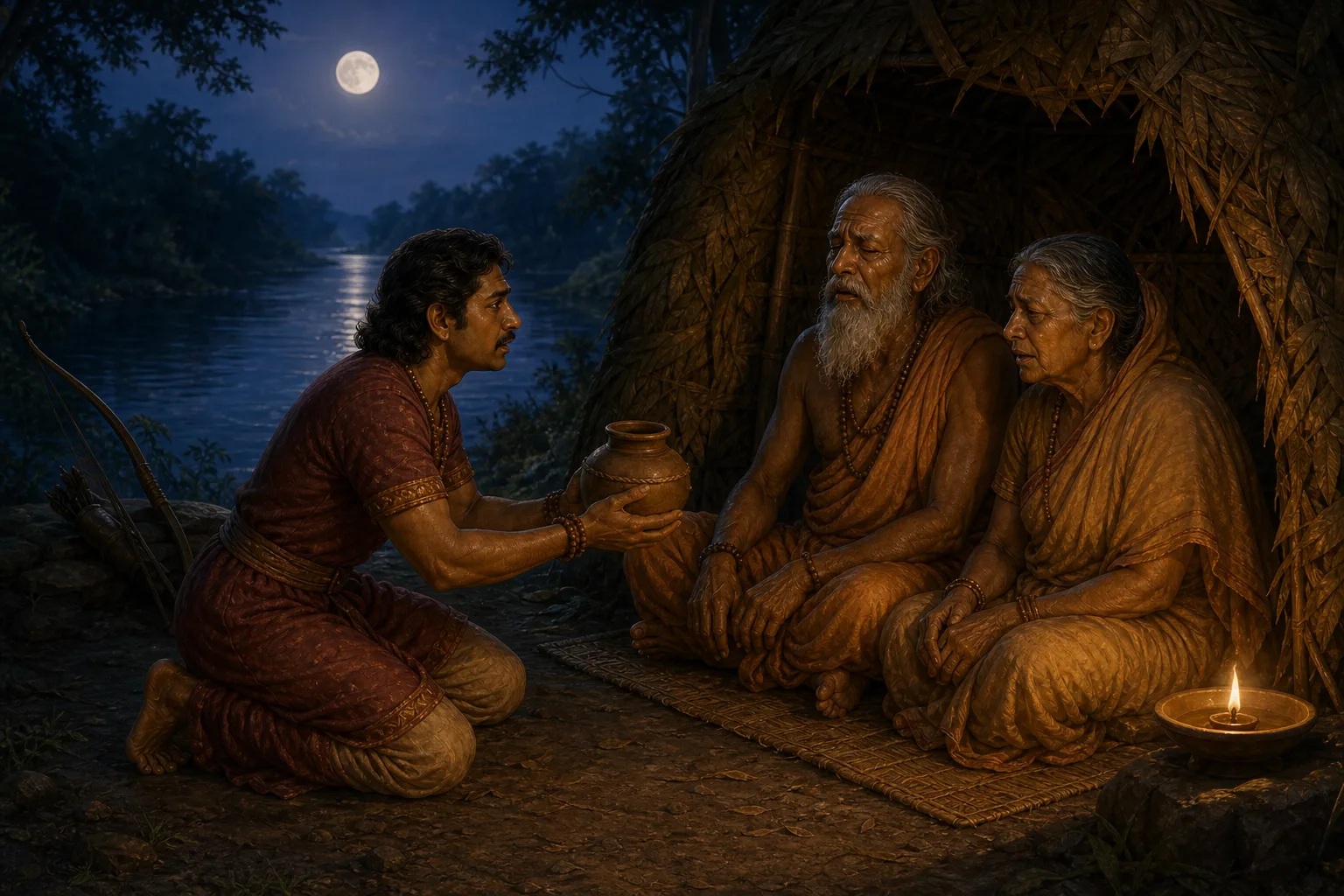
Dasharatha had never escaped responsibility for that night. Now he believed the bereaved father's words were being fulfilled.
Through his final hours, Dasharatha's awareness faded and returned. He repeatedly called the names of Ram, Sita, and Lakshman. Kaushalya and Sumitra remained nearby. Before dawn, the king died. For a while the palace did not know. When attendants and court singers came to begin the morning routine, the queens' lament was heard and the news spread.
Ayodhya now faced two crises: the family's profound grief and the public responsibility of governing without a king. Bharat and Shatrughna were in their grandfather's kingdom of Kekaya, while Ram was in the forest. Vashishtha and the ministers maintained order. Dasharatha's body was preserved in oil until Bharat could return for the funeral rites. Messengers left at once for Kekaya, instructed not to announce the death or exile on the road, but only to say that Bharat must come to Ayodhya without delay.
“An old mistake cannot be undone, but telling the truth about it helps others understand the sorrow and take responsible steps forward.”
New stories in your inbox
One story every week, and a special tale on festivals. Free, always.
Your email goes to our newsletter provider (beehiiv) so we can send you stories. It is not linked to any child's reading on this site. Unsubscribe any time from the email footer.