Kaikeyi and the Two Boons
Ramayana
Ayodhya had been washed and decorated. Flowers hung above doorways, musicians prepared their instruments, and families spoke eagerly about the next morning, when Ram was to be installed as heir apparent. From the upper rooms of Kaikeyi's palace, her longtime attendant Manthara saw the celebration. When she learned its purpose, she hurried to Kaikeyi.
Kaikeyi was delighted by the news. Ram was as dear to her as her own son Bharat. She offered Manthara a jewel and said, "I make no difference between Ram and Bharat. Ram's consecration is joyful news." Kaikeyi did not begin with hatred for Ram.
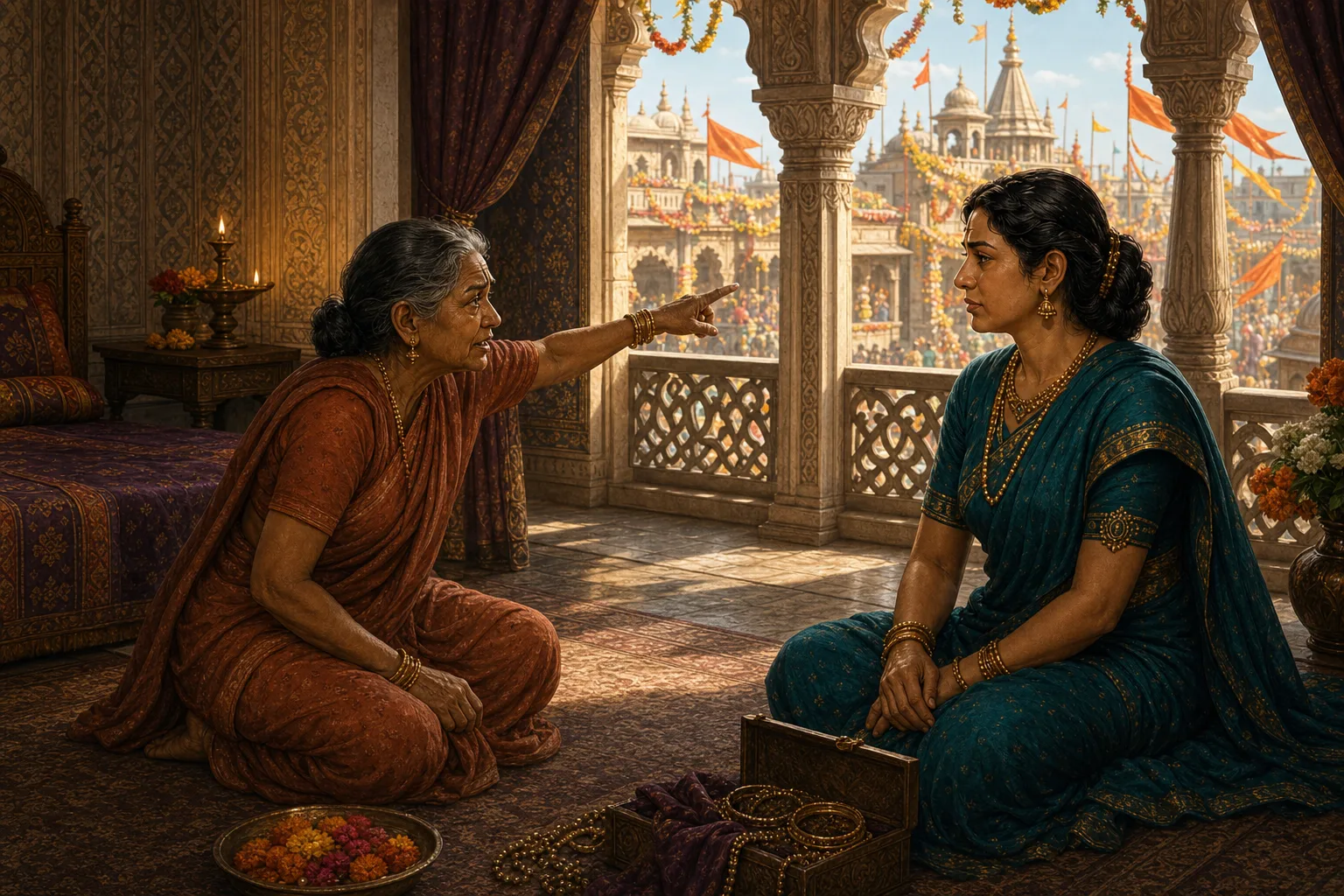
Manthara presented one danger after another. Once Ram became heir, she argued, Kaushalya would hold the highest place, Bharat would be pushed aside, and Kaikeyi might lose both influence and safety. At first Kaikeyi rejected these claims. She knew Ram's generous nature and believed he would care for his brothers. But Manthara returned to the same fears in different forms: rivalry within a royal household, who would rule next, and a mother's worry for an absent son. Gradually, delight gave way to unease, and unease hardened into alarm.
Manthara painted every uncertainty as the worst that could happen, and Kaikeyi accepted the picture without asking anyone else she trusted. Manthara then reminded her of an old event. Years earlier, Kaikeyi had helped an injured Dasharatha during battle. In gratitude, he had promised her two boons. She had saved them for a future day.
Kaikeyi entered the chamber of displeasure, a room where a member of the royal family could show that a grievance required serious attention. She removed her ornaments and sat upon the floor. Dasharatha came to her joyfully, expecting that she too would celebrate Ram's coming consecration. Distressed to find her upset, he asked what she desired. Out of affection and concern, he again promised to grant her wish before he knew what it was.
Kaikeyi claimed the two old boons. By the first, Bharat must be installed as heir. By the second, Ram must leave Ayodhya that very day, wear an ascetic's clothing, and live in the forest for fourteen years. Dasharatha was stunned. He pleaded with her to choose something else, to allow time, and to remember that Ram loved Bharat and posed him no danger. Kaikeyi held the king to his word. The fear she had accepted was now a decision with consequences beyond anything she had first imagined.
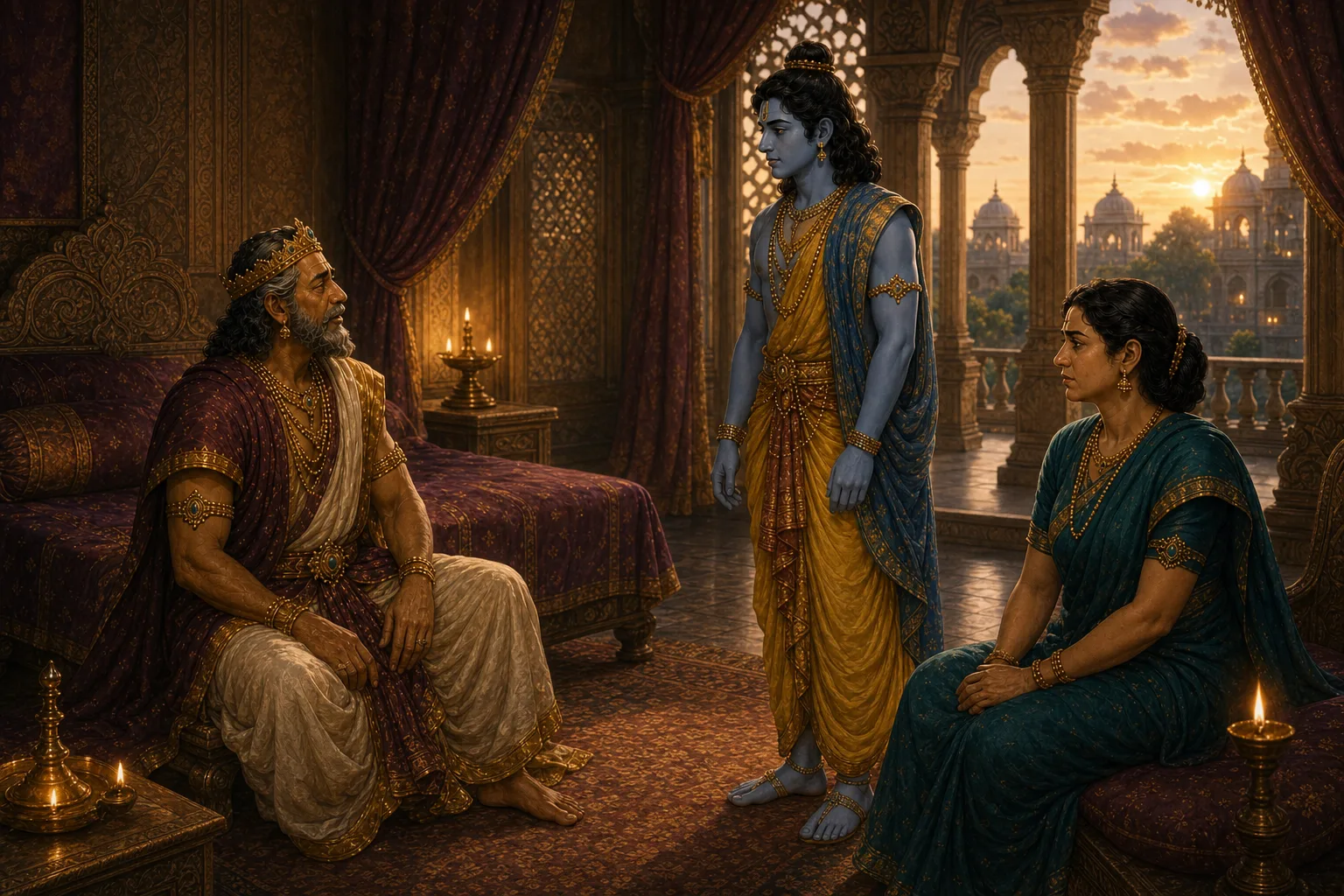
The night passed without rest. Dasharatha could neither bear to break his word nor bear to lose Ram. Outside the palace, preparations continued; inside it, the future had changed. Sumantra, the king's senior minister and charioteer, was sent to summon Ram. He expected that Dasharatha wished to give the prince final instructions for the ceremony.
Ram entered Kaikeyi's chamber and found his father unable to speak through grief. Kaikeyi told him about the boons herself. If Ram wished Dasharatha to remain true to his promise, she said, Bharat must be installed and Ram must spend fourteen years in the forest. Ram did not insult Kaikeyi or suspect Bharat. He answered that he would uphold his father's word.
“Fear can make one voice seem like the whole truth; a wise decision listens more widely before it becomes a promise that harms others.”
New stories in your inbox
One story every week, and a special tale on festivals. Free, always.
Your email goes to our newsletter provider (beehiiv) so we can send you stories. It is not linked to any child's reading on this site. Unsubscribe any time from the email footer.