The Road from Ayodhya to Chitrakuta
Ramayana
Many people of Ayodhya followed the chariot carrying Ram, Sita, and Lakshman. They did not wish to turn back. Ram understood their love, but the city could not be abandoned. When the exhausted followers slept beside the Tamasa, he asked Sumantra to continue quietly. It was not a rejection of their affection, but a difficult way of sending them home.
The travellers reached Shringaverapura near the Ganga. Guha, leader of the Nishada river community and Ram's friend, welcomed them. He offered food, rest, knowledge of the country, and protection. Ram declined royal comfort because of the conditions of exile, but accepted friendship with gratitude.
In the morning Sumantra had to return to Ayodhya. After their farewell, one of Guha's skilled boatmen carried the three travellers across the Ganga. Guha remained on the bank until the boat moved far downstream.
At Prayaga they visited Bharadvaja's hermitage. The sage recommended a quiet region and explained the safe route to Chitrakuta. Crossing the Yamuna, the travellers secured their few belongings on a simple raft and watched the signs of the forest carefully.
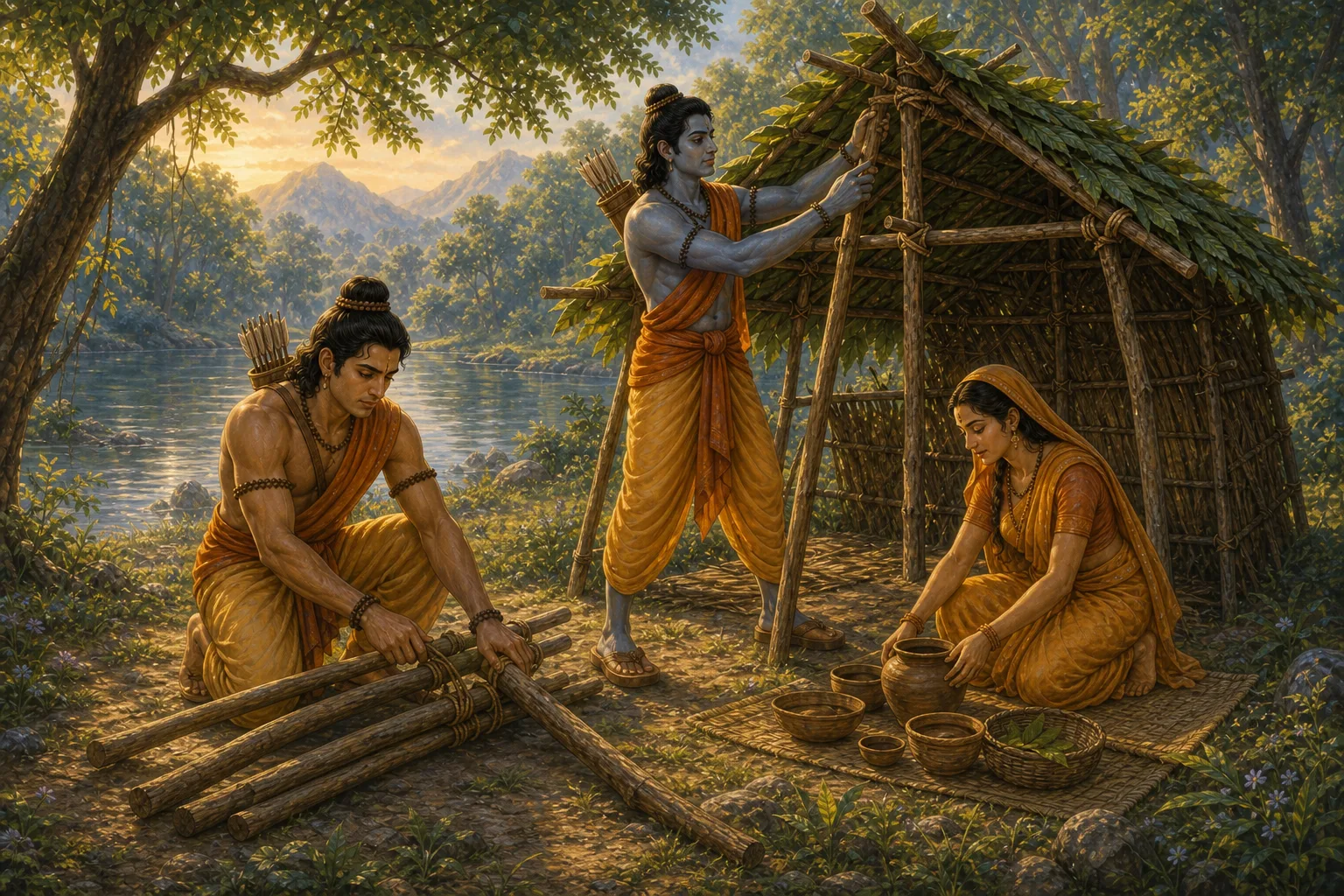
At Chitrakuta they found the Mandakini River and wooded hills. Ram and Lakshman used fallen timber and leaves to make a shelter while Sita arranged vessels, mats, and a place to prepare food. Far from the palace, the home was modest, but it was made through shared work.
“A difficult road becomes bearable through friendship, practical skill, and shared work.”
New stories in your inbox
One story every week, and a special tale on festivals. Free, always.
Your email goes to our newsletter provider (beehiiv) so we can send you stories. It is not linked to any child's reading on this site. Unsubscribe any time from the email footer.