Rishyasringa Comes to Ayodhya
Ramayana
The palace at Ayodhya had everything except the sound of children.
King Dasharatha had wealth, loyal counsellors, and a city that flourished beside the Sarayu. What he did not have was an heir, and as the years passed the wish to be a father and the worry over who would hold the kingdom after him became the same ache.
At last he put it before his council. He hid nothing behind royal pride.
"I have ruled well enough," he said. "But I have no child. Tell me what can be done."
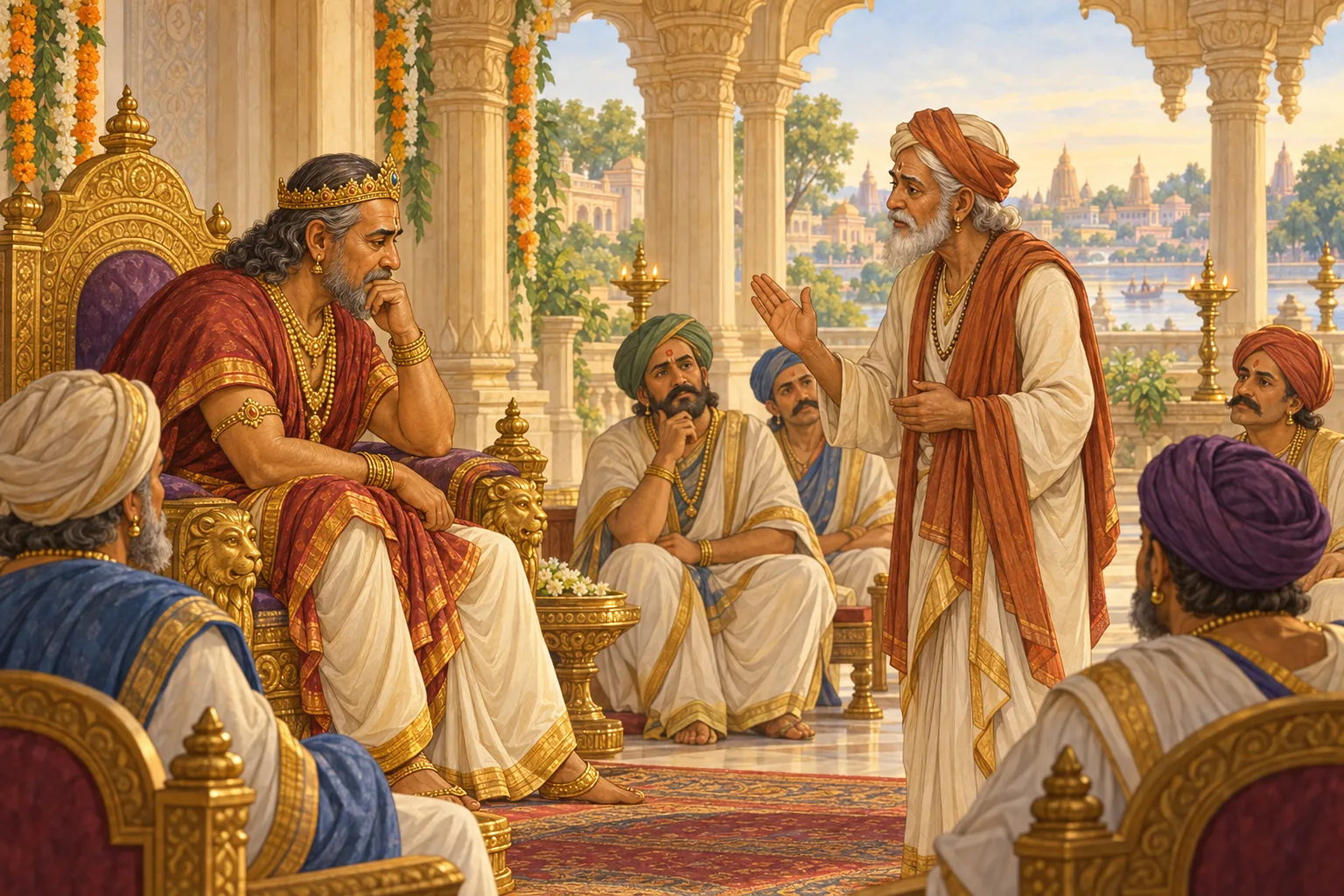
The ministers looked at one another. Then Sumantra, the charioteer who had served the king longest, remembered something he had carried for years without needing it.
"There is a word I heard long ago," he said. "The sage Sanatkumara spoke of a time to come. He said that when this house had no heir, a young sage named Rishyasringa would come, and children would follow."
"Who is he?" Dasharatha asked.
So Sumantra told it. Rishyasringa was the son of Sage Vibhandaka. His whole life had passed in his father's forest hermitage — studying, tending the fire, watching the seasons come and go. He had seen almost nothing of the world beyond the trees.
In those same years a terrible drought settled on the neighbouring kingdom of Anga. The sky stayed clear for months. Wells sank, fields cracked open, and King Romapada ran out of remedies. His counsellors told him that if the young sage would set foot in the kingdom, the earth might drink again.
Rishyasringa came. And the rain came with him.
Romapada welcomed him with great honour, and in time gave him his daughter Shanta in marriage.
Years later, when Dasharatha needed guidance for his own ceremonies, this was the story he remembered. He did not send a messenger. He went to Anga himself.
Romapada embraced his old friend. Dasharatha asked plainly for what he needed and why. Then he invited both Rishyasringa and Shanta to come to Ayodhya.
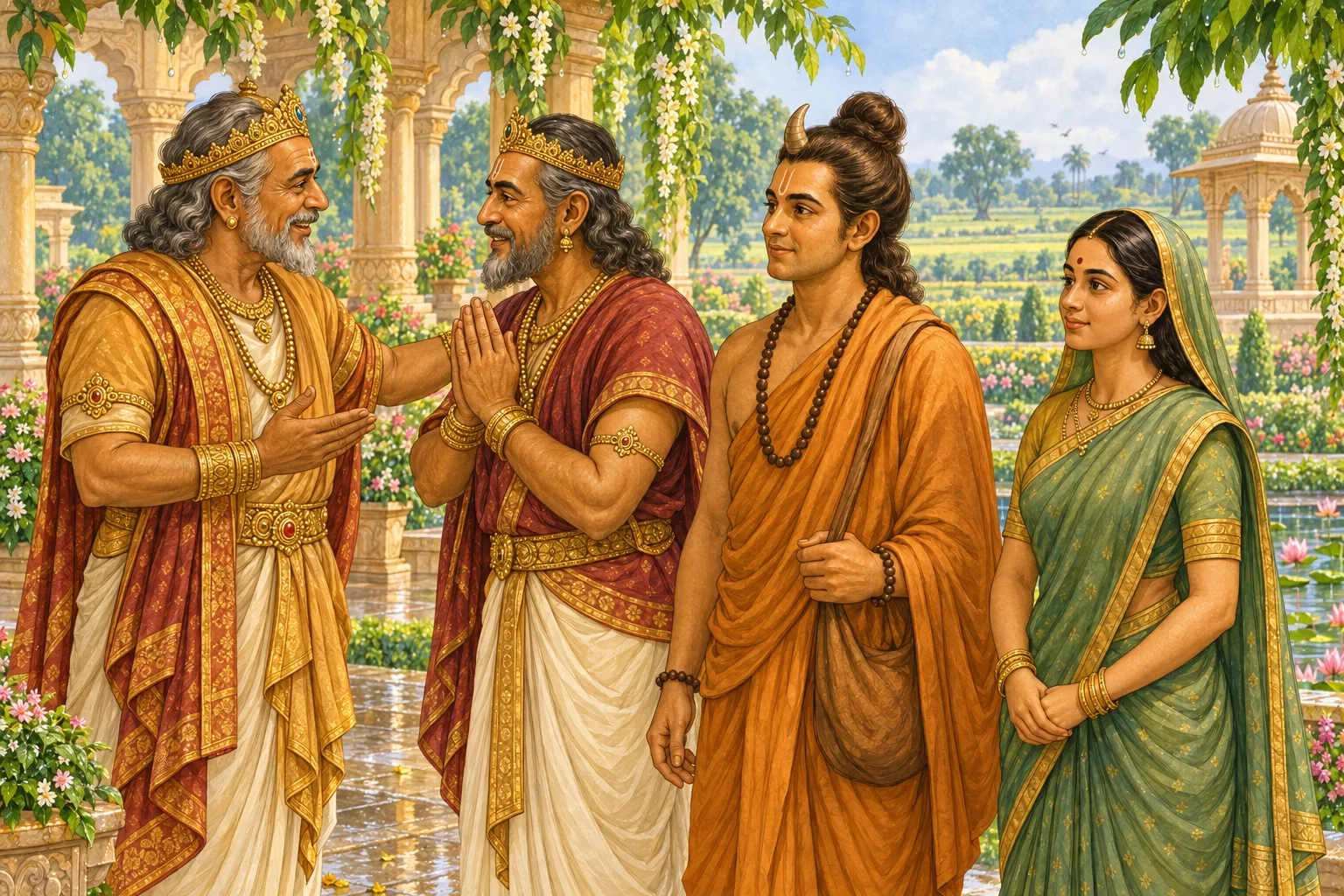
They accepted. Ayodhya welcomed them warmly.
Rishyasringa agreed to guide the ceremonies. Preparations began for an ashvamedha — an ancient royal rite centred on a consecrated horse — to be followed by a rite seeking children.
The ceremonial ground was laid out on the northern bank of the Sarayu. Messengers went out to rulers, relatives, teachers, and guests. Lodging and food were arranged not only for honoured visitors but for the many people whose labour made the gathering possible, and Dasharatha saw to that himself.
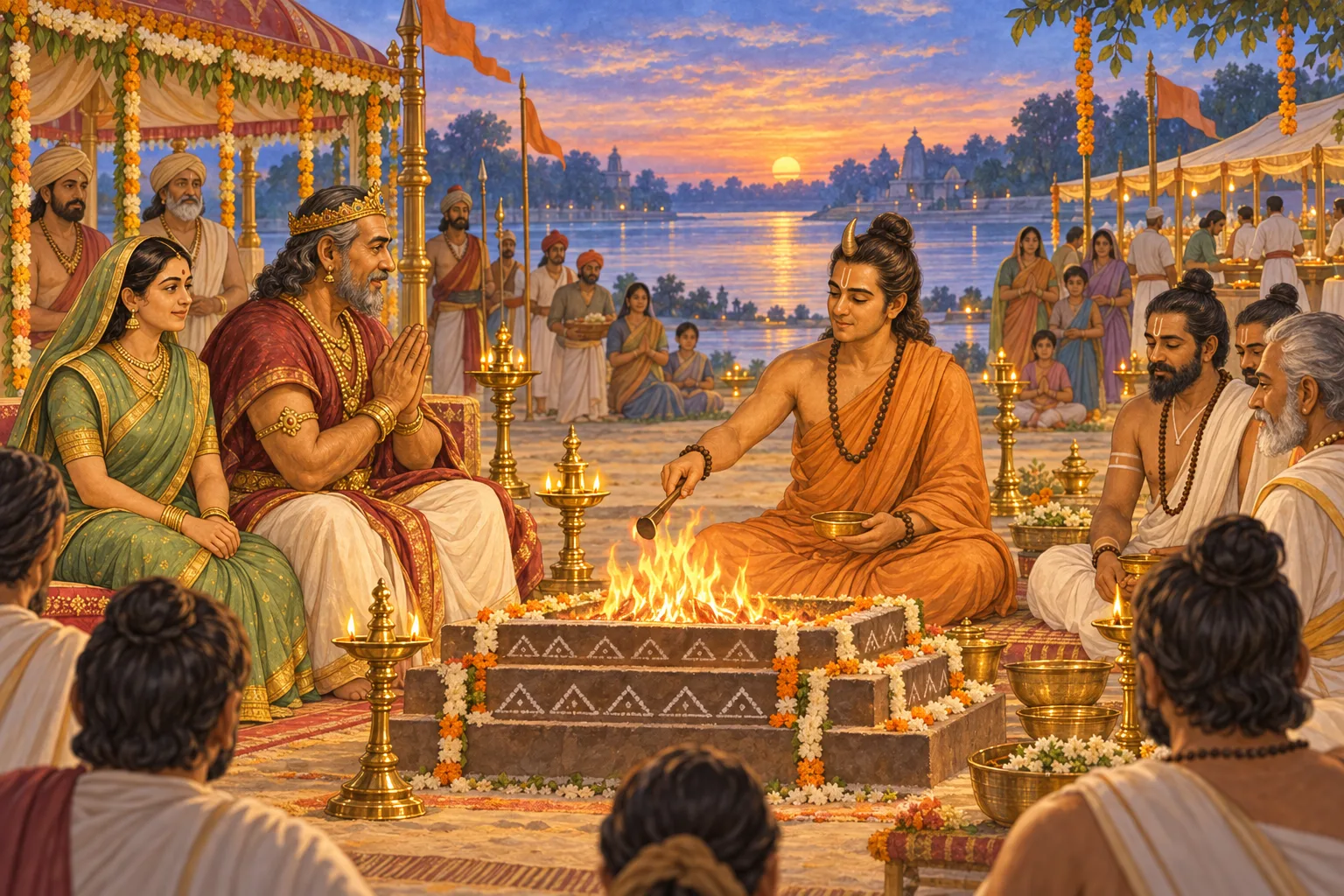
Fires burned. Offerings were made, verses were recited, gifts were given, and learned guests debated late into the evenings. This was no private wish made in a quiet room; it was a great royal undertaking.
The fire on the Sarayu bank burned through the night. Ayodhya waited — and far from Ayodhya, at that same hour, the devas were carrying a trouble of their own to Brahma.
“Asking for help is not weakness; it is how a hope too large for one person finally begins.”
New stories in your inbox
One story every week, and a special tale on festivals. Free, always.
Your email goes to our newsletter provider (beehiiv) so we can send you stories. It is not linked to any child's reading on this site. Unsubscribe any time from the email footer.