Sampati Reveals Lanka
Ramayana
The southern searchers sat above the sea with no clear way forward. Their deadline had passed, the ocean blocked the horizon, and Angada feared returning without news. As they discussed everything that had brought them there, they spoke of Jatayu—the old vulture-king who had challenged Sita's abductor and given Ram his final message.
From a higher ledge, an enormous aged bird heard the name.
He was Sampati, Jatayu's elder brother. Age and an old injury had kept him on the cliff for many years. When he first saw the exhausted vanaras below, he spoke harshly, and they feared another danger. But the sound of "Jatayu" changed him. He asked to be helped down so he could hear what had happened.
Angada and Hanuman approached carefully. They told Sampati how Ravana had carried Sita away, how Jatayu had ordered him to stop, and how the elderly bird fought although he knew the attacker was stronger. They described how Jatayu fell, lived long enough to guide Ram, and received funeral honour from Ram and Lakshman.
Sampati bowed his head. He had not known when or how his brother died. News brought pain, but it also ended years of uncertainty. The searchers allowed him time to grieve rather than immediately demanding information.
Then Sampati told them why the two brothers had been separated.
When they were young and proud of their wings, Sampati and Jatayu flew higher and higher, competing beneath the sun. The heat became unbearable. Jatayu weakened first. Sampati spread his larger wings above his younger brother and guided him downward, shielding him from the fierce light. Jatayu survived, but Sampati's outer feathers were badly damaged. He fell near the southern mountains and could no longer travel as before.
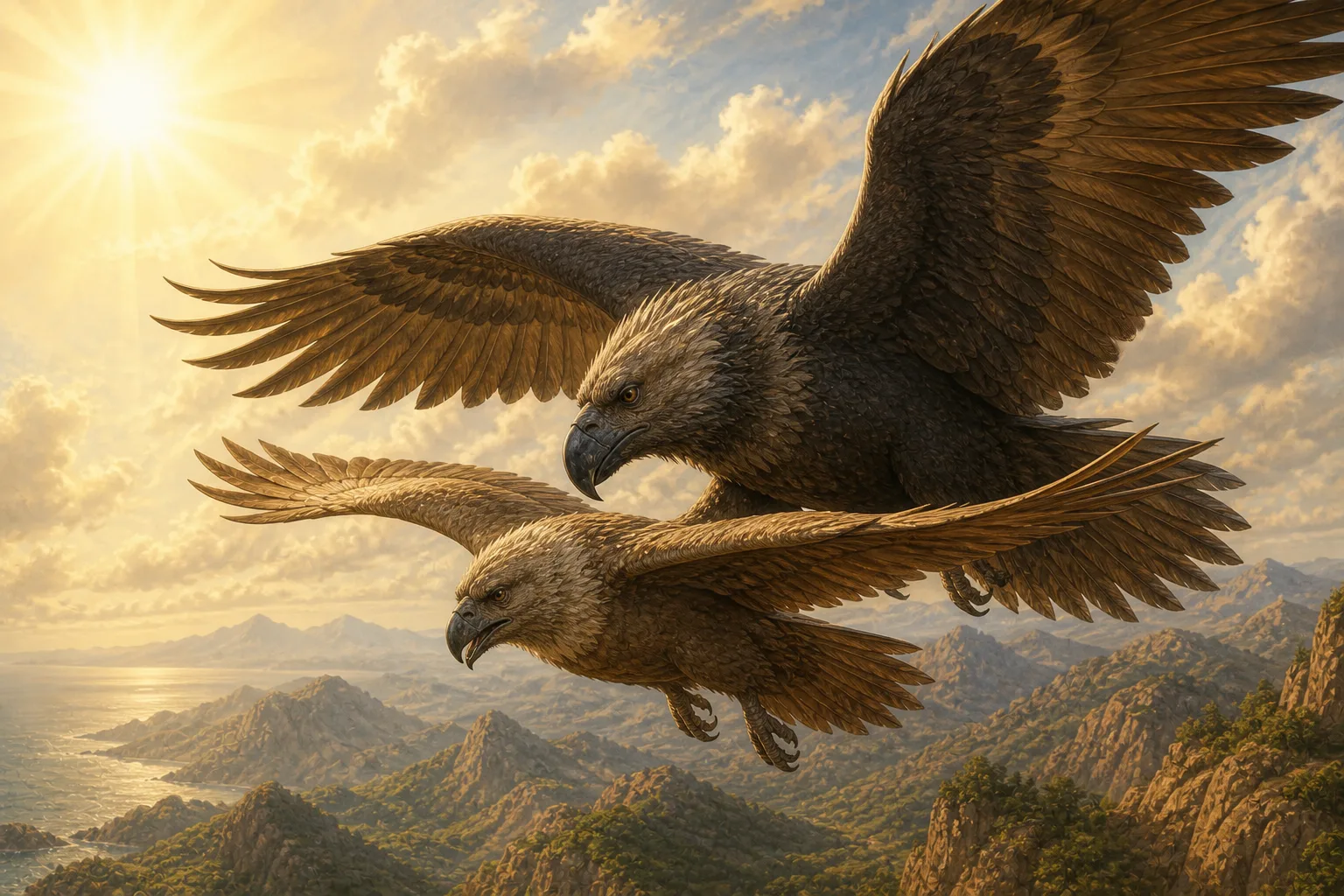
An ascetic named Nishakara had once told Sampati that a time would come when messengers searching for Ram's wife would reach him. By giving them the knowledge they needed, Sampati would fulfil a remaining purpose. Sampati had waited through the years, cared for by his son and sustained by the hope that his sight might still be useful even when his wings were not.
The old vulture's eyes could see across distances that the vanaras could not. He turned toward the southern horizon and studied it.
Across the ocean, he said, lay an island. Upon its mountain stood Lanka, the fortified city ruled by Ravana. Sampati declared that Sita was there, held under guard and continuing to think of Ram. The crossing was vast—a hundred yojanas of open sea—but it was no longer an unknown direction.
The searchers climbed to the clearest point on the cliff. Far beyond ordinary sight, the island lay under the bright sky. Most could not distinguish its walls, but Sampati described the mountain, city, and shore until they understood where to look.
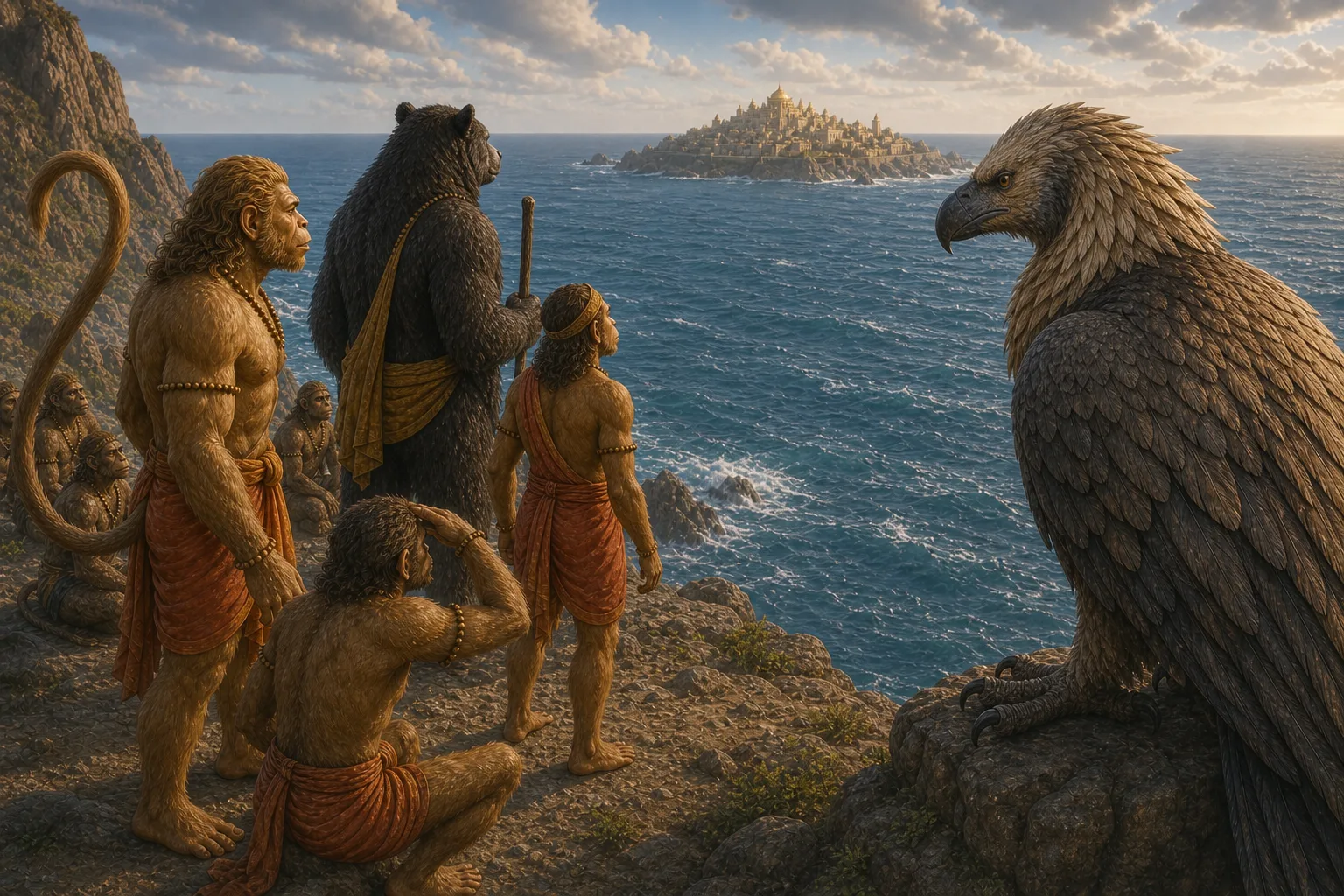
As he finished speaking, new feathers began to grow along Sampati's scorched wings. Nishakara's promise had come true.
He encouraged the party to leave despair behind. Jatayu had used his remaining strength to resist an abduction. Sampati used his remaining sight to guide those who would continue the rescue. The brothers' actions, separated by many years, now joined in the same effort.
Angada and the others no longer spoke of waiting for death. They honoured Sampati, returned to the shore, and began measuring what each member could leap. Their search had reached a precise answer: Sita was alive in Lanka. The next question was who could cross the ocean, enter a guarded city, find her, and return.
Jambavant already knew whom the group had not yet fully considered.
“Grief can become guidance when people listen to one another and use what remains of their strength to help.”
New stories in your inbox
One story every week, and a special tale on festivals. Free, always.
Your email goes to our newsletter provider (beehiiv) so we can send you stories. It is not linked to any child's reading on this site. Unsubscribe any time from the email footer.