Ayodhya and King Dasharatha
Ramayana
Long before Ram walked its streets, Ayodhya stood beside the Sarayu River in the ancient land of Kosala.
It was a great city, founded by Manu and shaped with care across generations. Its roads were broad and regularly tended. Strong gates and walls protected it. Markets offered goods brought by merchants from many places. Musicians, craftspeople, scholars, warriors, farmers, and traders all contributed to its life.
Groves and gardens brought shade and fragrance. Reservoirs held clean water. Horses and elephants were trained for royal service, while cattle and grain supported households throughout the region. Travellers arrived along busy roads, and envoys carried news between courts.
A city like this was never built by a king alone. Behind every shining gate were the hands, skills, decisions, and daily work of many people.
Ayodhya's king was Dasharatha, a descendant of the Ikshvaku line. His name was known in neighbouring lands, and he was respected as a skilled warrior. Yet ruling required more than courage in battle. Each day brought questions about food, safety, justice, alliances, ceremonies, roads, taxes, and the needs of the people.
Dasharatha therefore did not rule alone.
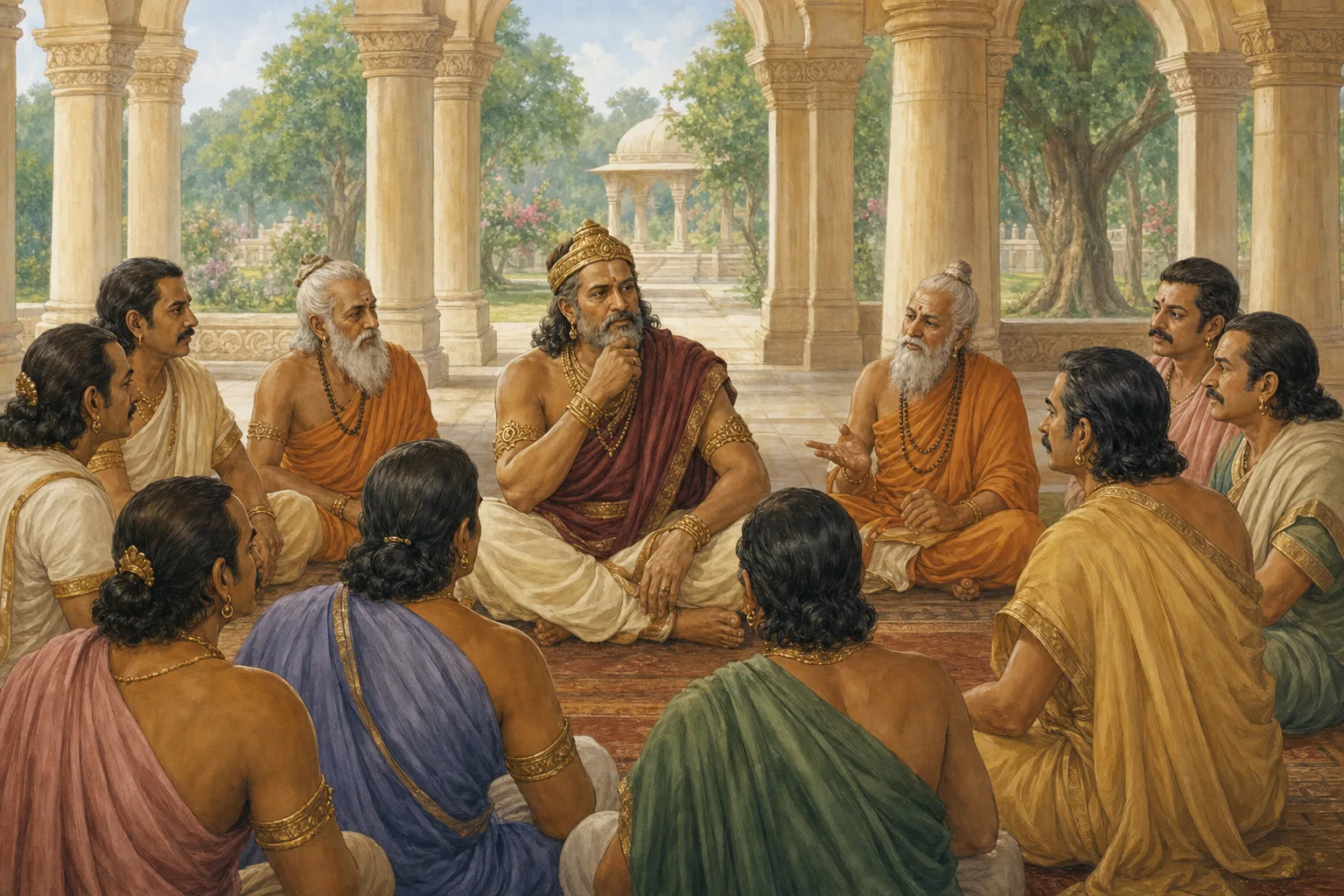
He relied on eight trusted ministers. Their names were Dhrishti, Jayanta, Vijaya, Siddhartha, Arthasadhaka, Ashoka, Mantrapala, and Sumantra. They were expected to understand law and public affairs, keep confidences, gather reliable information, and speak honestly to the king.
The royal priests Vashishtha and Vamadeva advised on learning, ethics, and sacred responsibilities. Other counsellors brought different kinds of experience. Messengers and observers helped the court understand what was happening beyond the palace instead of acting only on rumour.
Good counsel did not mean agreeing with whatever the king already wished to hear. A minister had to consider consequences. A decision that sounded impressive in the council chamber could burden a family, anger an ally, or leave a distant settlement without help. The advisers therefore examined a question from more than one side before action was taken.
Dasharatha also had to judge his advisers by their conduct. Were they truthful? Could they protect private information without hiding wrongdoing? Did they understand both rules and circumstances? Could they resist greed and anger?
The king's household included three principal queens: Kaushalya, Kaikeyi, and Sumitra. Each would become the mother of princes important to the Ramayana. At this point in the story, however, the palace had no children.
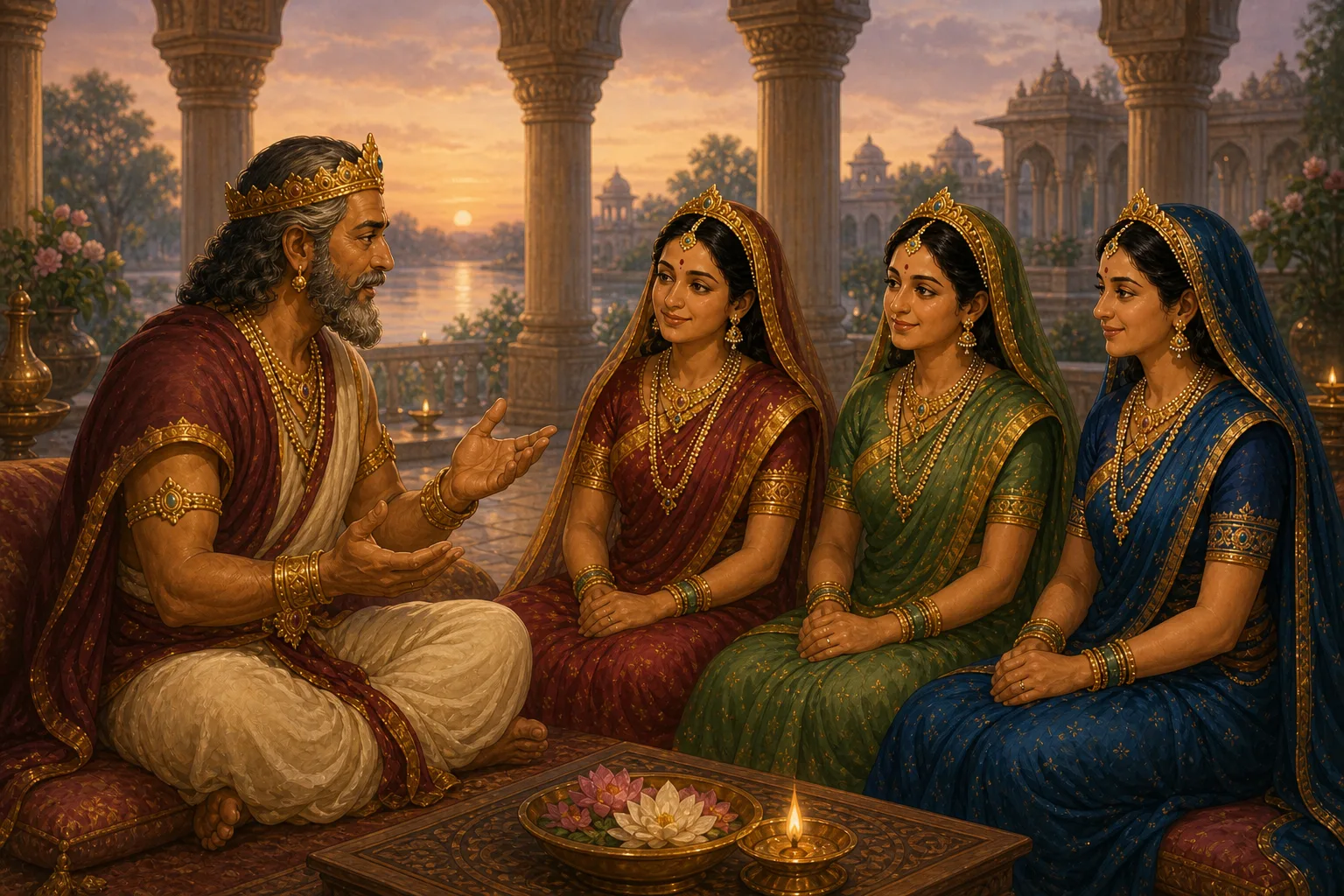
This sorrow followed Dasharatha even through busy days of court. He could inspect an army, welcome an envoy, or hear a well-reasoned report, but a private question remained: who would care for the kingdom after him?
His concern was personal, because he longed to be a father. It was also political. If no heir was ready, rivalry or unrest could follow. The stability praised in Ayodhya's streets might not last unless the future was prepared for.
The king grew older. Wealth, reputation, and loyal ministers could not answer the longing in his home.
At last Dasharatha brought the matter before his advisers and teachers. He did not hide behind royal pride. He acknowledged what troubled him and asked what should be done.
The answer would lead to a great ceremony, the arrival of the sage Rishyasringa, and the births of four sons. It would also connect the hopes of one household to events unfolding far beyond Ayodhya.
For now, the city waited beside the Sarayu.
“A flourishing community depends on shared work, wise counsel, and care for the future.”
New stories in your inbox
One story every week, and a special tale on festivals. Free, always.
Your email goes to our newsletter provider (beehiiv) so we can send you stories. It is not linked to any child's reading on this site. Unsubscribe any time from the email footer.