Ram Spares Ravana
Ramayana
The garuda's arrival had freed Ram and Lakshman from the serpent-arrows, and the war Ravana thought already won had turned against him. Furious, he sent his commanders out one after another to hold the field.
Dhumraksha came first, and Hanuman defeated him. Vajradamshtra fell before Angada. Akampana drove hard into the vanara ranks until Hanuman met him and struck him down as well. Then the commander Prahasta marched out with a great force of his own — Nila stopped his advance and killed him with a single heavy rock. Every victory cost both armies dearly, and still Lanka's gates kept opening.
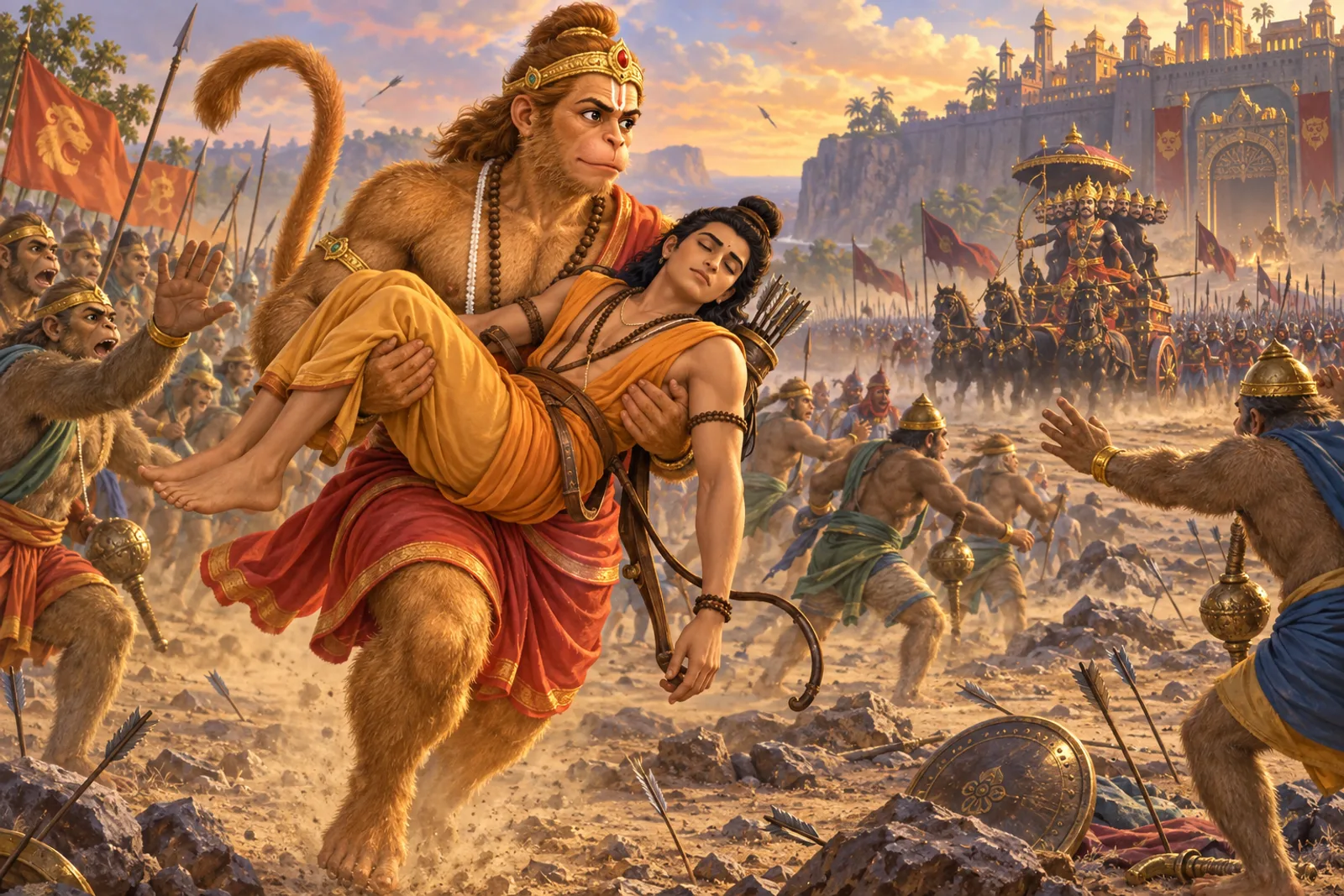
At last Ravana entered the field himself, his chariot and banner and armour all shining. His arrows found Sugriva and many other vanara warriors. Hanuman reached his chariot and traded blow for blow with him. Then Lakshman stepped into the fight and challenged Ravana directly — and a weapon of terrible power struck him down where he stood. Hanuman lifted him at once and carried him away to safety.
Ram came forward next. Hanuman lifted him onto his own shoulders, so that he could face the chariot-warrior at equal height rather than looking up at him. Ram's arrows cut Ravana's bow apart, broke his chariot to pieces, drove off his horses and his charioteer, and knocked the crown from his head. Ravana stood before him at last — exhausted, unarmed, and alone.
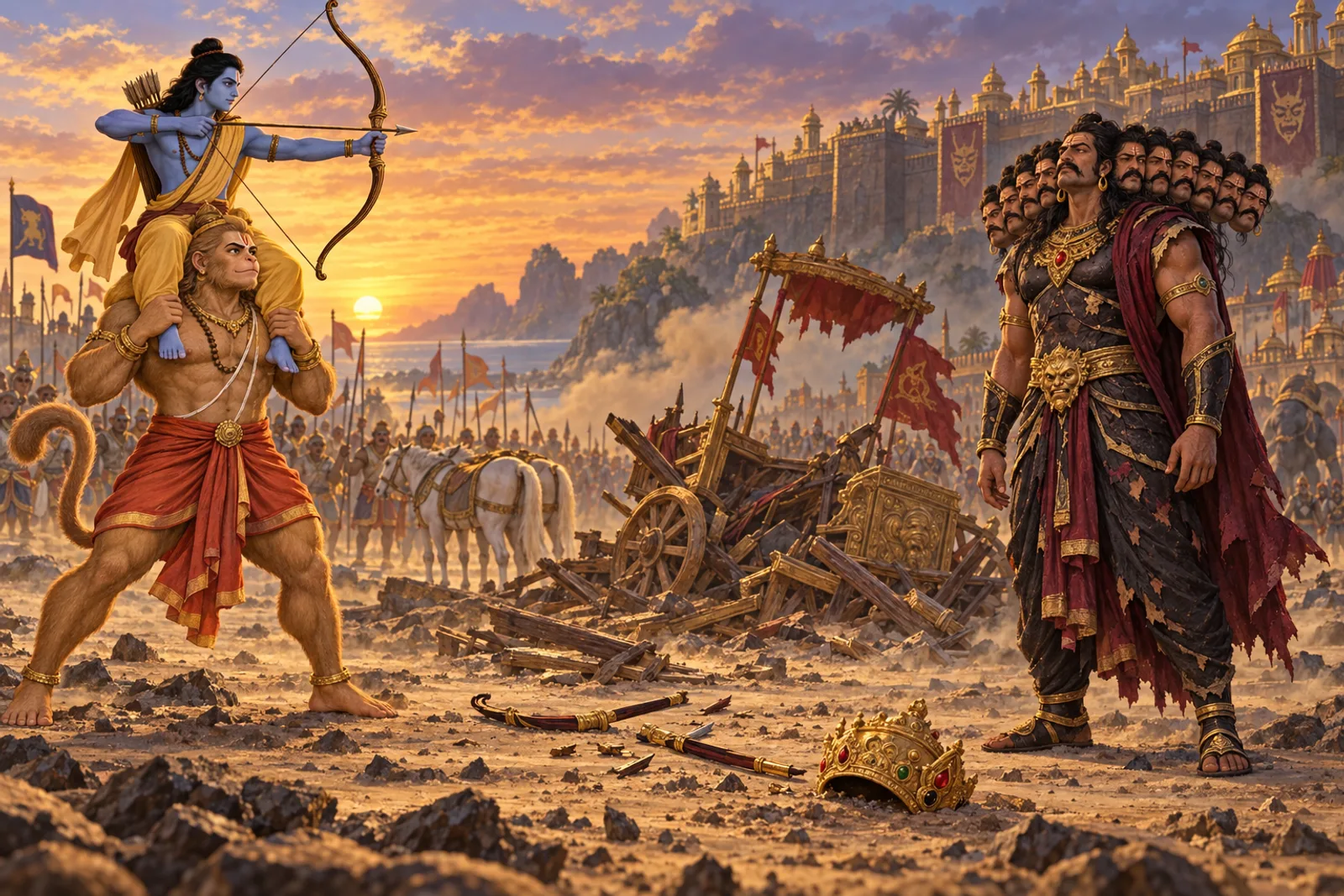
Ram could have ended it there. Instead he told Ravana plainly that he was worn out and had lost every weapon in his hand — and let him go. "Go," he said. "Rest. Come again tomorrow." It was not forgiveness for what had been done, and it did not end the war; Ram knew perfectly well that Ravana would arm himself again by morning. But he would not turn a fair victory into a blow against a man who could no longer defend himself.
Ravana walked back into Lanka in humiliation, already thinking of who was left to send against Ram next — the one brother whose very sleep made the whole city tremble.
“A fair victory does not need to become a blow against someone who can no longer defend themselves.”
New stories in your inbox
One story every week, and a special tale on festivals. Free, always.
Your email goes to our newsletter provider (beehiiv) so we can send you stories. It is not linked to any child's reading on this site. Unsubscribe any time from the email footer.