Bharat Refuses the Throne
Ramayana
In Kekaya, Bharat had awakened from a troubling dream. Just then messengers arrived from Ayodhya with Vashishtha's command that he return immediately. Following their instructions, they did not reveal the exile or Dasharatha's death, even when questioned. Bharat asked after his father, Ram, Lakshman, and the whole family. Their guarded replies increased his unease, but he and Shatrughna began the long journey without delay.
As they approached Ayodhya, Bharat did not see the city he knew. The roads lacked their usual activity, music was absent, and people kept their faces lowered. No father came to receive him at the palace. He searched Dasharatha's rooms and then went to his mother Kaikeyi. She told him that the king had died. Bharat collapsed in grief and asked what his father had said in his final hours.
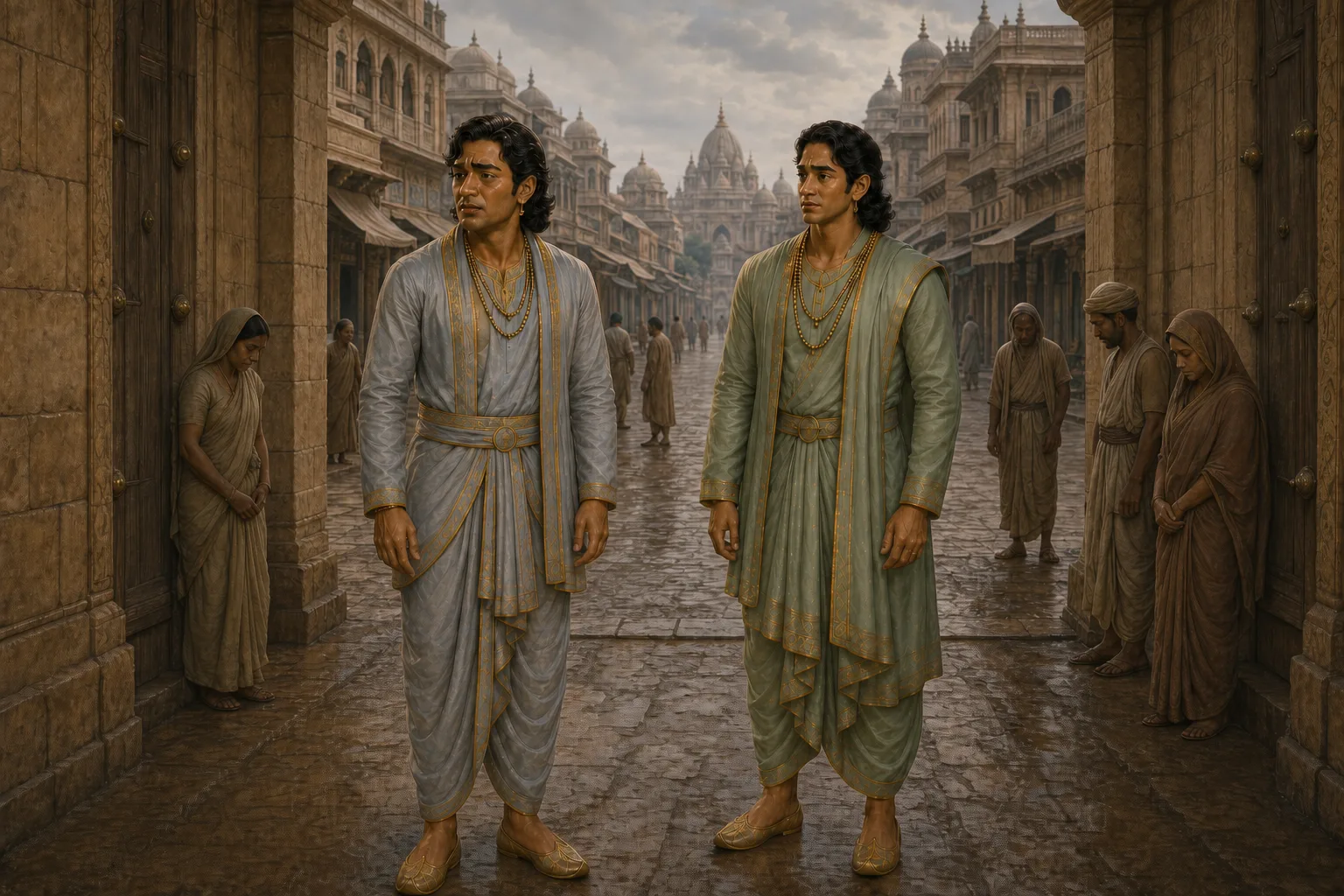
Kaikeyi then explained that Ram had gone to the forest for fourteen years and that Bharat could now take the kingdom. She expected her son to accept the future she believed she had secured for him. Bharat was horrified. He asked what crime Ram had committed. When he learned the full account of the boons and exile, grief became anger. He made clear that he had requested neither the boon nor Ram's place.
Bharat addressed Kaikeyi with severe words. Some of those words, spoken in grief, wounded more than they needed to. But Bharat would not take what her plan had won for him.
Shatrughna's anger turned toward Manthara, and for a moment she was in danger of physical harm. Bharat intervened. Violence would not bring Ram home, and a new injustice could not repair an earlier one.
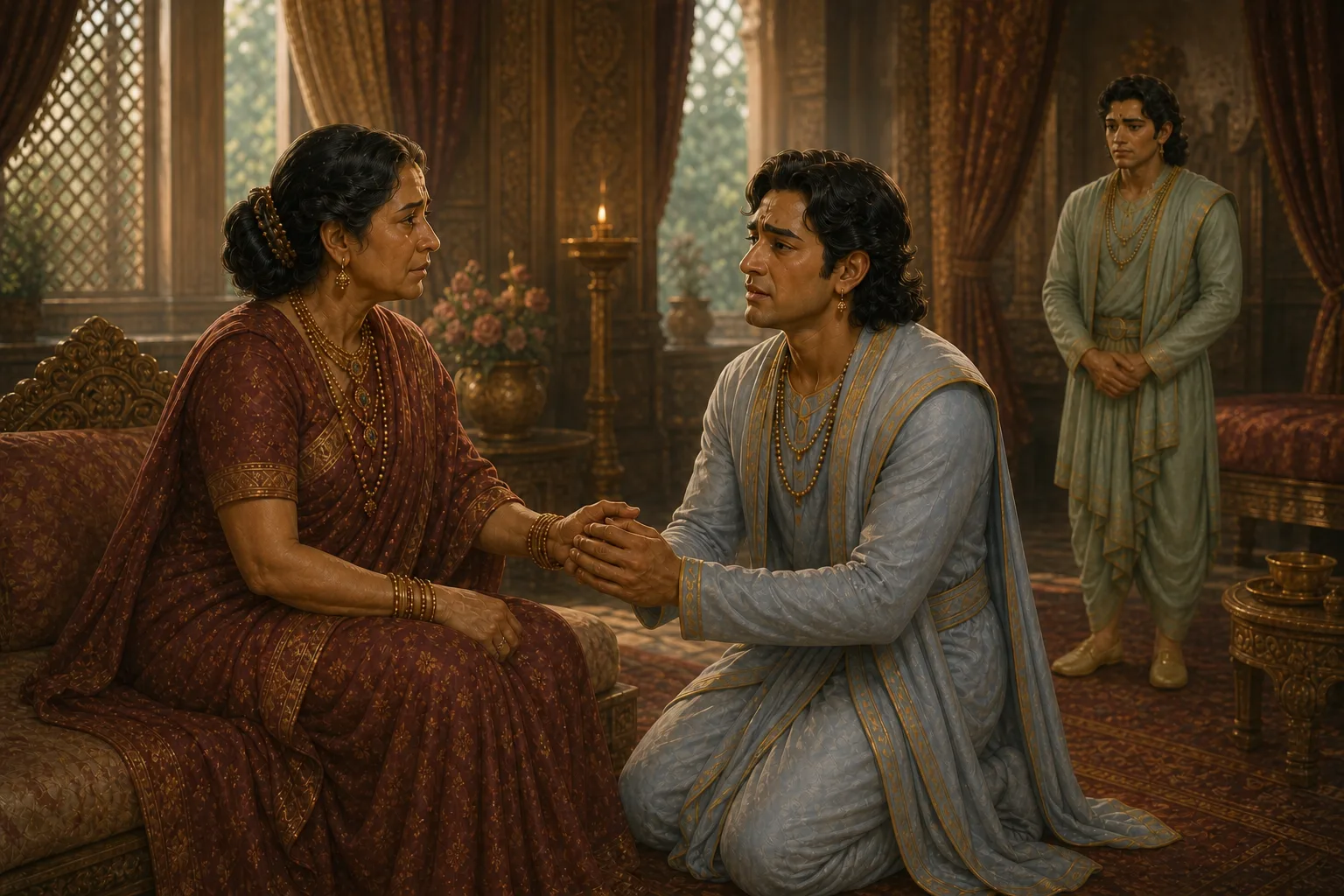
Bharat next went to Kaushalya. At first she feared that he might have known about the plan. Bharat solemnly declared that he had taken no part in it and wished to bring Ram back. Kaushalya recognized his grief and sincerity. Instead of continuing to suspect each other, they mourned together for Dasharatha and for the family in the forest.
Vashishtha asked Bharat to perform his father's funeral responsibilities. The rites took place beside the Sarayu according to the ancient customs. The family and city observed days of mourning. Meanwhile, the ministers and council handled necessary affairs.
After the mourning period, an assembly was called. Ministers and leading residents asked Bharat to take charge of the kingdom. He answered that Ram, the eldest son, was alive and that he would not accept a throne obtained through Ram's exile. He announced that he would go to the forest and ask Ram to return. If Ram still insisted on completing their father's promise, Bharat was even willing to take his place in exile.
Bharat ordered roads cleared and arrangements made for bridges, resting places, and provisions. This was not preparation to challenge Ram with an army. The mothers, teachers, ministers, and many citizens wished to come so that the request would represent the family and Ayodhya together. Shatrughna stood beside him. At dawn, the great company would begin moving toward Chitrakuta. Bharat was not setting out to become king. He was going to bring his elder brother home.
“We are not bound to accept an advantage created by another person's harmful choice; we can refuse it and work to repair the harm.”
New stories in your inbox
One story every week, and a special tale on festivals. Free, always.
Your email goes to our newsletter provider (beehiiv) so we can send you stories. It is not linked to any child's reading on this site. Unsubscribe any time from the email footer.