Vali Falls
Ramayana
Sugriva had been driven back once already from the gates of Kishkindha, wounded and afraid, wearing a flowering garland Lakshman had tied around his neck so that Ram would know which brother to spare. Now he stood at the gates a second time, calling his brother Vali out to fight again.
Inside, Tara asked him to wait. She had learned that Sugriva had found new allies — Ram and Lakshman of Ayodhya, exiled princes with a fearsome reputation — and she reasoned that no brother returned so soon after such a defeat without real confidence behind him. "Make peace with him," she said. "Name him your heir, and let this end without a second fight you don't yet understand."
Vali did not dismiss her. He told her plainly that he trusted her judgement and did not believe Ram would strike at a man who had never challenged him. But pride answered louder than caution. He said he meant only to finish what Sugriva had started, and went out through the gate.
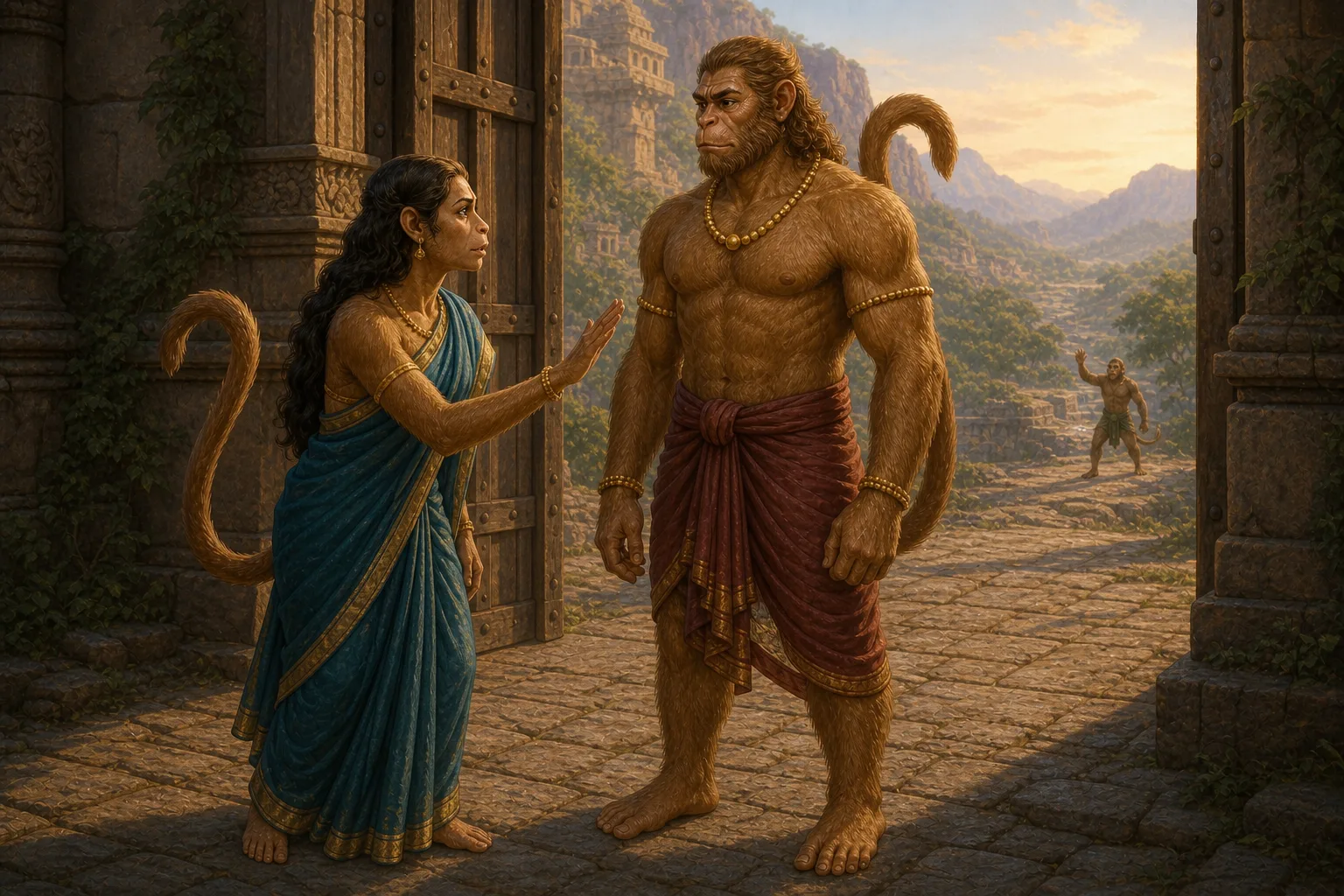
The brothers fought again in the clearing outside the city. This time Ram, watching from among the trees, could tell them apart by the garland, and he loosed a single arrow. It struck Vali and ended the fight before Vali had ever seen him standing there.
Vali had breath enough left to ask why. Famous for his sense of right, Ram had struck him from hiding, in a battle Vali had not brought to Ayodhya's door. If Ram had needed help finding Sita, Vali said, he had only to ask — he might have found Ravana himself. Why judge him and strike him down without ever speaking first?
Ram answered that his family's authority held in the forest as it did in the city, and that Bharat now carried it in his name. He said Vali had wronged Sugriva by keeping his wife Ruma from him and driving him into exile, and that a hunter tracking dangerous prey through the forest was not bound to announce every arrow in advance.
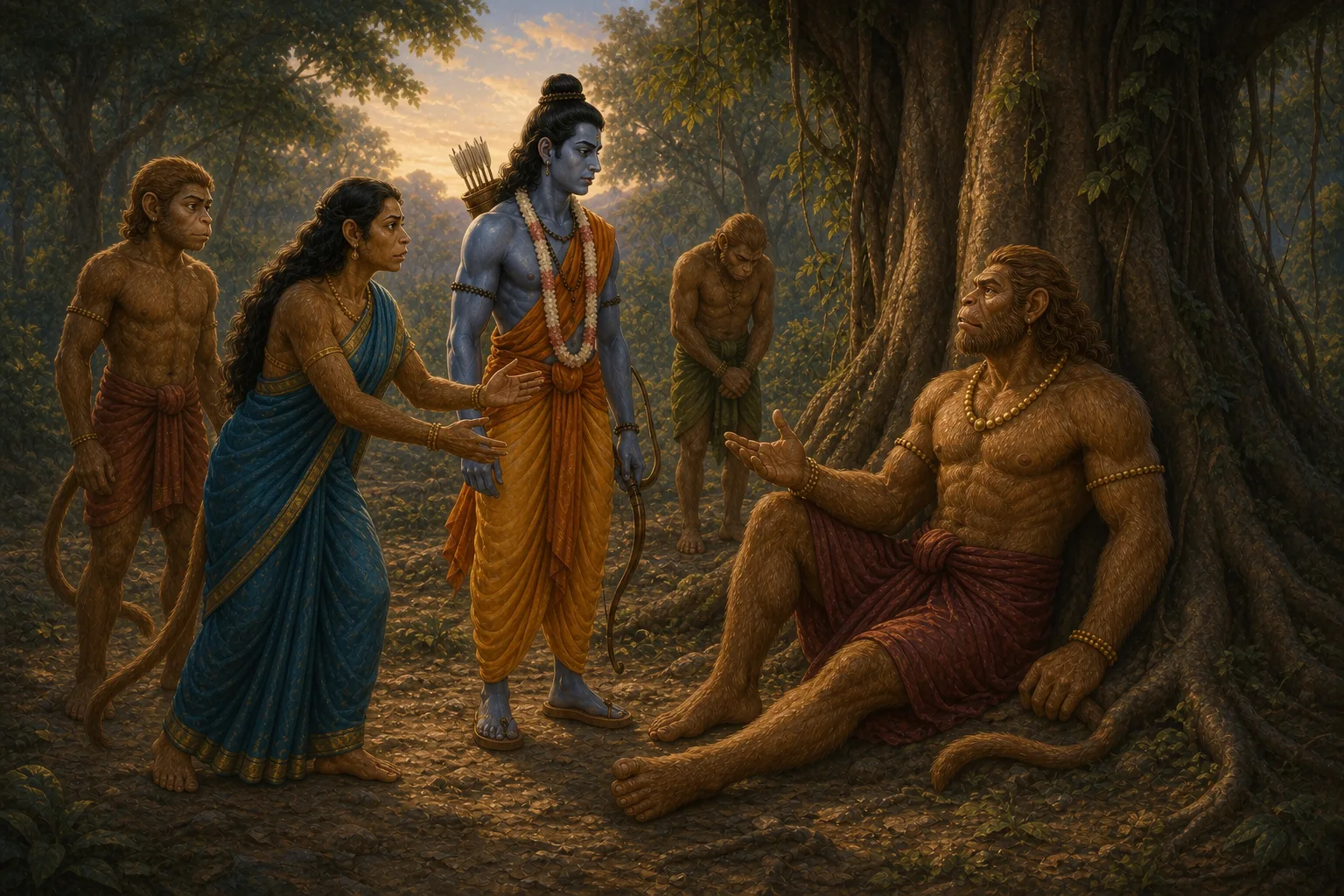
Vali listened to all of it. He did not take back his question. But his anger eased as his strength failed, and his thoughts turned to what would come after him. He asked Ram and Sugriva to look after his son Angada, still young for the weight he was about to inherit. He asked that Tara's counsel be honoured, not set aside. Then he took the gold chain from his own neck and placed it around Sugriva's — and asked him not to let the same suspicion divide them the way it had divided their own house.
Tara reached the clearing with Angada close behind her. She had warned against exactly this, and now it lay in front of her. Her grief was plain and total — for Vali, for Angada's sudden inheritance, for the whole shape of Kishkindha about to change — and no words from anyone standing there could make it smaller.
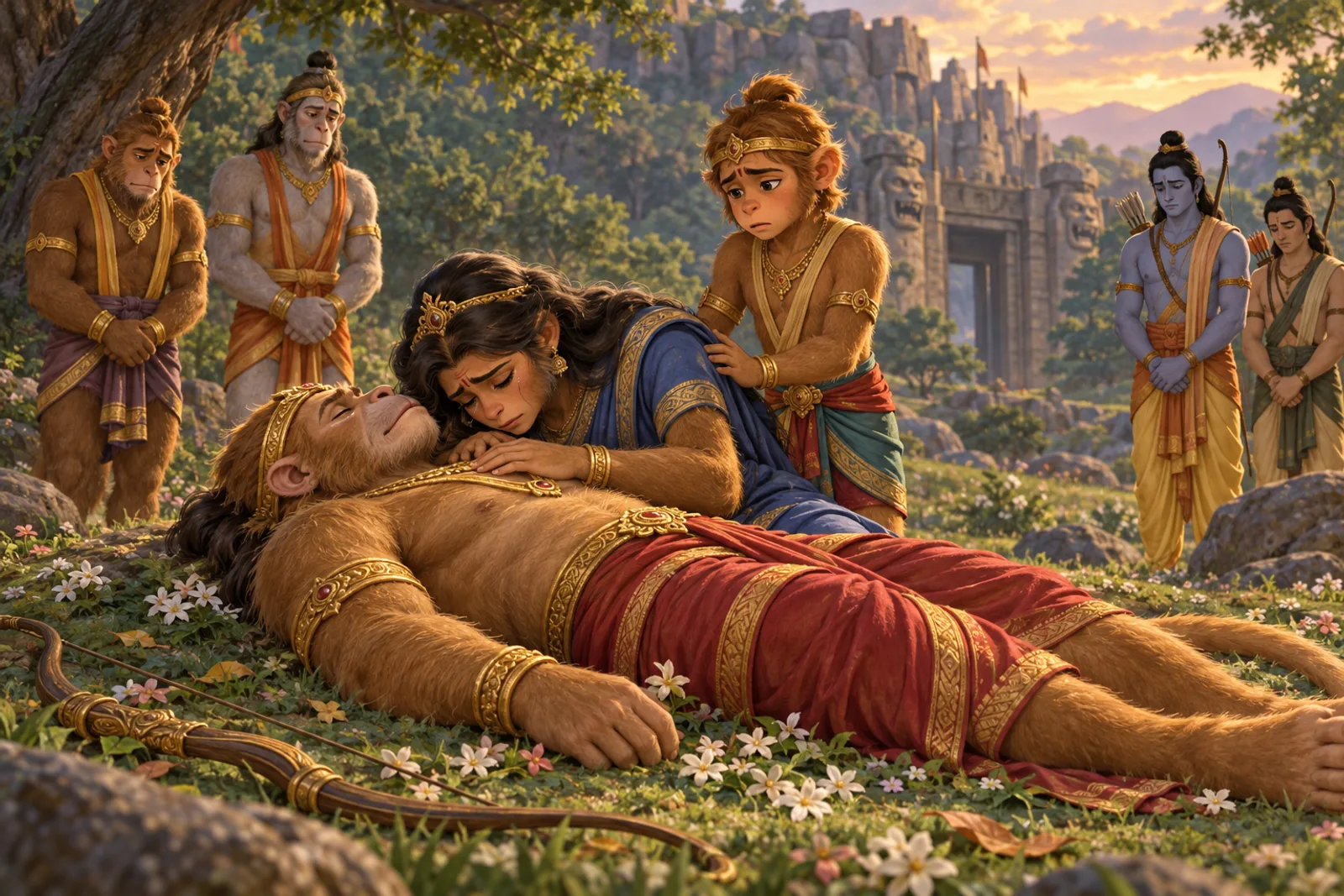
Kishkindha buried Vali with full honour, Tara and Angada and Sugriva and Hanuman walking together through the mourning. Then Sugriva was crowned, and Angada named beside him as heir — not as a replacement for his father, but as the one thing of Vali's that the kingdom still had left to protect.
Ram did not enter the city; his exile did not allow it. He and Lakshman waited outside its walls for the rains to end and Sugriva's promised search to begin. A kingdom had been mended. But it had been mended over a grave, and everyone in Kishkindha knew whose.
“A promise kept for the living matters most in how it is carried out after someone is gone.”
New stories in your inbox
One story every week, and a special tale on festivals. Free, always.
Your email goes to our newsletter provider (beehiiv) so we can send you stories. It is not linked to any child's reading on this site. Unsubscribe any time from the email footer.