Sita in the Ashoka Grove
Ramayana
Hidden in the branches of the shimshapa tree, Hanuman watched the woman below. Her sari was worn, her hair was tied without royal care, and grief had made her thin. Yet her bearing recalled everything Ram had said of Sita. She guarded his memory as carefully as Hanuman guarded the ring entrusted to him.
He looked for evidence rather than trusting resemblance alone. The ornaments she still wore matched those Ram had described; others were missing, like the jewels dropped during the abduction. She spoke Ram's name in sorrow. Hanuman became increasingly certain that the long search had ended.
Before he could decide how to approach, Ravana entered the grove with attendants. He praised Sita, offered wealth and rank, and pressed her to accept him. Sita turned away. Placing a blade of grass between them as a boundary, she told him that she was Ram's wife and would not consent.
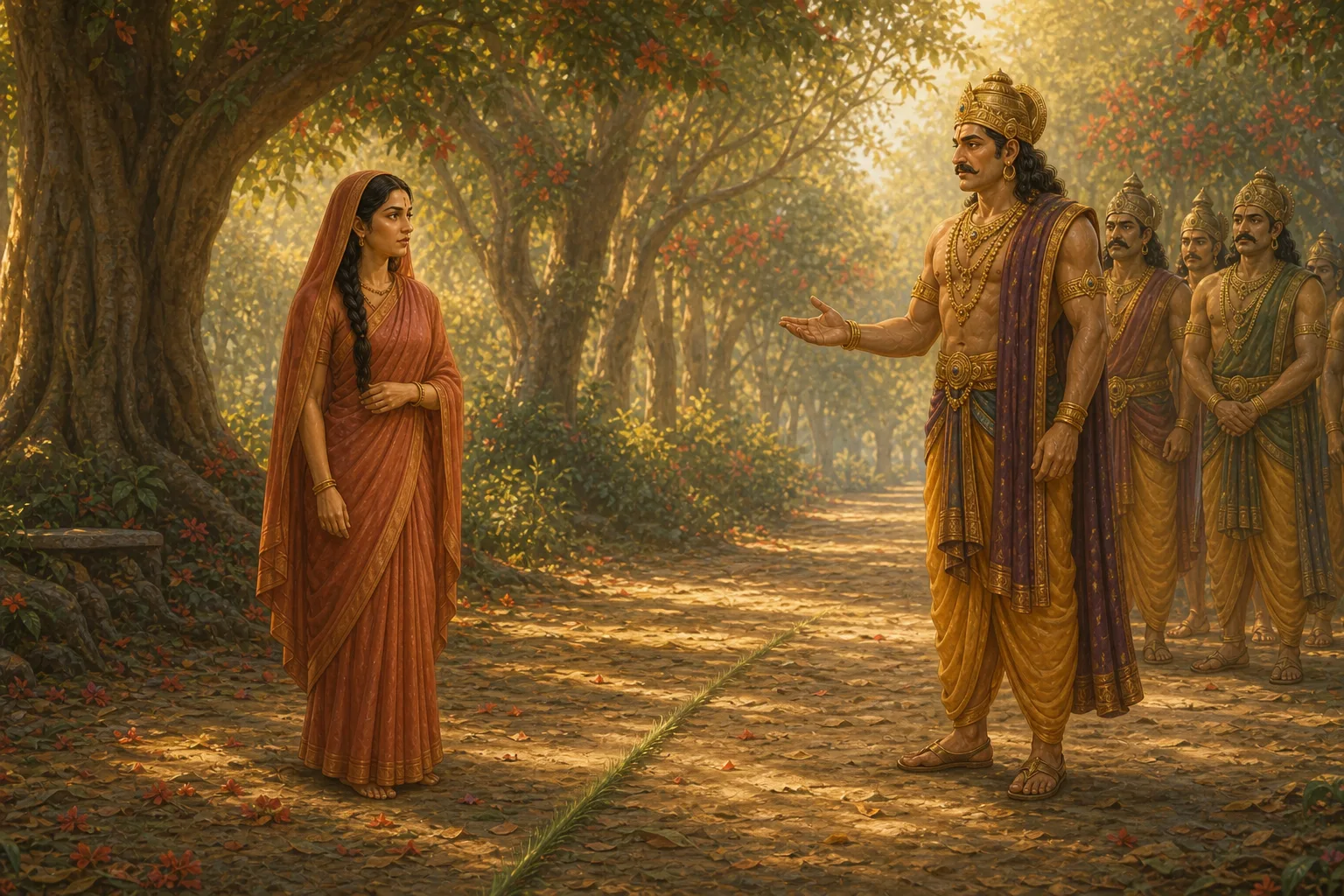
She urged Ravana to return her and seek peace before his choices destroyed him and Lanka. Ravana answered in anger, imposed a deadline, and threatened her life if she continued to refuse. Sita did not change her answer.
When Ravana left, several guards tried to frighten Sita into yielding. Others argued that threats would not change her mind. Sita remained firm, though firmness did not make her free from fear or exhaustion.
Alone again among hostile voices, Sita's despair became severe. She wondered whether Ram knew where she was, whether rescue could cross the sea, and how long she could endure. For a brief moment, she considered ending her life.
An elderly guard named Trijata awoke and stopped the others. She had dreamed of Ram and Lakshman approaching in victory, of Sita restored to safety, and of Ravana's power collapsing. Trijata took the dream as a warning, and told the others to treat Sita with respect.
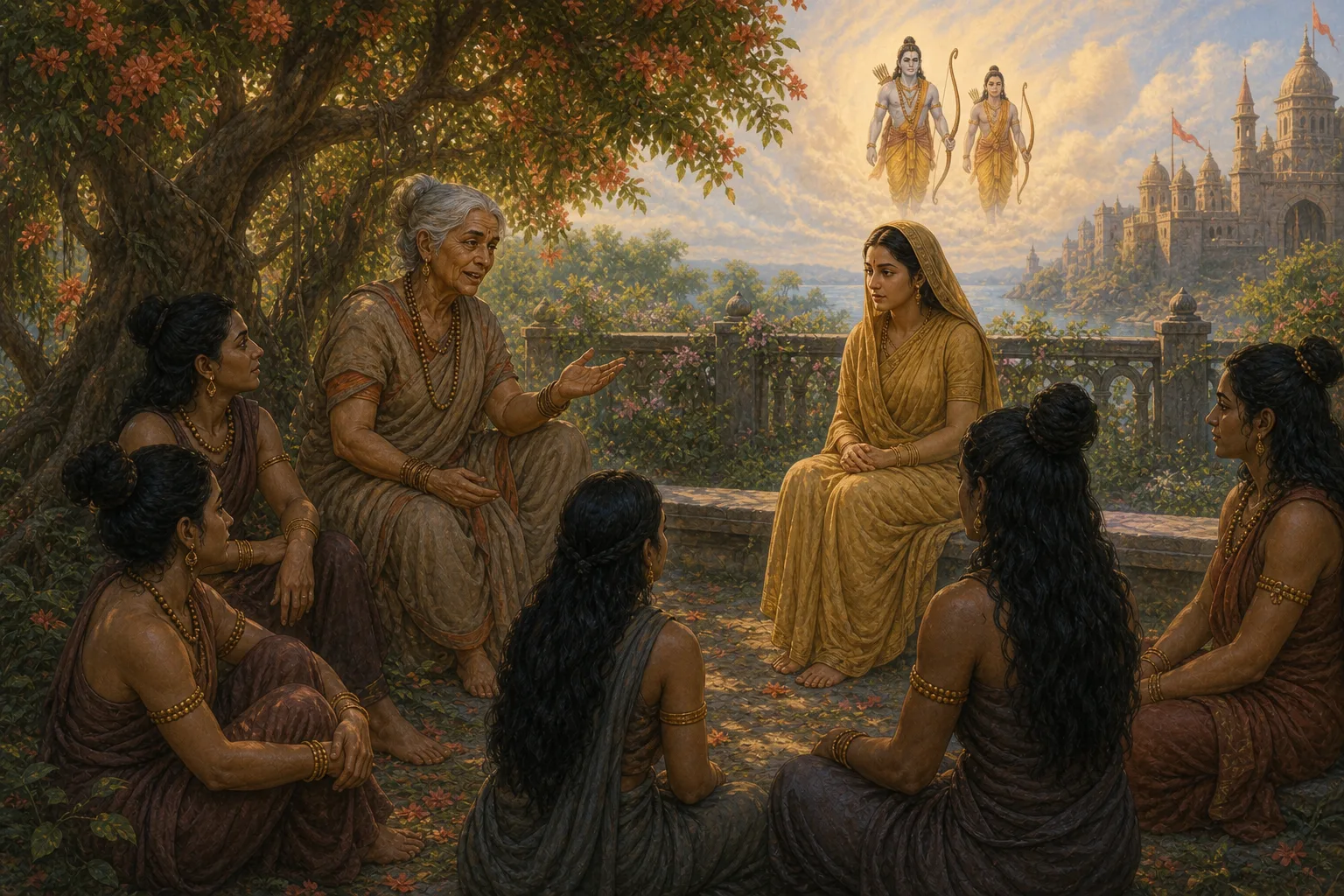
Unknown to her, help was already in the tree above. Hanuman had heard her name Ram, heard Ravana's demands, and seen her resistance. He now possessed the evidence needed to identify her.
But approaching her remained dangerous. A strange vanara speaking suddenly from darkness could frighten her. Ravana could send shape-shifting spies. If Sita cried out, the guards might seize Hanuman before he delivered Ram's message. If he spoke Sanskrit in the manner of a learned courtier, she might suspect Ravana in disguise; if he spoke carelessly, she might not trust him.
Hanuman decided to begin indirectly. From concealment he would softly tell the story of Dasharatha, Ram's exile, Sita's abduction, the alliance with Sugriva, and the search that had crossed the sea. These were facts a hostile stranger would struggle to assemble with sincerity. He would let recognition grow before showing himself.
“Captivity can restrict a person's movement without taking away their judgment, dignity, or right to refuse.”
New stories in your inbox
One story every week, and a special tale on festivals. Free, always.
Your email goes to our newsletter provider (beehiiv) so we can send you stories. It is not linked to any child's reading on this site. Unsubscribe any time from the email footer.