Shurpanakha and the Battle with Khara
Ramayana
At Panchavati, the cold season was passing quietly. Ram, Sita, and Lakshman lived in their leaf cottage beside the Godavari. One day Shurpanakha, Ravana's sister, came wandering through the region. She could change her appearance and moved through this part of the forest without fear. Seeing Ram with matted hair, forest clothing, and a bow, she asked why three people who looked like royalty were living as ascetics.
Ram introduced himself, Sita, and Lakshman and explained their exile. Shurpanakha named her own family—Ravana, Kumbhakarna, Vibhishana, and her brothers Khara and Dushana, who lived at Janasthana. She then proposed that Ram leave Sita and live with her. Ram answered that he was Sita's husband.
Ram turned the conversation into a joke and directed Shurpanakha toward the unmarried Lakshman. Lakshman answered sarcastically and sent her back toward Ram. Their words confused rather than calmed the encounter. Neither brother had to accept her proposal, but a clear and respectful refusal would have been wiser.
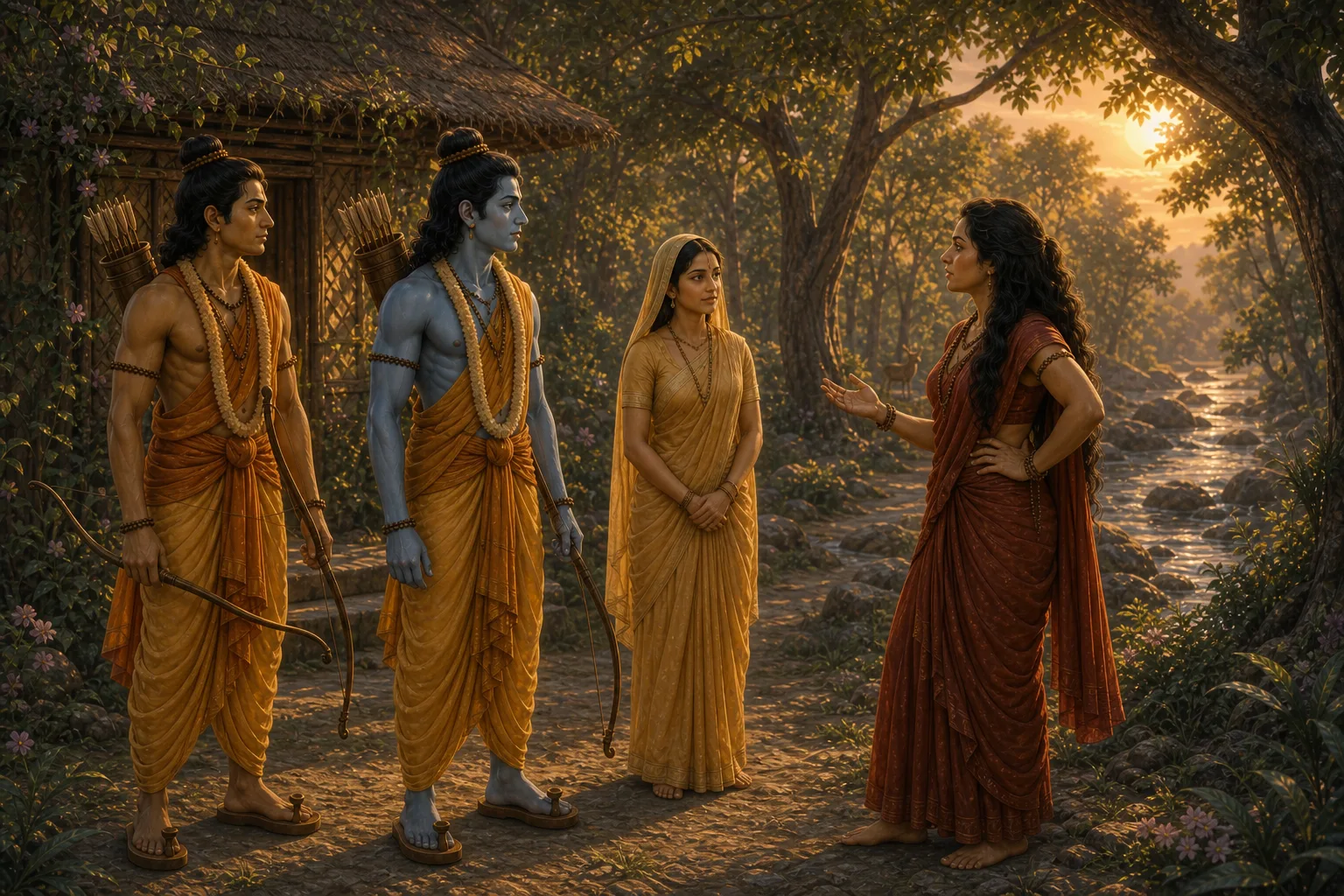
Humiliated and angry, Shurpanakha blamed Sita and rushed at her. Ram told Lakshman to protect Sita. Lakshman stopped Shurpanakha and cut her nose and ears with his sword. The attack on Sita was wrong, but the mockery that preceded it and the disfiguring response that followed deepened the harm instead of ending it.
Wounded, Shurpanakha fled to her brother Khara. She told him about the attack and her humiliation. Enraged, Khara sent fourteen warriors against Ram. Ram placed Sita under Lakshman's protection and defeated the attackers. When Shurpanakha returned, she challenged Khara to go into battle himself.
Khara ordered Dushana to assemble a great force. Dark omens appeared on the road, but anger made him ignore them. Dust rose near Panchavati, and the noise of an approaching army reached the cottage. Ram asked Lakshman to lead Sita to a protected forest shelter while he stood before the attackers. This was no contest arranged to display strength: an organized force had now come to attack their home.
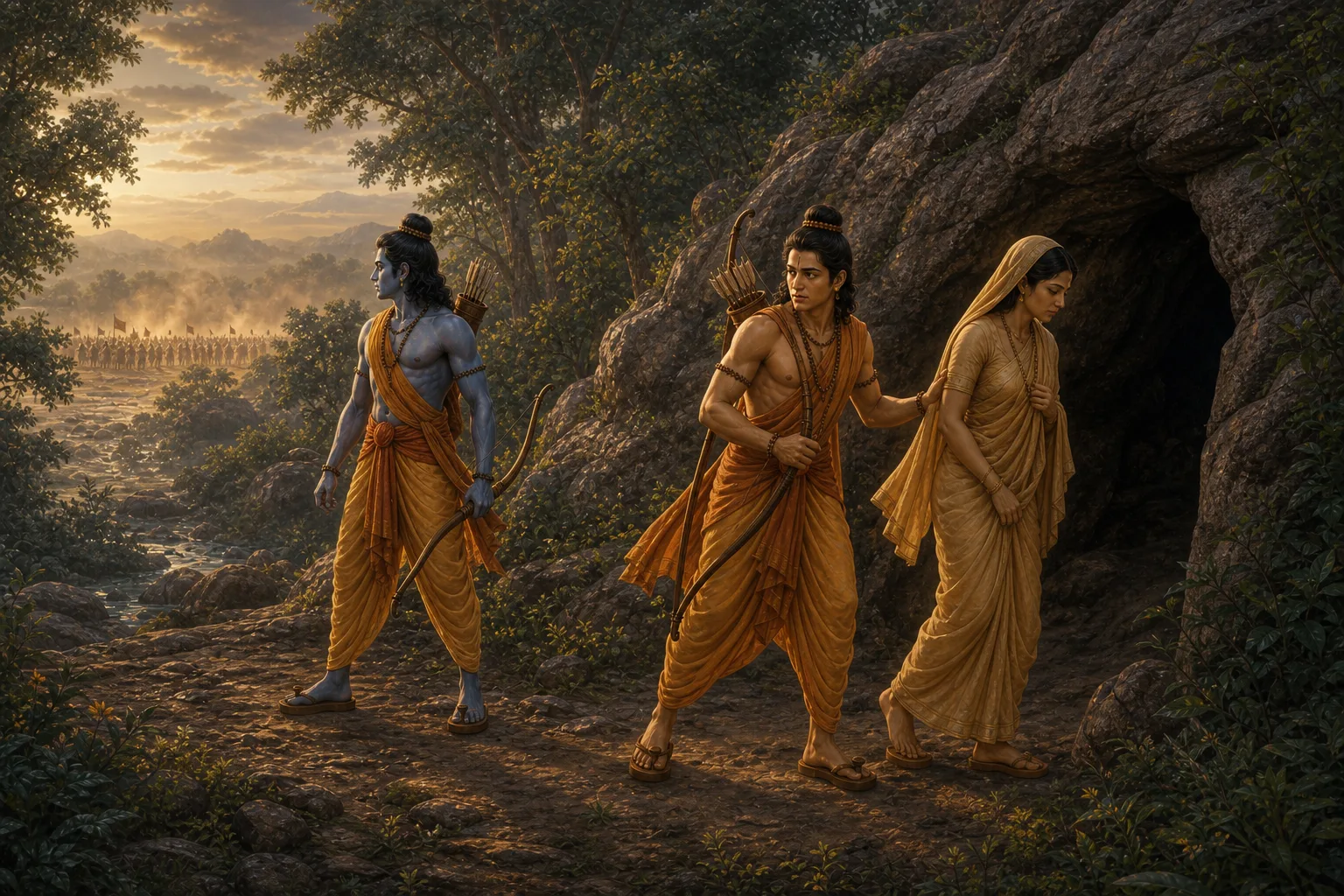
The battle was long and severe. Dushana, Trishira, and other commanders attacked from different directions. Ram broke their weapons and chariots and ultimately defeated the enormous attacking force of fourteen thousand warriors. An encounter that could have ended with a firm refusal had grown through ridicule, injury, revenge, and retaliation into terrible destruction.
At last Khara faced Ram himself. He attacked with a mace and an uprooted tree, while Ram reminded him that assaults upon hermitages and the killing of innocent people carried consequences. Khara too fell in the struggle. Among those who escaped Janasthana was a warrior named Akampana. He travelled toward Lanka, carrying news of the defeat to Ravana.
Panchavati appeared quiet again, but it was not the same quiet as before. Sita emerged safely with Lakshman, and they returned to Ram. The immediate attack had ended, yet another path had opened: word of Khara's defeat would now reach Ravana.
“A boundary should be spoken clearly and firmly; humiliation and retaliation only multiply harm.”
New stories in your inbox
One story every week, and a special tale on festivals. Free, always.
Your email goes to our newsletter provider (beehiiv) so we can send you stories. It is not linked to any child's reading on this site. Unsubscribe any time from the email footer.