Hanuman Before Ravana
Ramayana
Sita's message was safe with him now. But Hanuman knew Ram would need more than news of where she was — he would need to know how Lanka fought. So instead of slipping away quietly, Hanuman decided to be seen.
He ate his fill of fruit in the Ashoka grove and broke apart the trees and structures built around Sita's captivity, leaving only the tree that sheltered her untouched. The guards who rushed at him found him ready. He defeated the first force, then Jambumali, then the ministers' sons and five commanders in turn. Fear spread through Lanka faster than the news of who had caused it.
Ravana sent his young son Aksha next, fast and skilled in a swift chariot, covering the sky with arrows. Hanuman did not treat him lightly for his age — he watched the prince fight with real respect, and looked for a way to end it without killing him. But Aksha pressed the attack harder, and Hanuman understood that a warrior this capable, left standing, would only prolong the danger to everyone else. He broke the chariot, brought the prince down, and killed him.
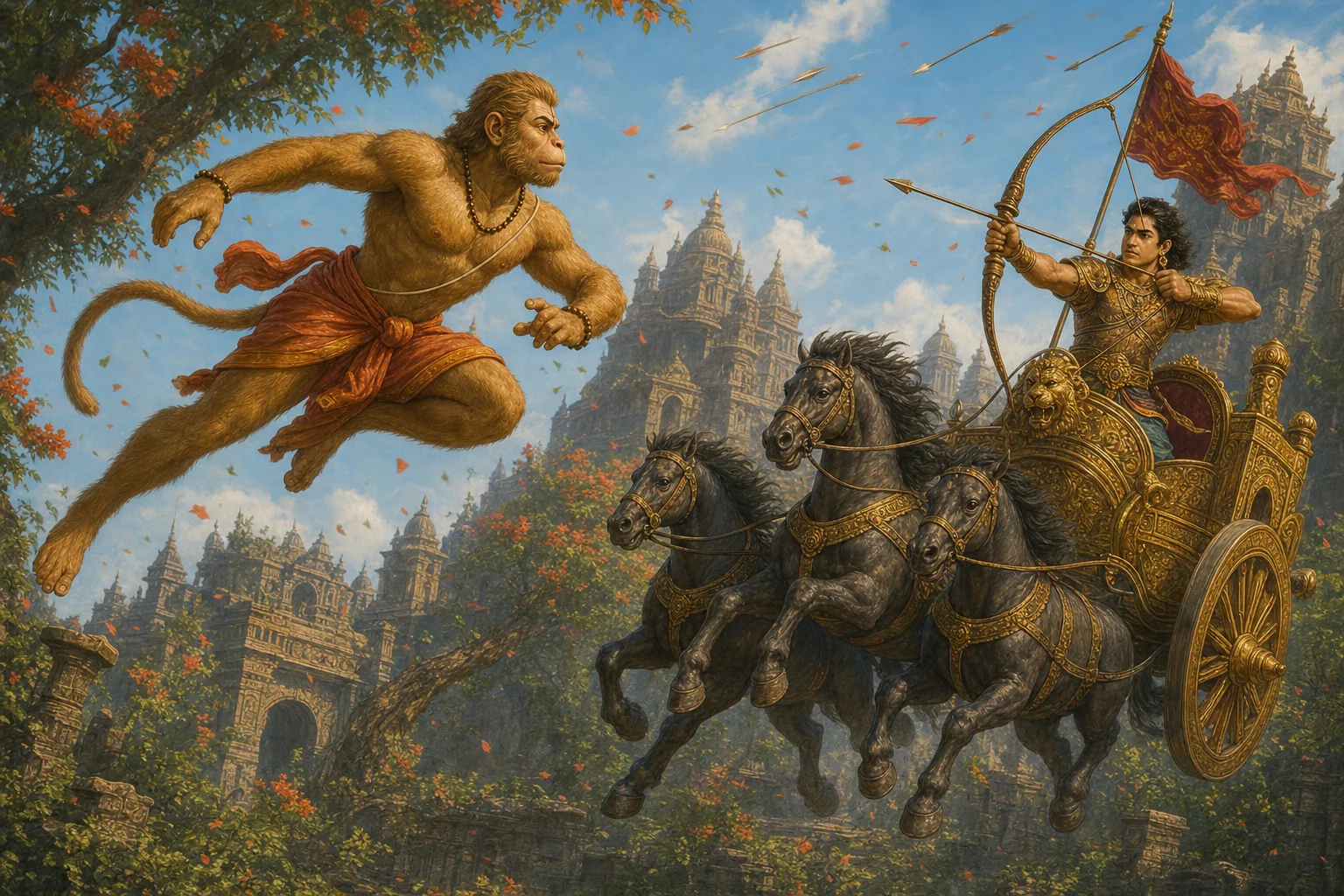
Grieving and furious, Ravana sent his elder son next — Indrajit, also called Meghanada. Indrajit saw at once that ordinary arrows would never hold this vanara, and called instead on a Brahma weapon. Its binding closed around Hanuman, and he recognised the protection Brahma himself had once granted him — he could have broken free the moment its power weakened. He chose to stay bound instead. Capture would take him somewhere arrows never could: straight into Ravana's own court.
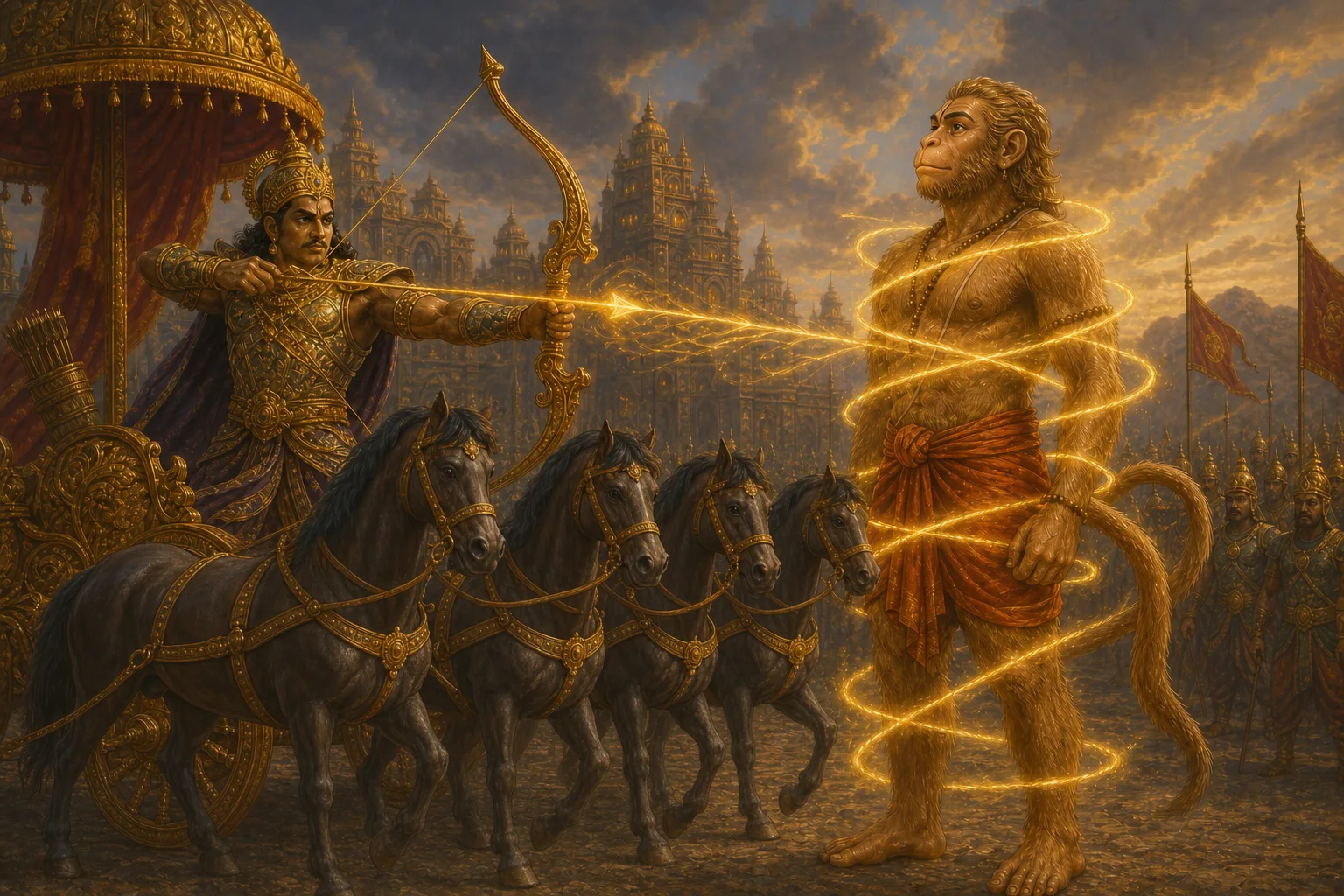
The guards tied ordinary ropes over the fading divine binding and dragged him through the city. Hanuman let them. Even bound, he watched everything — the roads, the walls, the strength of the army, the fear on people's faces — gathering exactly what Ram would need to know.
Ravana's court showed the full weight of his kingship: a high throne, carved pillars, gold and jewels and lamps, ministers and commanders arranged around him in rows. Before all of them, Hanuman named himself plainly — Ram's messenger. He spoke of the alliance with Sugriva, said that Sita had been found, and urged Ravana to return her in peace. He made no false claim that one messenger had conquered Lanka. But he warned, just as plainly, that if peace were refused, Ram and Lakshman and the vanara army would cross the sea themselves.
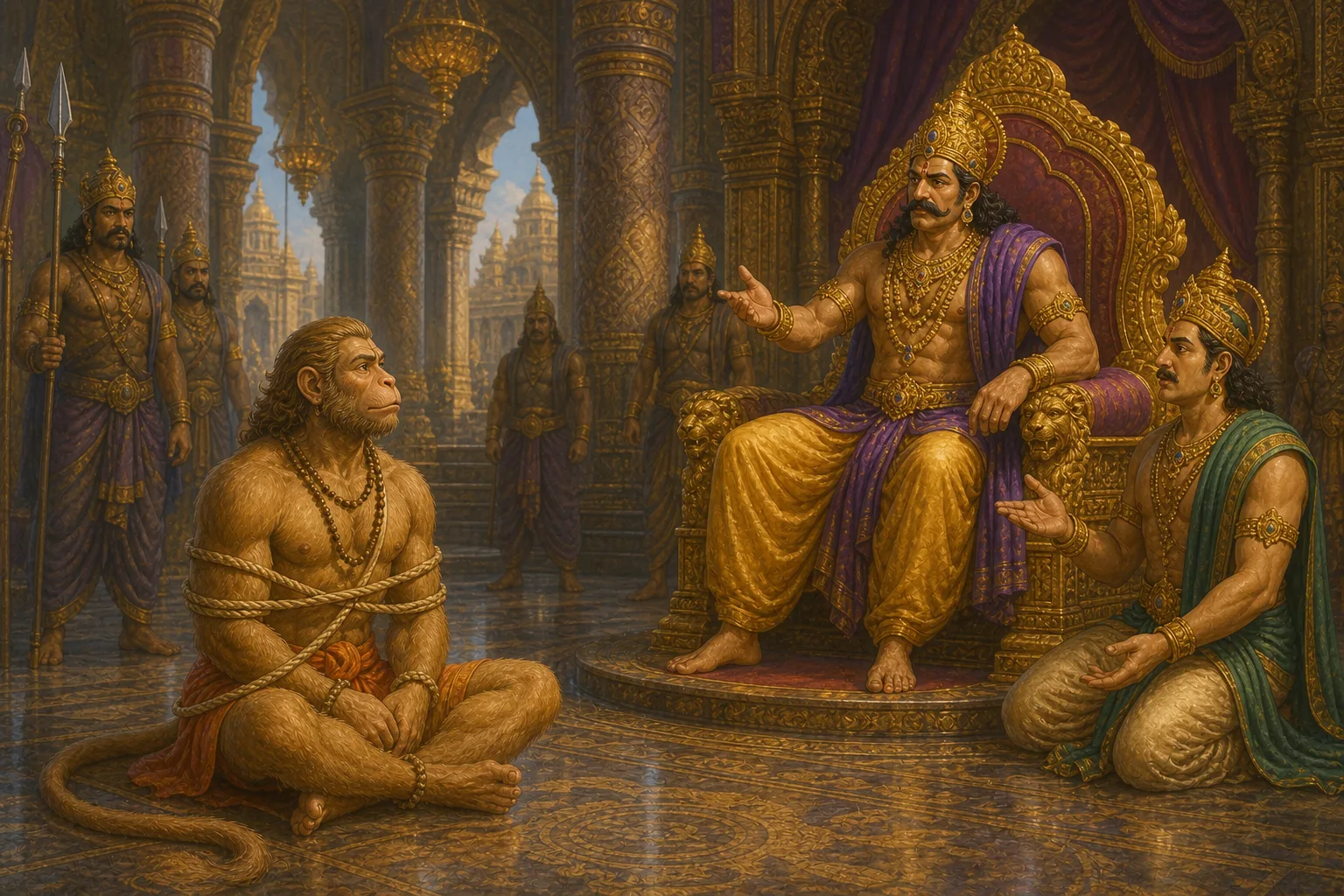
Ravana ordered him killed on the spot. It was Vibhishana who stopped it. A hostile envoy could be punished, even marked, he argued — but killing a messenger broke the very rule that let enemies speak to one another at all. Ravana changed the sentence instead. A vanara's tail was a mark of pride, he said. Let cloth be wound around it, set alight, and paraded through every street of Lanka, so the whole city could watch.
The guards took hold of Hanuman's tail and began winding the cloth around it, length after length, while he waited to see exactly what they meant to do with the fire.
“A messenger who tells the truth plainly, even to an enemy's face, carries more weight than one who only fights.”
New stories in your inbox
One story every week, and a special tale on festivals. Free, always.
Your email goes to our newsletter provider (beehiiv) so we can send you stories. It is not linked to any child's reading on this site. Unsubscribe any time from the email footer.