Vishvavati: The Guardian of the Gifted Merit
Singhasan Battisi
King Bhoj had found the golden throne of Vikramaditya beneath an old mound, and each of its thirty-two carved guardians stopped him with a story before he could sit.
On the twenty-sixth step, Vishvavati reminded Bhoj that life is brief and no ruler carries treasure beyond it. Vikram learned this during an ordinary court session when an attendant quietly said that the hour for worship was passing. He realized that duty, learning, charity, and reflection could not always be postponed until a convenient future.
He entrusted the daily government to capable officers and went to a forest sanctuary—not to abandon his people permanently, but to examine his own discipline. Many ascetics practised difficult forms of penance there. Vikram joined them and gradually copied their harshest austerities. The fiercest of them offered their own bodies into the sacred fire, trusting Shiva's nectar to restore them, and Vikram followed them into the flames, believing greater pain must mean greater devotion.
When Shiva's attendant brought restorative nectar for the exhausted ascetics, Vikram was accidentally overlooked. The others noticed and refused to celebrate their recovery while a companion still lay unaided. Their concern reached Shiva, who restored Vikram and asked what blessing he desired.
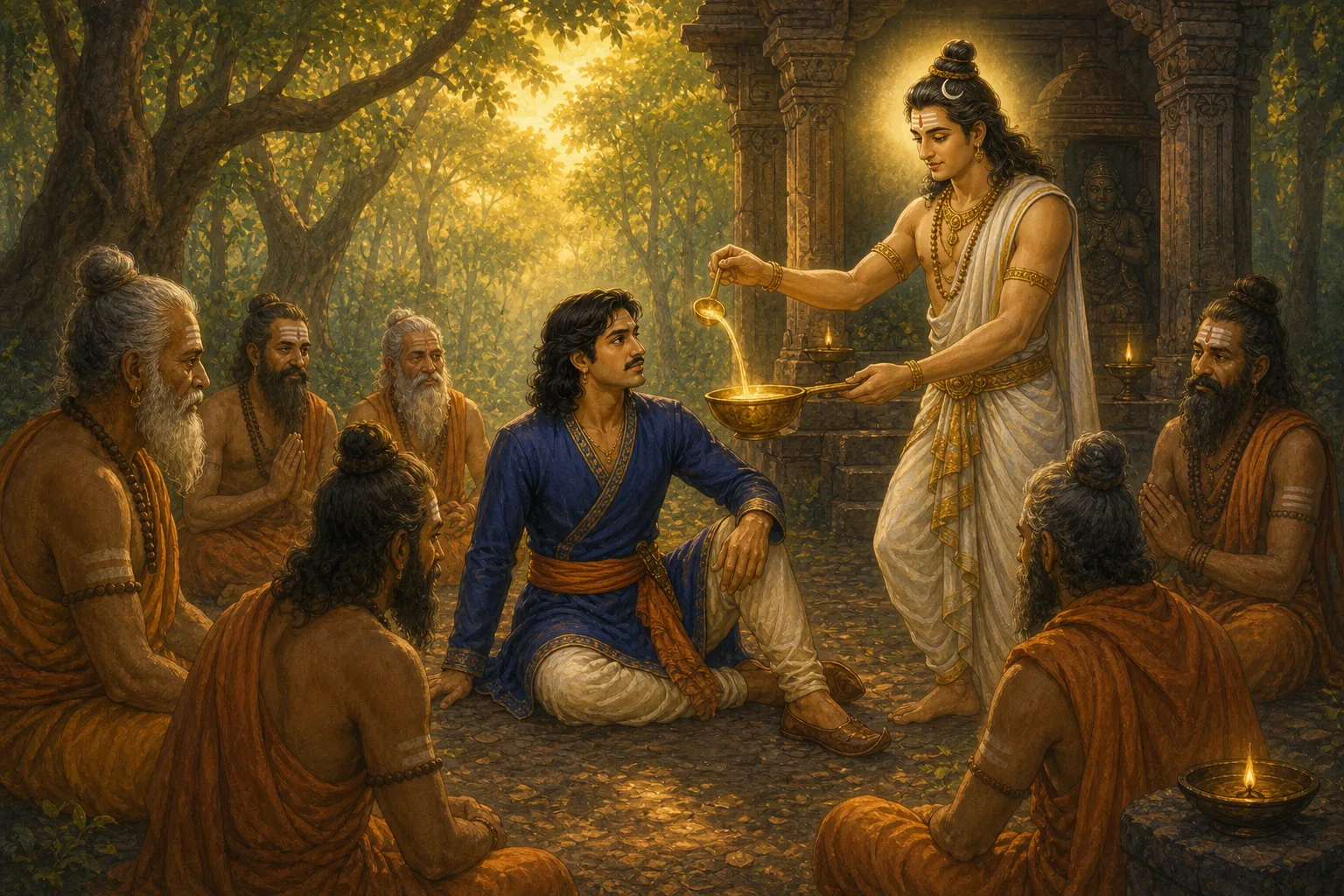
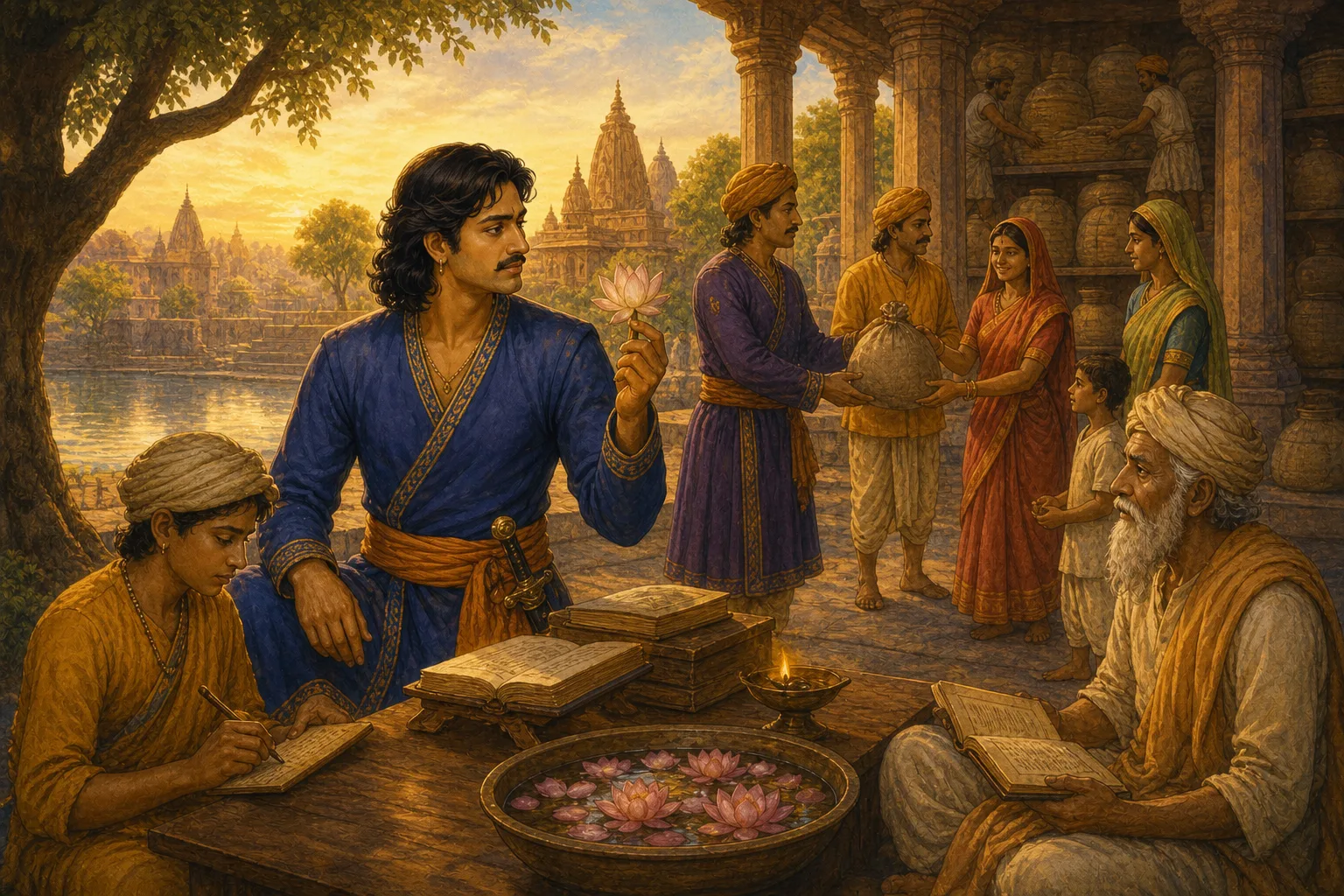
Vikram did not request conquest, wealth, or superiority. He asked for freedom from fear of death and for guidance across the cycle of birth and loss. Shiva answered that his allotted work in the world was not yet complete. True devotion did not require destroying a useful life. He gave Vikram a lotus that would remain fresh until six months before the king's death.
Years later the lotus finally faded. Vikram understood the sign. He provided securely for dependants, arranged the administration, and distributed much of his personal wealth in charity without emptying the kingdom's public resources. Then he returned calmly to spiritual preparation, neither clinging to life nor wasting it before its time.
Vishvavati asked Bhoj, "Can you remember death without neglecting the life and duties still entrusted to you?" Bhoj stepped back.
Moral: Awareness of life's end should deepen responsible living, not turn devotion into self-destruction.
“Awareness of life's end should deepen responsible living, not turn devotion into self-destruction.”
New stories in your inbox
One story every week, and a special tale on festivals. Free, always.
Your email goes to our newsletter provider (beehiiv) so we can send you stories. It is not linked to any child's reading on this site. Unsubscribe any time from the email footer.