Padmavati: The Guardian of the Moonlit Rescue
Singhasan Battisi
King Bhoj approached the eleventh step. Before he could place his foot upon it, Padmavati awoke in lotus-pink robes.
"Vikramaditya did not stop when the danger before him fell," she said. "He looked for the hidden power that could make it rise again. Listen, and decide whether you would do the same."
One night Vikram was staying in a distant city. He had dismissed his attendants and was resting alone when a cry came from the north.
"Is there no brave person who will save me?" a woman called. Her voice rose again and again, then suddenly became silent.
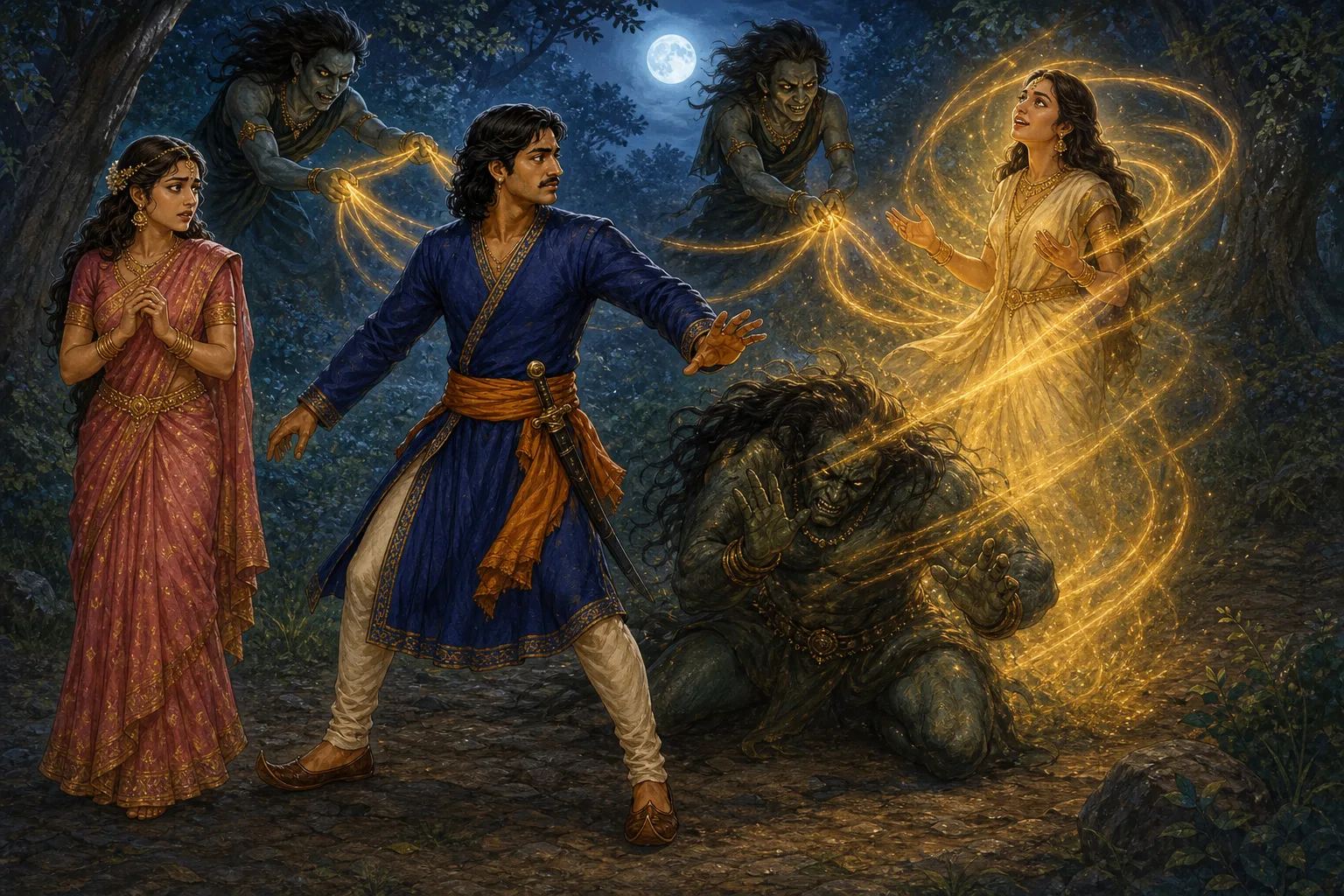
Vikram took his shield and sword and followed the sound into the forest. Beneath the moonlit trees he found a young woman struggling to escape a fierce rakshasa. The creature demanded that she obey him. When she refused, he seized her and threw her down.
"Release her," Vikram commanded. "Strength does not give you the right to torment someone."
The rakshasa turned on him. Their struggle was fierce, but Vikram finally struck him down. At once, two warriors sprang from the creature's body. Vikram defeated one, while the other fought until dawn and then vanished among the trees.
Vikram helped the woman to her feet. "Come with me. You are safe for now."
She shook her head. "Not for long. The survivor can find me wherever I hide. A powerful enchanted woman lives within him. Her magic reveals every hiding place, and she can create new fighters whenever he falls."
Vikram understood that defeating the outer enemy would never be enough. He remained nearby, and the following night the rakshasa returned. Vikram stood between him and the woman. Again they fought, and again Vikram brought the creature down. When the enchanted woman emerged to restore him, Vikram summoned his trusted betals.
"Do not harm her," he ordered. "Prevent her from returning to the rakshasa until we learn why she serves him."
The betals gently restrained her and brought her before Vikram. She explained that she had once served Shiva but had failed in a duty and received a curse. The rakshasa had later performed severe penance and demanded her magical service as a reward. Bound by that command, she had been forced to live within him and renew his strength.
"His defeat has ended the binding," she said. "You have freed me without treating me as an enemy."
The rescued young woman then told her own story. She was a princess from an island kingdom near the sea. While she and her companions were bathing at a secluded lotus pond, the rakshasa had carried her away. He had demanded that she marry him, but she had refused despite his threats.
"You protected both my life and my choice," she told Vikram. "Please help me return with honour."
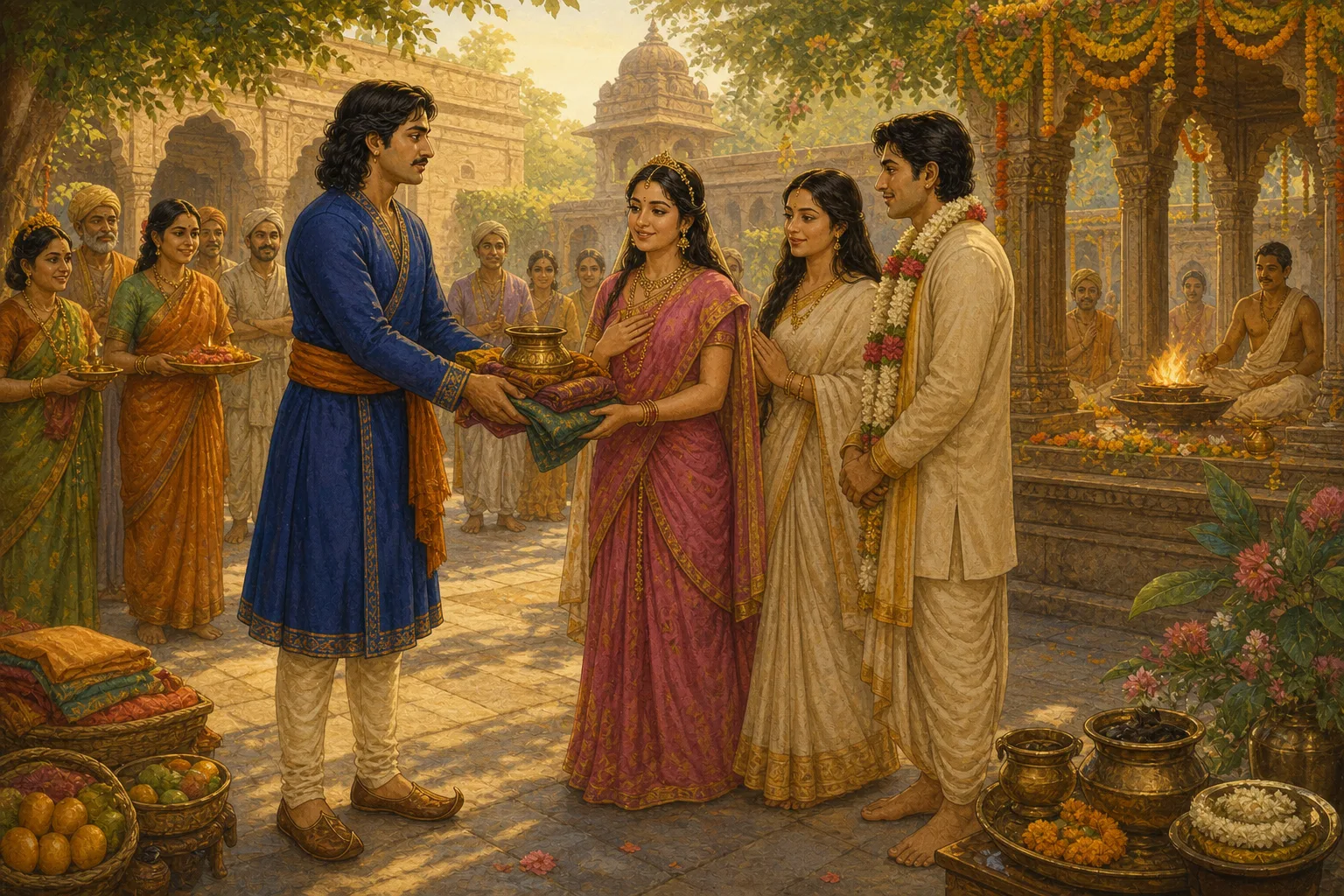
Vikram did not claim either woman as a prize. He called the betals and arranged a swift journey to Ujjain. There he gave the enchanted woman safety and a respected place according to her wishes. For the princess, he searched for a learned and honourable family acceptable to her. When she chose to marry a worthy young scholar, Vikram conducted the ceremony, supplied a home and generous gifts, and ensured that she would never again depend upon the mercy of a captor.
Padmavati turned to Bhoj. "Vikram overcame the visible attacker, broke the hidden binding, listened to both women, and protected their freedom afterward. Would your rescue be as complete?"
King Bhoj withdrew his foot.
Moral: A rescue is complete only when the danger, its hidden source of power, and the survivor's future safety are all addressed.
“A rescue is complete only when both danger and the power behind it are ended.”
New stories in your inbox
One story every week, and a special tale on festivals. Free, always.
Your email goes to our newsletter provider (beehiiv) so we can send you stories. It is not linked to any child's reading on this site. Unsubscribe any time from the email footer.