Anurodhavati: The Guardian of Steadfast Reunion
Singhasan Battisi
King Bhoj had found the golden throne of Vikramaditya beneath an old mound, and each of its thirty-two carved guardians stopped him with a story before he could sit.
King Bhoj approached the twenty-first step. Anurodhavati awoke and said, "A promise to relieve suffering must be followed with patient courage."
A scholar named Madhav once came to the gates of King Kamasen's court. Music was already sounding inside, yet after listening for only a few moments Madhav shook his head. "The ruler and his courtiers are not judging the performance carefully," he told the gatekeeper.
The words reached Kamasen, who demanded an explanation. Madhav said that one drummer in the circle was hiding an injured thumb and striking the drum differently to compensate. The musicians were examined, and his observation proved exactly right. Astonished by such a sensitive ear, Kamasen welcomed him into the assembly, gave him fine clothes and ornaments, and invited him to hear the court's most accomplished performer, Kamakandala.
Kamakandala entered with flower garlands and began a difficult dance. Every turn of her wrists and every step remained joined to the melody. A bee, drawn by the perfume, landed on her chest. She could not brush it away without breaking the rhythm, so she quietly directed a narrow breath toward it while continuing to dance. The bee flew off, and scarcely anyone noticed. Madhav did. Delighted by such discipline, he gave Kamakandala every ornament Kamasen had just awarded him.
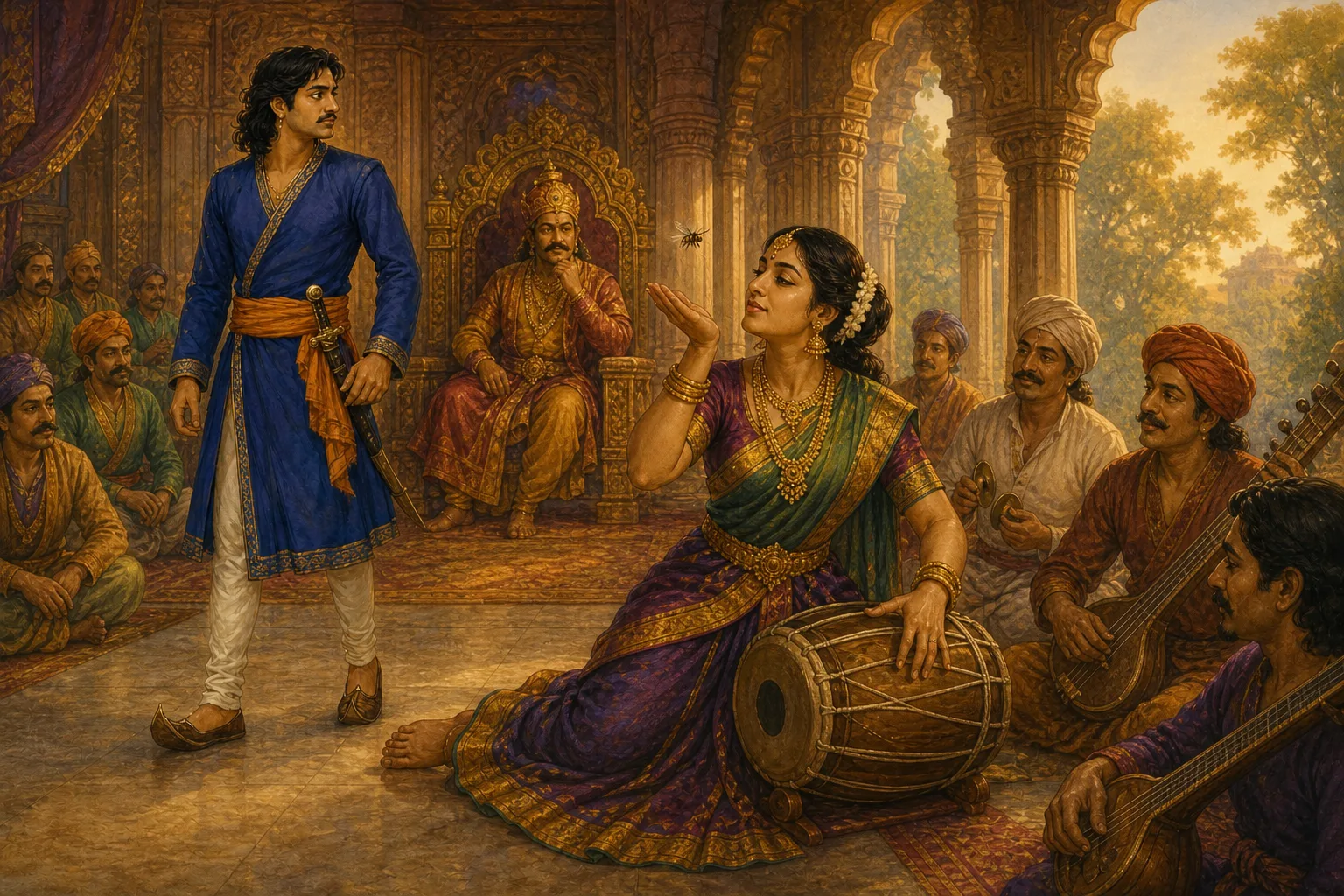
Kamasen saw only an outsider giving away royal gifts in front of the court. He ordered Madhav to leave the kingdom. Madhav explained the hidden feat and asked that Kamakandala's skill be tested, but the offended king would not reconsider.
Outside the palace Madhav stood beneath a tree, wondering where a banished traveller could go. Kamakandala sent a trusted attendant to find him and brought him quietly to her home. She understood that his gift had honoured her art rather than her beauty. Through the night they exchanged songs and demonstrated all they had learned. Admiration deepened into love, but by morning both knew that discovery would place them in danger. Madhav promised to seek help and return. Kamakandala asked him not to forget; then they parted with no certainty except their word to one another.
Madhav wandered through villages and forests repeating her name. Kamakandala refused celebrations and found comfort only when her companions spoke of Madhav's learning and kindness. At last Madhav remembered that people called Vikramaditya a reliever of others' sorrow, and he set out for Ujjain.
He learned that Vikram visited a Shiva temple beside the river each morning. On the temple threshold Madhav wrote an appeal: he was a foreign Brahmin overwhelmed by separation; if the king truly protected the distressed, he begged to be heard before despair conquered him. Vikram noticed the writing during his worship. He announced a reward for anyone who found Madhav, and searchers went through markets, inns, gardens, and riverbanks.
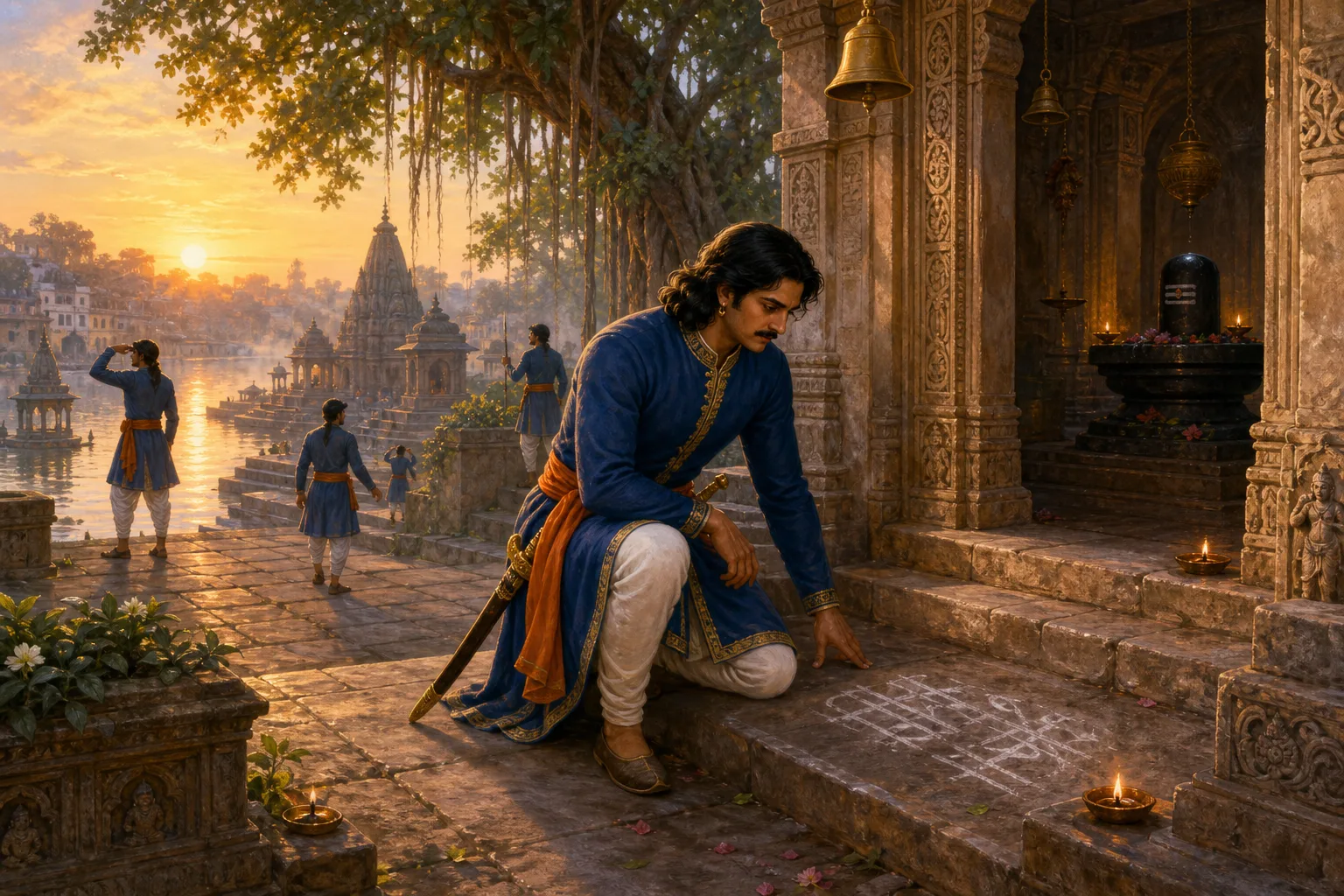
One of Vikram's skilled messengers finally recognized the exhausted traveller from the signs of sleepless grief and brought him safely to court. Madhav recited verses about two people separated by power rather than choice. Vikram neither mocked him nor made an instant promise. He gave him food and rest, then listened to the whole history. Only after questioning Madhav carefully did Vikram say, "If her wish is truly the same as yours, I will not abandon you."
Vikram travelled toward Kamasen's city with Madhav and a small, disciplined force. He camped outside the walls rather than alarming the citizens. A messenger carried a respectful request: release Kamakandala from her court obligations and let two consenting adults choose their life. Kamasen answered that no neighbouring king could command his household.
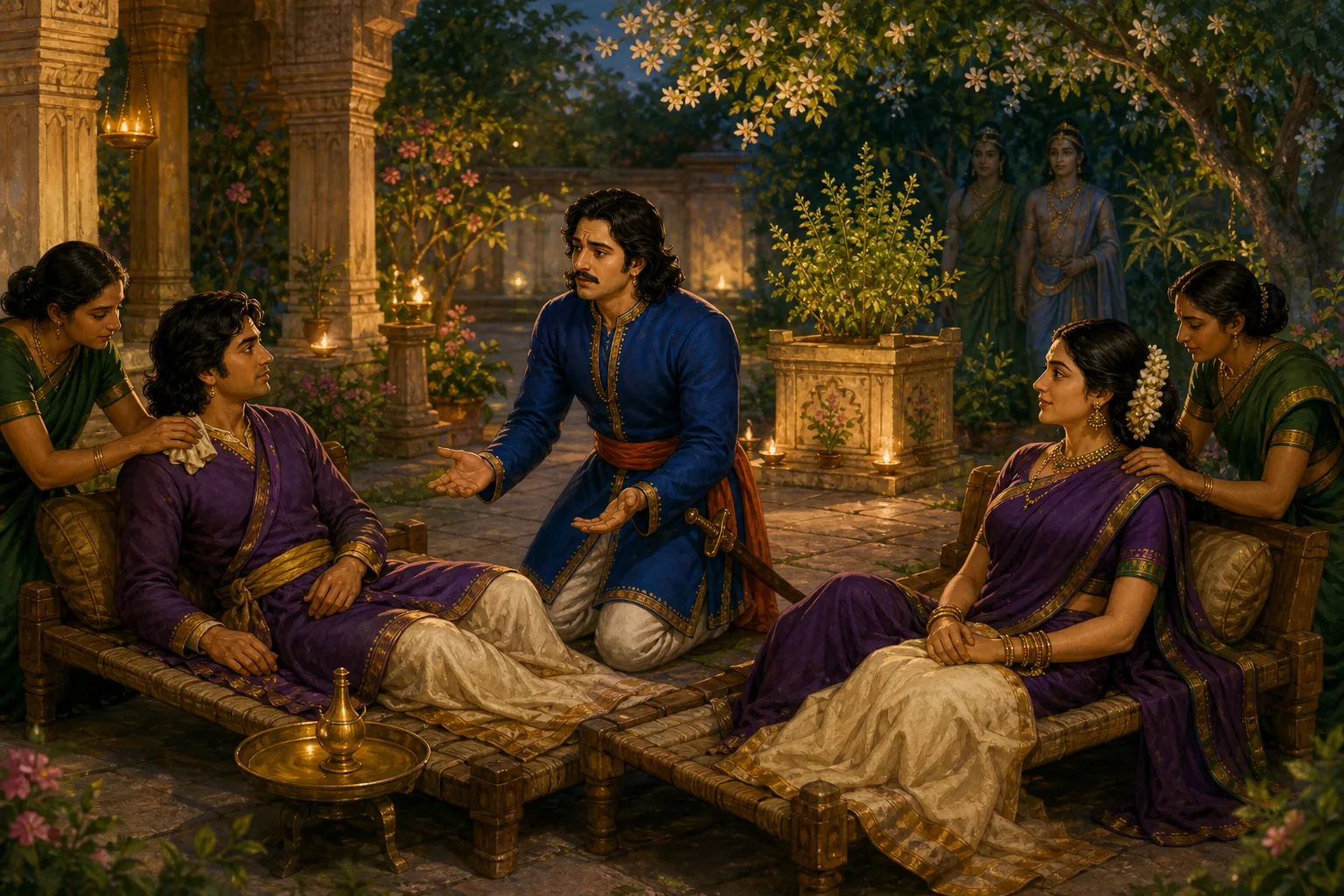
Before risking soldiers and townspeople, Vikram still needed to know whether Kamakandala freely shared Madhav's commitment or whether grief had coloured Madhav's memory. He entered the city in disguise and spoke with her. His test was severe: he falsely reported that Madhav had died on the journey. Kamakandala was overcome and collapsed. When word returned that Kamakandala had died, Madhav also fell senseless with grief.
Vikram immediately understood that his attempt to discover the truth had itself caused terrible harm. He did not defend the test merely because his purpose had been serious. He accepted responsibility, called the two betals who sometimes aided him, and asked them to bring life-restoring nectar. The nectar revived Kamakandala and Madhav. Vikram apologized for the suffering his deception had caused and promised that their wishes—not another test—would guide what followed.
Vikram again asked Kamasen to settle the matter peacefully. He reminded him that a ruler may reward an artist, but cannot own her judgment or future. Pride still led Kamasen to resist. When conflict could no longer be avoided, Vikram ordered his commanders to protect ordinary homes, fields, temples, and musicians' quarters. His forces overcame the opposition without destroying the city.
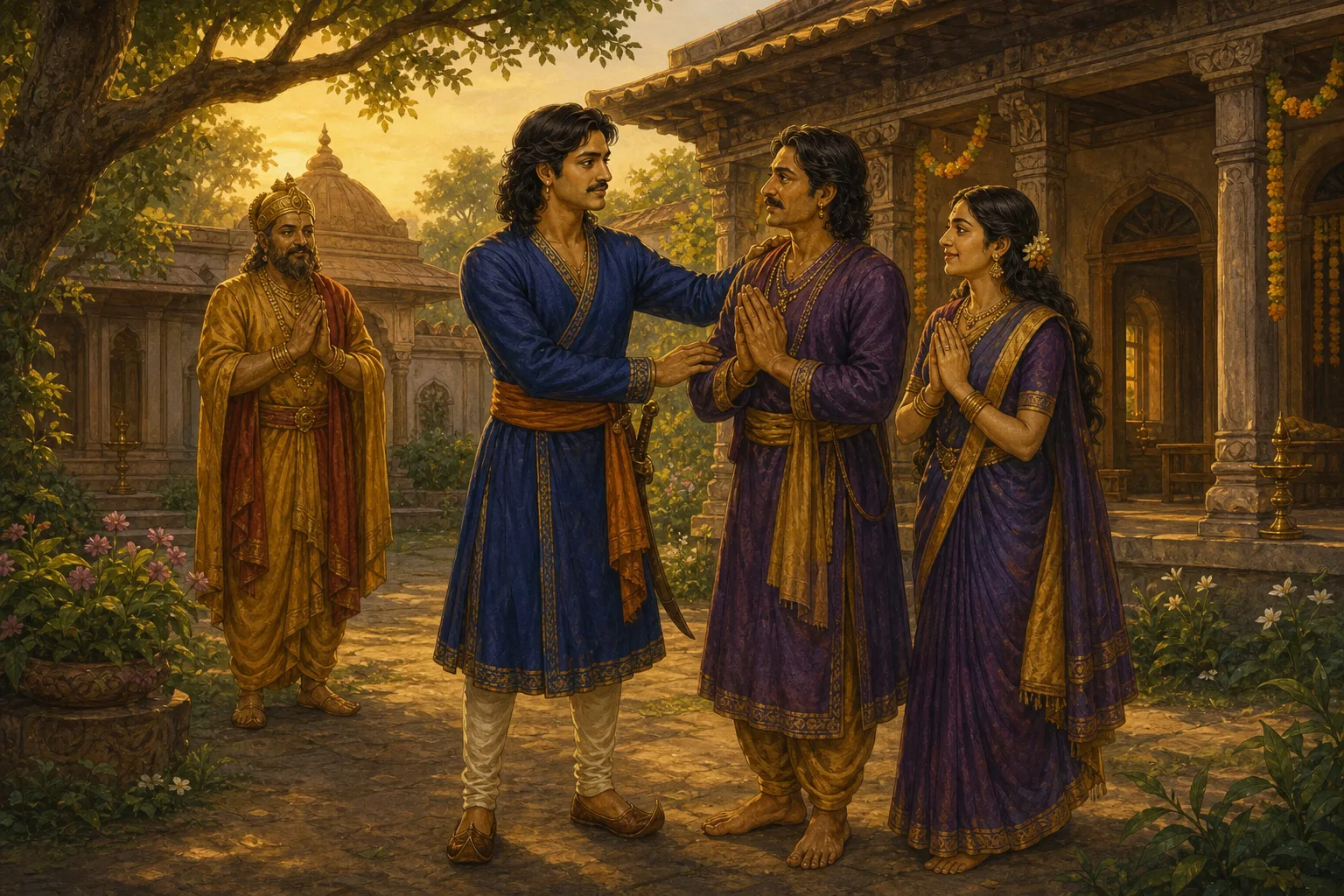
Kamasen expected humiliation when he surrendered. Vikram took neither his crown nor his treasury. He required only that Kamakandala be released from compulsory service and that the separation end. In open court Kamakandala stated her choice for herself. Madhav and Kamakandala were reunited before both kingdoms, and Vikram gave them a safe home and enough resources to teach music independently.
Their school later welcomed talented pupils whether or not a court had noticed them. Madhav taught his students to listen closely; Kamakandala taught them that control and creativity must serve truth, not pride. Vikram returned to Ujjain without claiming their happiness as a royal possession. He had kept his promise, repaired the harm he caused along the way, and left the reunited pair free to shape their own future.
Anurodhavati asked Bhoj, "Will you repair harm caused even while pursuing a worthy goal?" Bhoj stepped back.
Moral: Compassion keeps searching until separated lives can be safely reunited.
“Compassion keeps searching until separated lives can be safely reunited.”
New stories in your inbox
One story every week, and a special tale on festivals. Free, always.
Your email goes to our newsletter provider (beehiiv) so we can send you stories. It is not linked to any child's reading on this site. Unsubscribe any time from the email footer.