Anuparekha: The Guardian of Nature and Learning
Singhasan Battisi
King Bhoj had found the golden throne of Vikramaditya beneath an old mound, and each of its thirty-two carved guardians stopped him with a story before he could sit.
At the twenty-second step, Anuparekha asked whether wisdom comes from birth or teaching. Vikram and his chief minister had once argued over the same question. The minister believed earlier tendencies fixed a person's intelligence; Vikram insisted that what children hear, see, and practise also shapes them. They agreed to examine the question rather than win it with words.
In the old telling, Vikram arranged for four infants—a prince and the sons of a minister, a city guard, and a Brahmin—to be raised in a secluded forest house. Their nurses could feed and protect them but could not speak or hear, so no child learned his family's occupation or rank. Guards kept the place free from visitors and even loud public sounds. This severe experiment lasted twelve years.
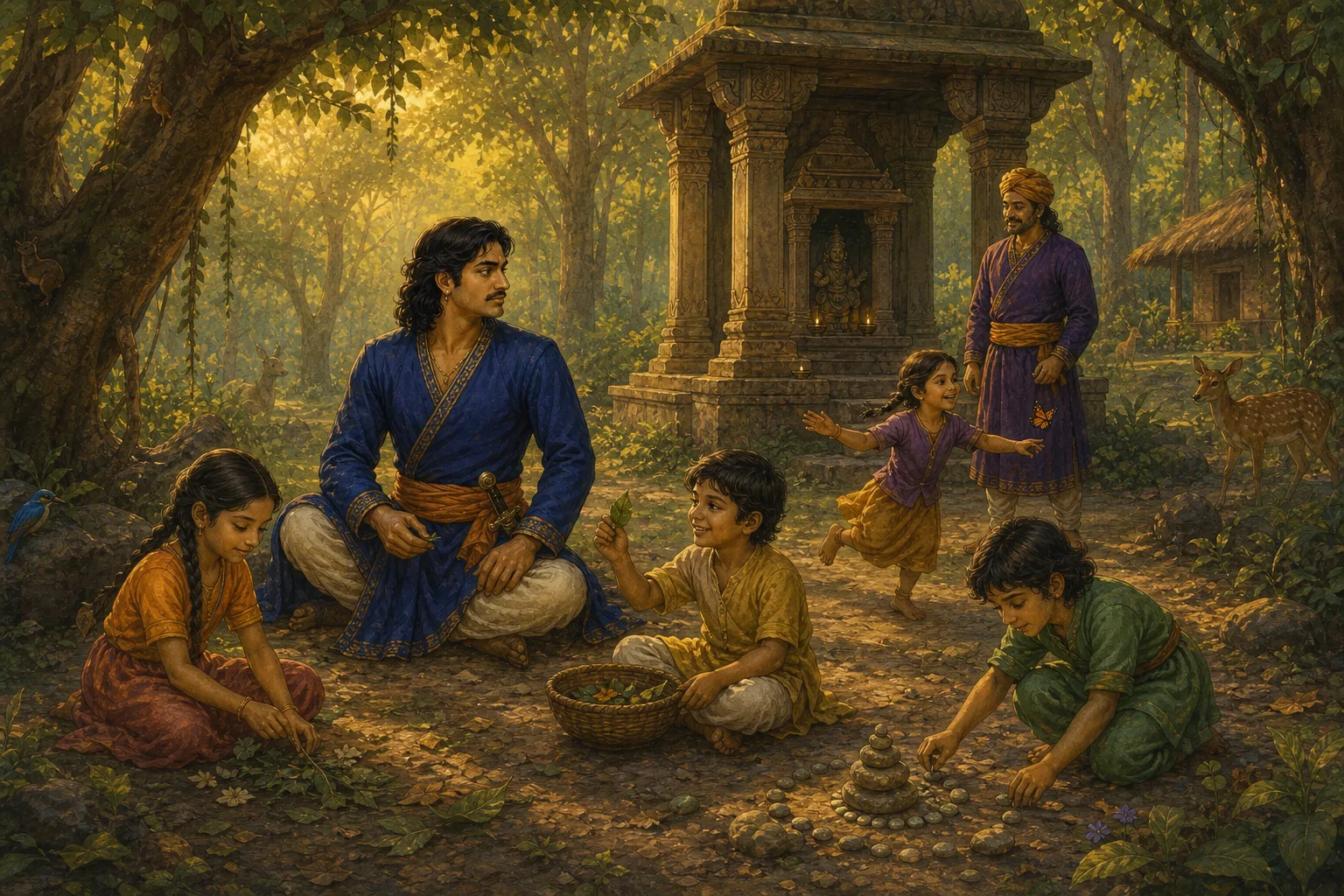
When the families longed to see the children, Vikram ended the isolation and brought them to court. All four had grown without ordinary language and community, yet their gestures and early responses differed. Courtiers used these differences to argue that birth alone had decided everything.
Vikram saw a more complicated lesson. The children's isolation had also limited all of them; silence was not a fair education. Whatever tendencies they carried needed language, affection, teachers, companions, and choice in order to develop fully. He acknowledged that the test could not justify denying any child those things again.
He reunited the children with their families, provided patient teachers, and asked what each wished to learn once they could communicate. He told the court that inherited tendencies may offer a beginning, while environment, opportunity, effort, and judgment influence the path. Evidence should improve care, not become a cage.
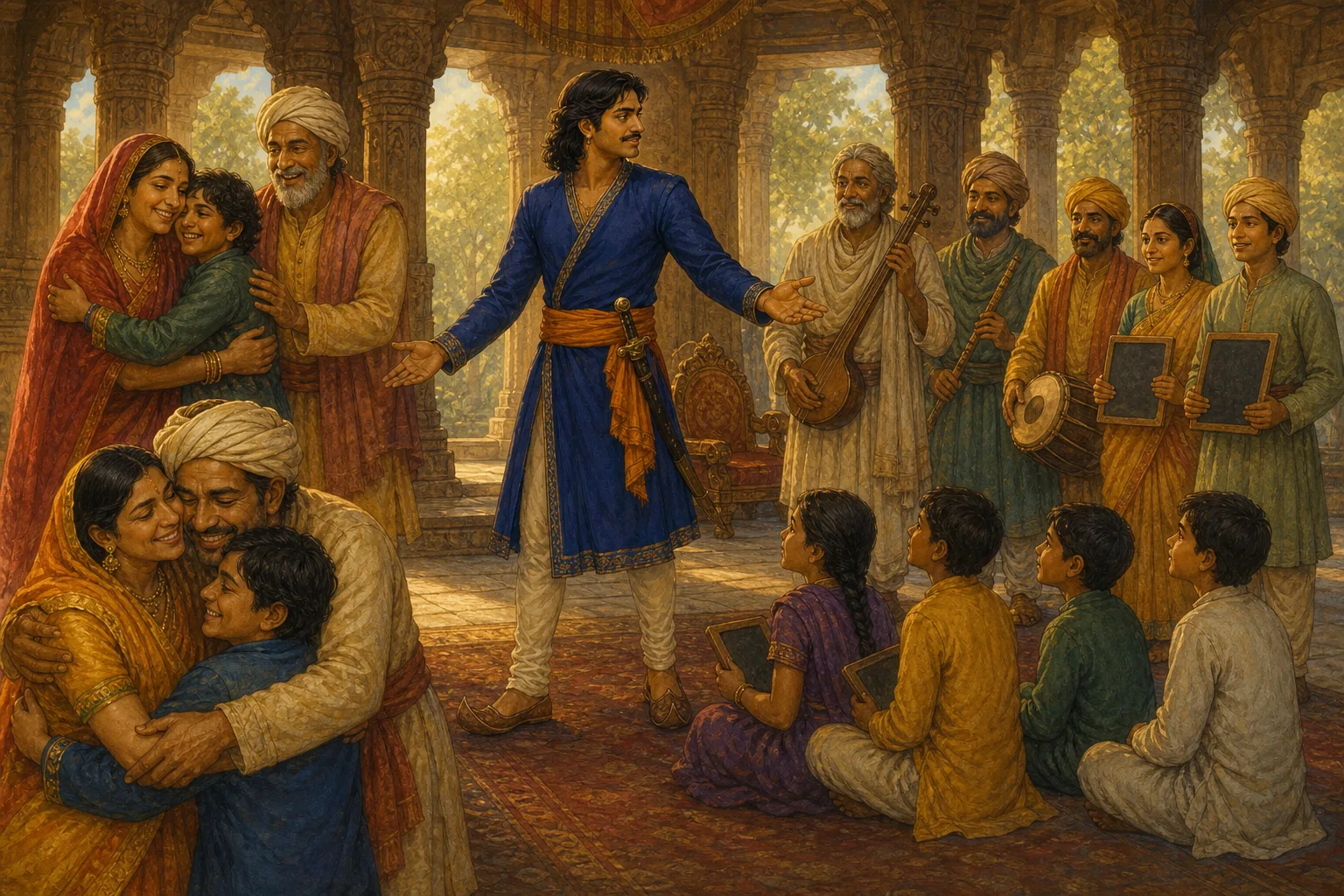
"No child should be trapped by a prediction about birth," he concluded. "A fair kingdom gives every child room to grow."
Anuparekha asked Bhoj, "Will you look beyond ancestry and invest in possibility?" Bhoj lowered his foot.
Moral: Inborn tendencies matter, but care, learning, and choices shape what a person becomes.
“Inborn tendencies matter, but care, learning, and choices shape what a person becomes.”
New stories in your inbox
One story every week, and a special tale on festivals. Free, always.
Your email goes to our newsletter provider (beehiiv) so we can send you stories. It is not linked to any child's reading on this site. Unsubscribe any time from the email footer.