Kaushalya: The Guardian of the Buried Legacy
Singhasan Battisi
King Bhoj had found the golden throne of Vikramaditya beneath an old mound, and each of its thirty-two carved guardians stopped him with a story before he could sit.
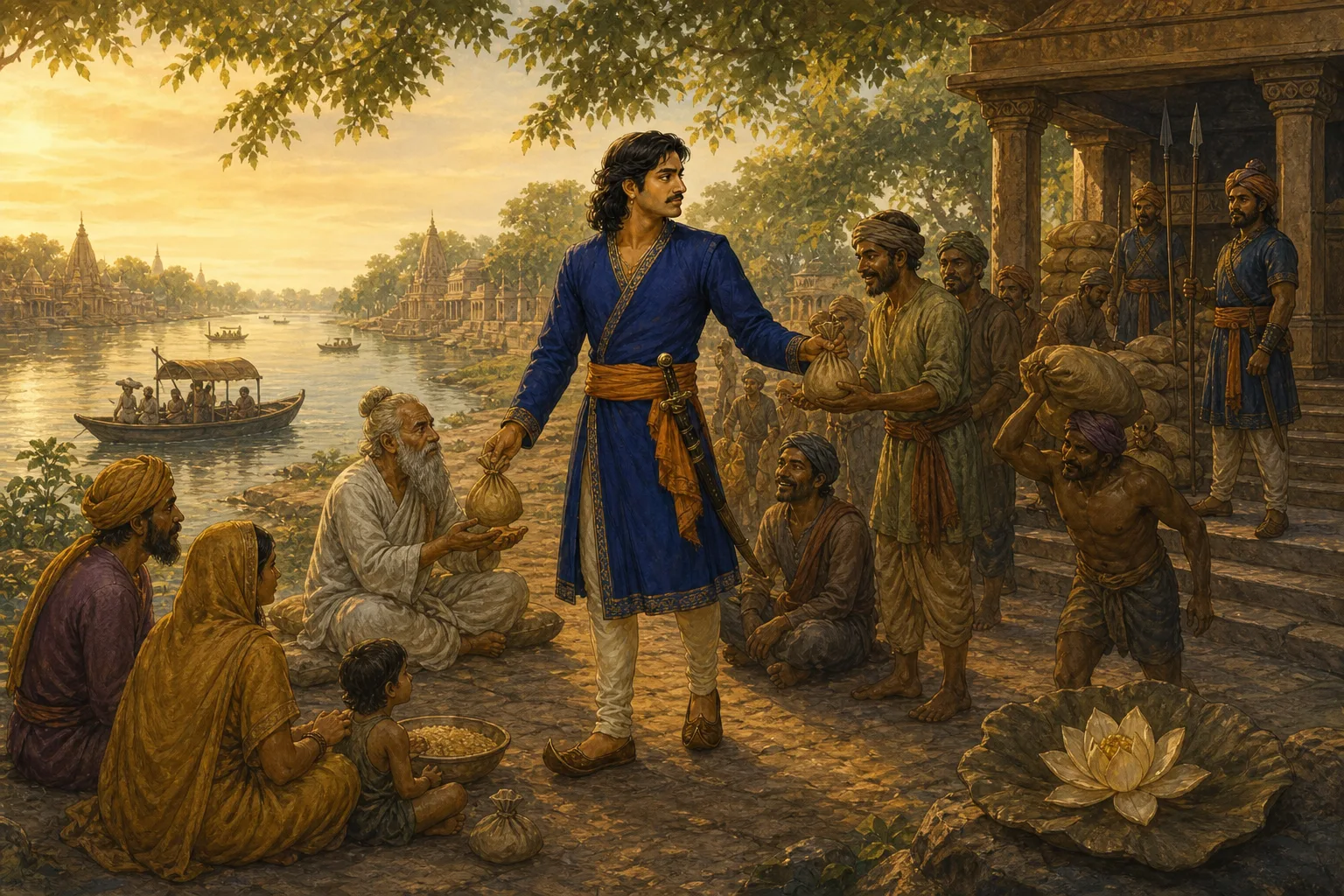
Kaushalya awoke on the thirty-first step. Six months before Vikram's death, the lotus Shiva had given him faded. Remembering the promised sign, Vikram built a quiet dwelling beside the Ganga. He did not vanish secretly. He arranged the kingdom's work, told ministers where he would be, and announced that anyone with a genuine need could still approach him.
Scholars, Brahmins, bards, labourers, travellers, and poor families came from many places. Some divine beings even arrived in disguise to test whether approaching death had made the king fearful or possessive. Vikram listened and gave from his personal wealth while ensuring that public stores, wages, irrigation, and emergency grain remained protected for the people after him.
One day a golden deer appeared nearby. Hunters prepared their bows, but the animal spoke and asked to see Vikram. It explained that it had once been a Brahmin who sought an ascetic's power for selfish reasons and had been cursed into this form. The curse would end only after meeting a ruler whose generosity was joined with courage and discernment.
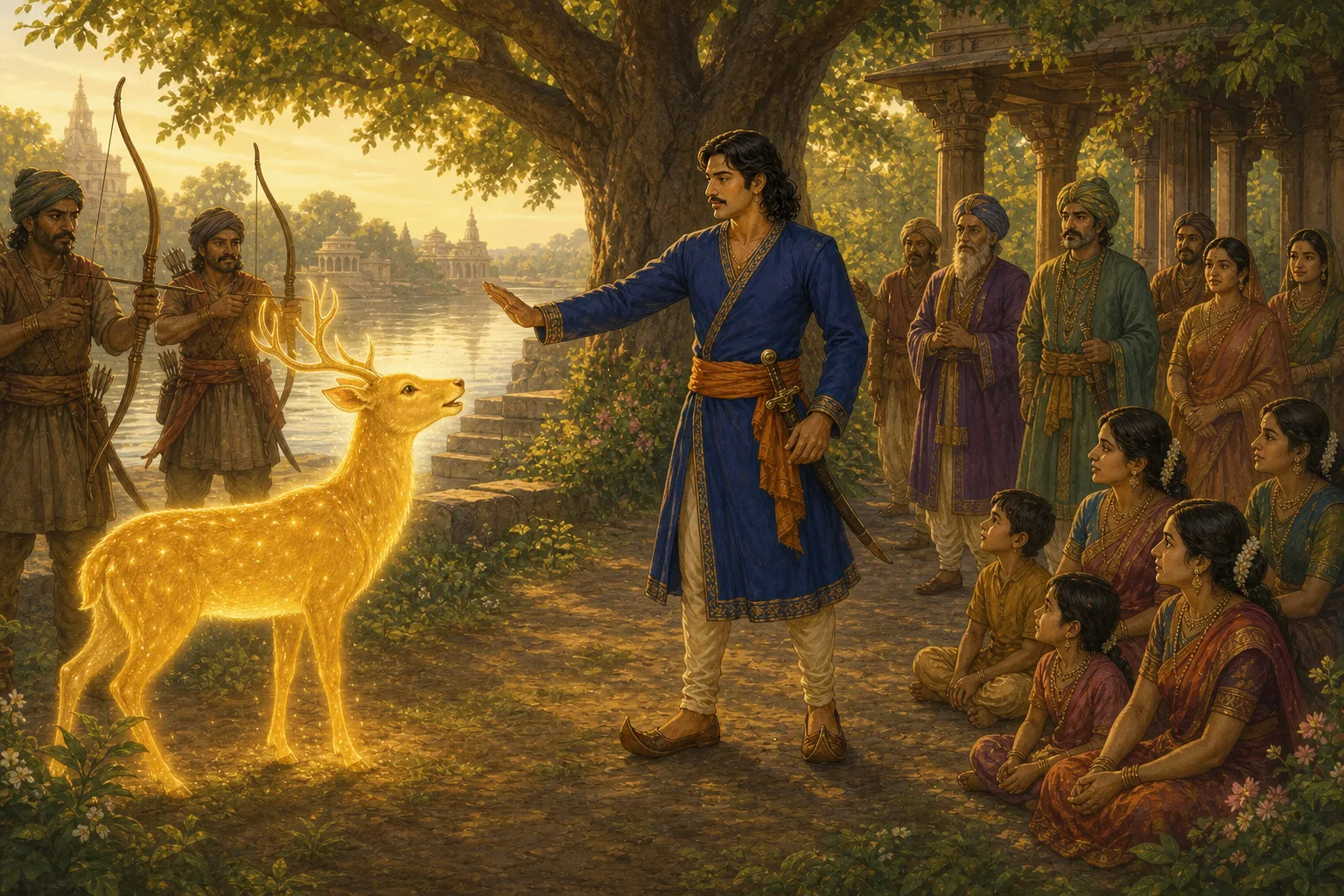
Vikram ordered the weapons lowered. The deer reached him, the enchanted form fell away, and the Brahmin regained his human life. Vikram arranged respectful final rites for the discarded form, offered charity in the visitor's name, and reminded everyone that a strange appearance was not permission for thoughtless violence.
Soon afterward Vikram's allotted life ended. The court mourned, but the administration continued because he had prepared it. Kaushalya stopped her account there: the next guardian would tell what happened to the throne after the king's departure.
Kaushalya asked Bhoj, "Can you prepare others responsibly for a future in which you are no longer at the centre?" Bhoj stepped back.
Moral: A lasting legacy prepares people and institutions to continue serving after one life ends.
“A lasting legacy prepares people and institutions to continue serving after one life ends.”
New stories in your inbox
One story every week, and a special tale on festivals. Free, always.
Your email goes to our newsletter provider (beehiiv) so we can send you stories. It is not linked to any child's reading on this site. Unsubscribe any time from the email footer.