Kanivati: The Guardian of the Greater Giver
Singhasan Battisi
At the twelfth step, Kanivati awoke and addressed King Bhoj.
"A generous ruler must be able to admire generosity in another," she told Bhoj. "Vikram once heard that another king might be a greater giver than he was, and he chose curiosity instead of wounded pride."
One day in Vikram's court, a travelling Brahmin praised his courage and charity. Then he added carefully, "On the seacoast lives King Kirtidhwaj. Every morning, before taking food, he gives away one hundred thousand coins. I have never seen another vow like his."
Vikram did not punish the comparison or demand that the guest withdraw it. He wanted to understand how such enormous giving could continue. With the betals' help, he travelled to Kirtidhwaj's city, dismissed them outside its walls, and entered in plain clothing.
At the palace gate he asked for work. Kirtidhwaj questioned him about his skills.
"My name is Vikram," he replied, without announcing his crown. "I can perform a difficult task when others cannot."
The king appointed him to his service. Vikram watched the daily distribution of coins, but he also noticed that every night Kirtidhwaj quietly left the palace and walked toward the forest.
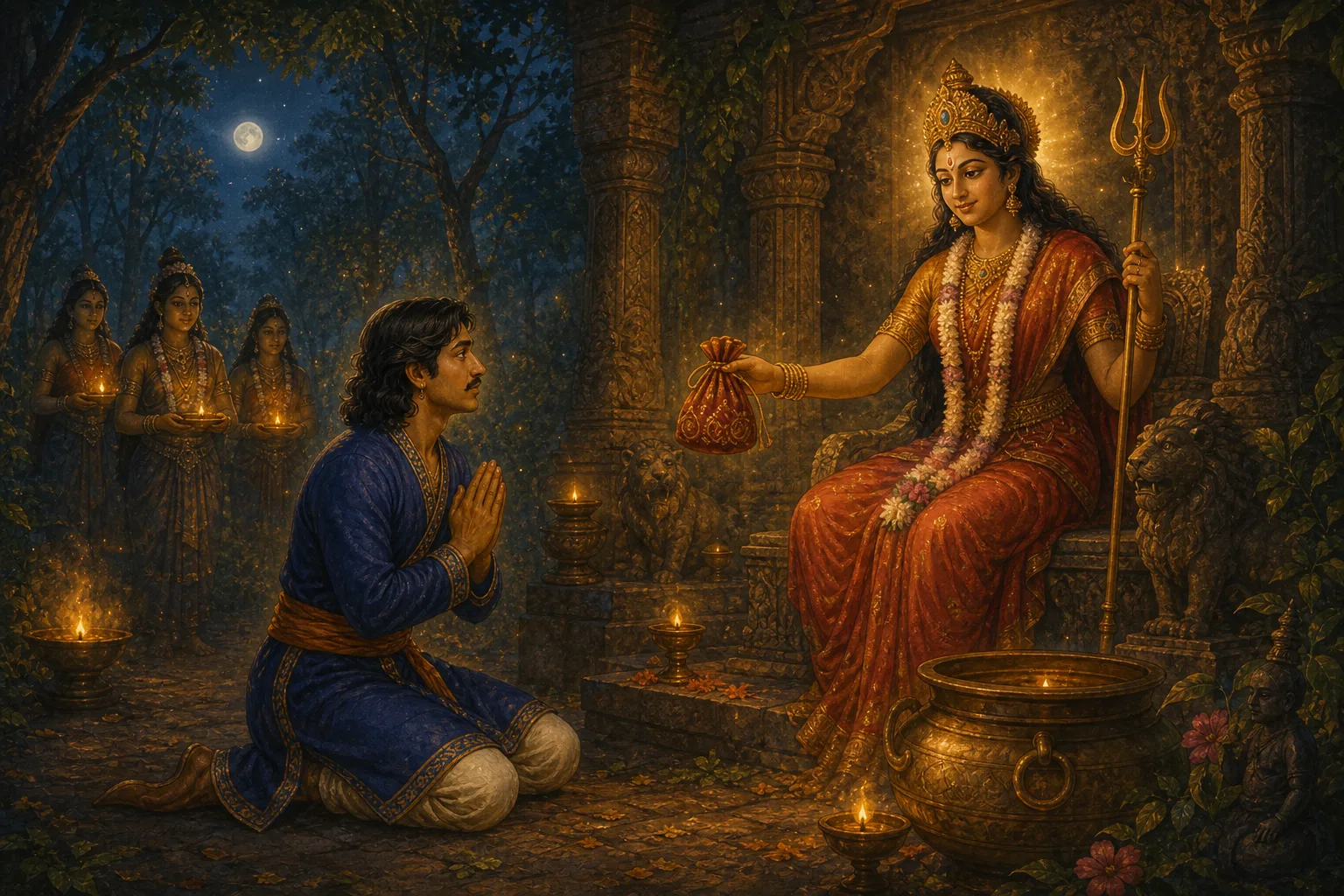
One night Vikram followed at a distance. Deep among the trees stood a temple of the goddess. Nearby was a great vessel heated over a fire. Kirtidhwaj bathed, prayed, and willingly entered the terrible magical trial. Yoginis appeared, the ritual consumed his body, and then the goddess restored him with divine nectar. She gave him the money required for the next morning's charity.
Vikram was shaken. Kirtidhwaj's purpose was noble, but his promise depended upon repeating unbearable suffering.
The following night Vikram reached the temple first. He completed the same trial. When the goddess restored him and offered the usual coins, he bowed and said, "Please keep them. I seek a different gift."
He repeated the ordeal until the goddess asked why he refused the reward.
"Give me the purse from which these coins come," Vikram said. "A good vow should not require someone to be destroyed and restored every night."
The goddess recognized that he sought neither riches nor fame. She gave him the inexhaustible purse.
When Kirtidhwaj came to the temple later, the goddess and the ritual vessel had vanished. He searched in anguish. Without the nightly gift, he believed he would have to break his promise to the people. He stopped eating and grew weak.
Vikram approached him as a servant. "You once promised that I might ask for help in a difficult hour. Tell me what troubles you."
Kirtidhwaj described the temple and the lost means of fulfilling his vow. Vikram placed the magical purse in his hands.
"Use this. Your daily charity can continue, and no dangerous ritual need continue with it."
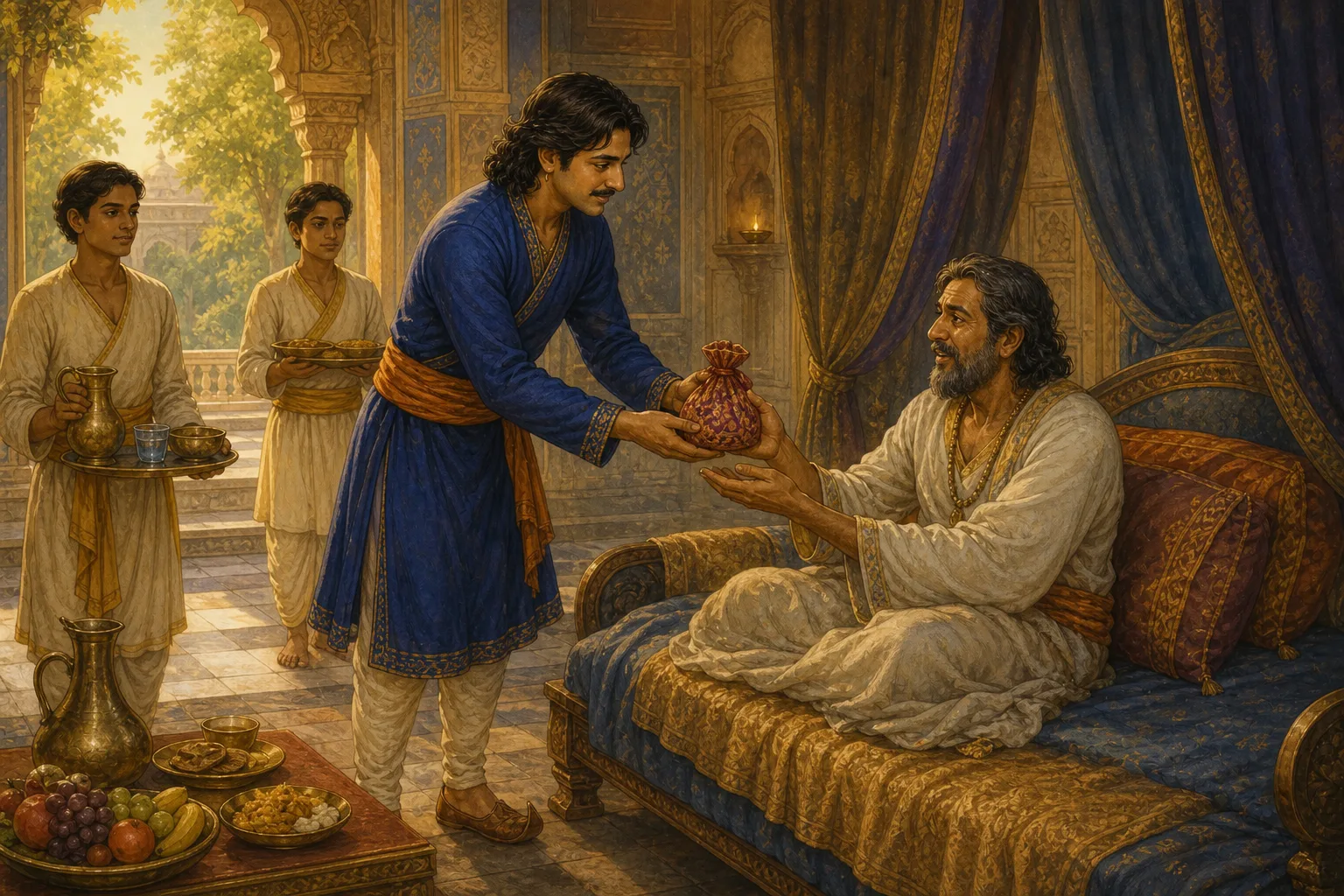
Kirtidhwaj understood that the stranger before him had risked himself to preserve another king's honour. He offered Vikram wealth and position, but Vikram declined, revealed who he was, and asked leave to return to Ujjain.
Back home, Vikram openly praised Kirtidhwaj's devotion. He did not call himself the greater giver, though he had surrendered the endless purse without hesitation.
Kanivati asked Bhoj, "Can you search for another person's greatness, remove the suffering hidden beneath it, and then give away the solution without claiming the praise?"
King Bhoj lowered his foot.
Moral: True generosity honours goodness in others and finds a safe way for it to endure.
“True generosity admires goodness in others and seeks a safer way for it to continue.”
New stories in your inbox
One story every week, and a special tale on festivals. Free, always.
Your email goes to our newsletter provider (beehiiv) so we can send you stories. It is not linked to any child's reading on this site. Unsubscribe any time from the email footer.