Prabhavati: The Guardian of the Impossible Promise
Singhasan Battisi
At the tenth step, Prabhavati awoke in deep violet.
"Courage should end a cruel condition, not pass it to someone with less power," she told King Bhoj. "Vikramaditya once faced an impossible promise, but he did not claim the reward that custom offered him."
One spring day Vikram sat in a palace garden where peacocks called and cool wind moved through the flowering trees. A young traveller stumbled through the gate, fell at the king's feet, and began to weep. He was thin from refusing food and rest, and his eyes showed that despair had exhausted him.
Vikram first gave him water and asked the attendants to bring a simple meal. "You have reached a place of safety," he said. "Tell me your name, your home, and what burden has made you harm your own health."
The young man's name was Vasu. During his travels he had heard of a princess of extraordinary character and beauty. When he went to her kingdom, he learned of a terrible marriage condition. Her guardian had ordered a magical fire kept beneath a great vessel. Anyone seeking the princess's hand was expected to pass through the enchanted trial. Proud challengers had come from distant lands. Many had turned back; others had been gravely harmed.
Vasu had seen the princess from afar and lost all peace of mind. He did not believe he could survive the trial, yet he could not accept that an old boast controlled her future. He had wandered without eating, thinking that his life held no path forward.
"Your despair is real," Vikram said, "but you must not destroy yourself over a rule another person created. We will investigate it. First regain your strength."
Vikram offered Vasu music, companionship, work in the court, and time to recover. He even reminded him that affection could not be forced into success. Vasu listened but said, "I do not ask you to win anyone for me. I ask only that someone powerful enough question the condition and hear what the princess wants."
That answer persuaded Vikram. He travelled with Vasu to the distant kingdom, using his trusted magical helpers to cross the long road quickly. Before speaking of marriage, Vikram asked to meet the princess and her guardian.
The princess said, "I want the dangerous condition ended. I will not choose a husband merely because he survives a spectacle, and I do not want another person harmed in my name."
Her guardian admitted that the rule had grown from an old vow. Pride and fear of breaking tradition had kept it alive even after its cruelty became clear. Vikram asked him to withdraw it peacefully.
"I made the vow before the kingdom," the guardian replied. "People will say my word has no value unless the trial is answered."
Vikram called for the magical fire to be prepared, but he changed the purpose of the event. Vasu would not enter it, and the princess would not be treated as a prize. Vikram himself would confront the enchantment to release everyone from the vow.
Before stepping forward, he instructed his helpers to remain alert with cooling sacred water. The magical light rose around him. For a moment he vanished within its brightness and fell unconscious. His helpers immediately carried him clear and sprinkled the sacred water over him. Vikram opened his eyes and stood again.
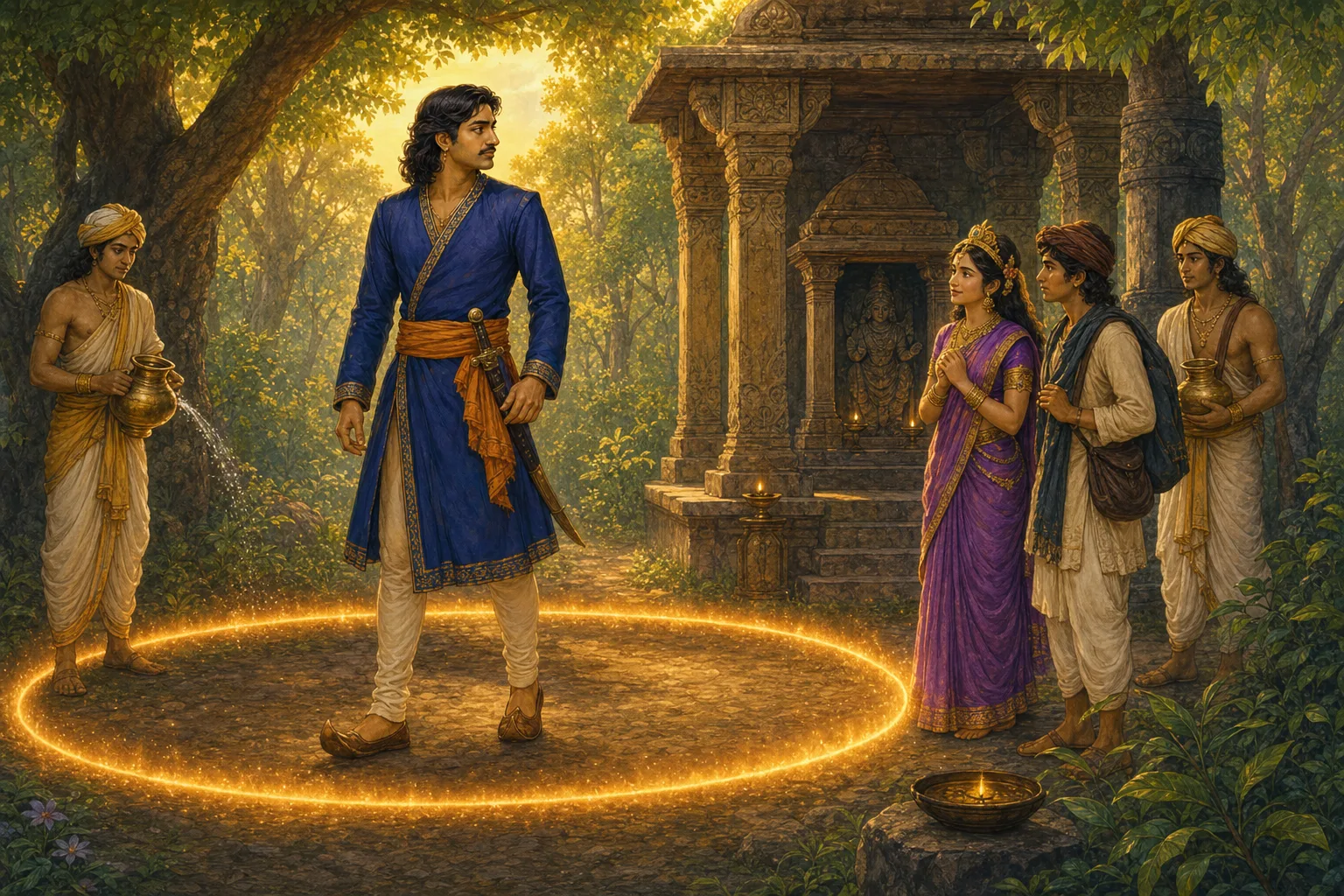
The court fell silent. The guardian understood that Vikram had accepted the danger without seeking the princess, her wealth, or her kingdom. The old vow had been answered by courage used for another person's freedom.
He ended the condition publicly. The princess placed a ceremonial garland around Vikram's neck in gratitude, but Vikram gently returned it to her hands.
"Honour is not ownership," he said. "Your choice remains yours."
The princess then spoke privately with Vasu. He apologized for allowing despair to become obsession and promised that he would respect any answer she gave. After time and honest conversation, they freely chose one another.
The guardian arranged their wedding and offered Vikram jewels, horses, attendants, and part of the kingdom. Vikram transferred the wedding gifts and resources to the new couple so they could begin securely, then refused anything for himself.
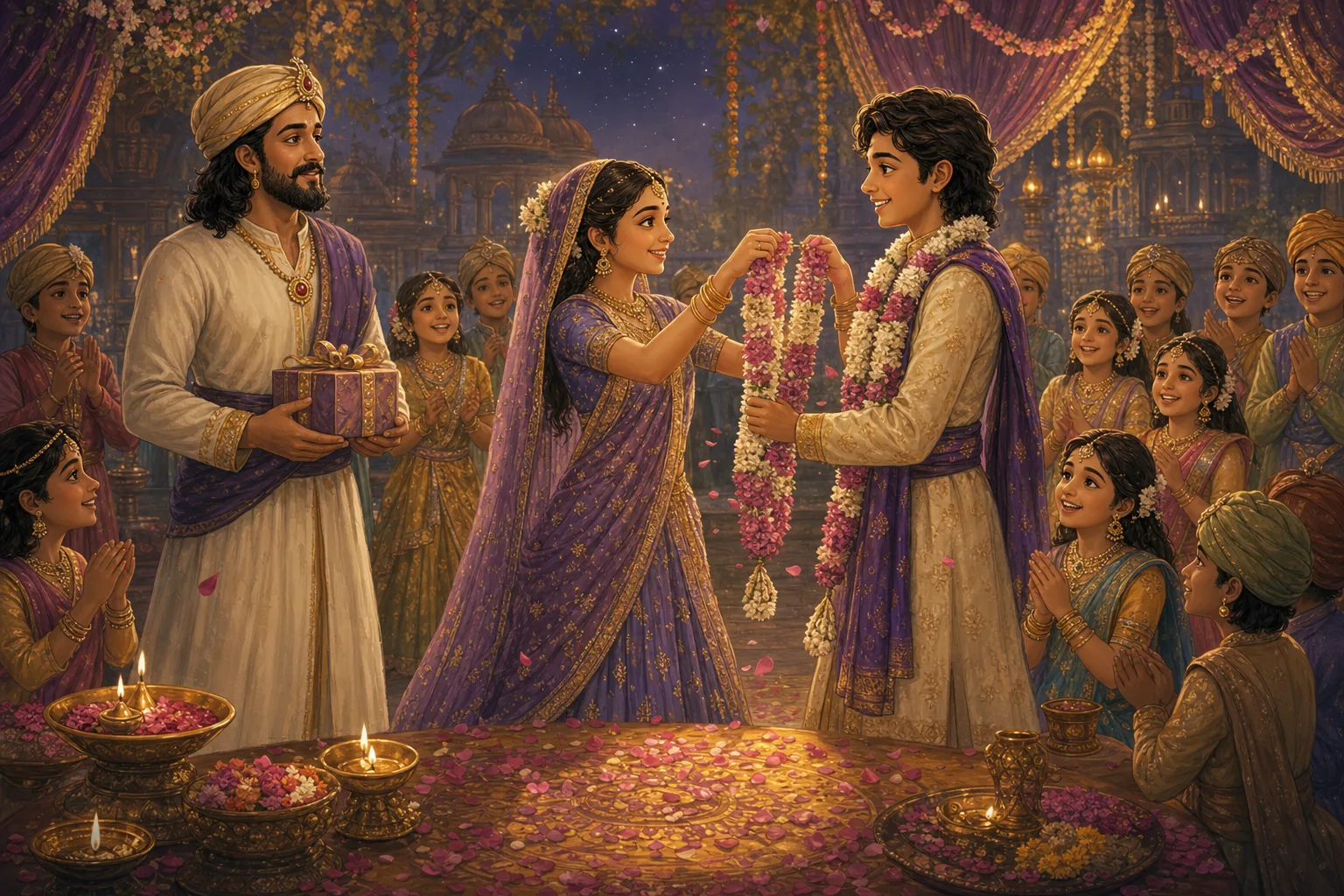
At Vikram's request, the court recorded a new rule: future marriages would require the willing agreement of both people. No one would be expected to prove love by entering a deadly trial, and anyone overwhelmed by despair would receive care rather than mockery.
The princess thanked Vikram not for winning her but for asking what she wanted. Vasu thanked him for stopping his self-destructive path before offering any promise of success.
Vikram returned to Ujjain empty-handed. He had faced the danger, yet its only reward was the end of the danger itself.
Prabhavati asked King Bhoj, "Could you accept great risk for another person's freedom, then step aside when custom tried to hand that person to you as a prize?"
King Bhoj lowered his foot.
Moral: True courage removes needless danger and protects another person's freedom to choose.
“True courage removes needless danger and protects another person's freedom to choose.”
New stories in your inbox
One story every week, and a special tale on festivals. Free, always.
Your email goes to our newsletter provider (beehiiv) so we can send you stories. It is not linked to any child's reading on this site. Unsubscribe any time from the email footer.