Kamodi: The Guardian of the Endless Bowl
Singhasan Battisi
King Bhoj returned with his priests and advisers, determined to reach the seventh step. Before his foot touched it, the guardian Kamodi descended and stood before him.
"The throne has known comfort only under a ruler like Vikramaditya," she said. "He did not merely possess wonders; he understood when another person needed them more."
One night, when Ujjain had grown completely quiet, Vikram heard a cry from beyond the northern river. It came again and again, then stopped. A ruler could have sent guards, but Vikram feared that delay might leave someone without help. He took his sword for protection and went alone so that no large party would frighten an innocent person.
At the riverbank he secured his clothes, crossed the dark water, and followed the sound. A young woman stood beneath a tall tree, weeping. High above her, a prisoner had been fastened where she could not reach him.
Vikram asked, "Are you separated from someone you love? Has someone threatened you? Tell me plainly what has happened."
The woman claimed that the prisoner was her husband. He had been punished for theft, she said, and she had brought him a final meal. "I have tried every way to reach him, but the food remains beyond my hands."
Vikram sensed that the story concealed something. The night was too still, the prisoner made no reply, and the woman's grief changed whenever she thought he was not watching. Yet he would not abandon a plea merely because it seemed strange.
"Stand on my shoulders," he said. "You will be able to reach him, and I will remain below."
The moment she climbed, Vikram realized that she was no ordinary traveller but a powerful magical being. Her plan had been to deceive a frightened or angry rescuer. Vikram neither panicked nor struck at her while she stood above him. He held steady and asked whether the prisoner had received what he needed.
Surprised by his calmness, the woman came down and revealed the truth. "I tested you with a dangerous appearance," she admitted. "You noticed the risk, yet you did not desert someone who might have needed help. You also refused to answer deception with needless harm. Ask for a reward."
Vikram thought of the many hungry people who came to his court. "If you wish to reward me, give me a way to provide food whenever it is truly needed."
The magical woman told him that such a gift belonged to her younger sister, Annapurna. She led him along the river to a small temple and clapped her hands. Annapurna appeared and listened as her sister described Vikram's service.
Annapurna gave Vikram a small bowl. It looked plain enough to belong in any household.
"Ask this vessel for a wholesome meal," she said, "and it will provide enough for those before you. Treat it as a responsibility, not a toy."
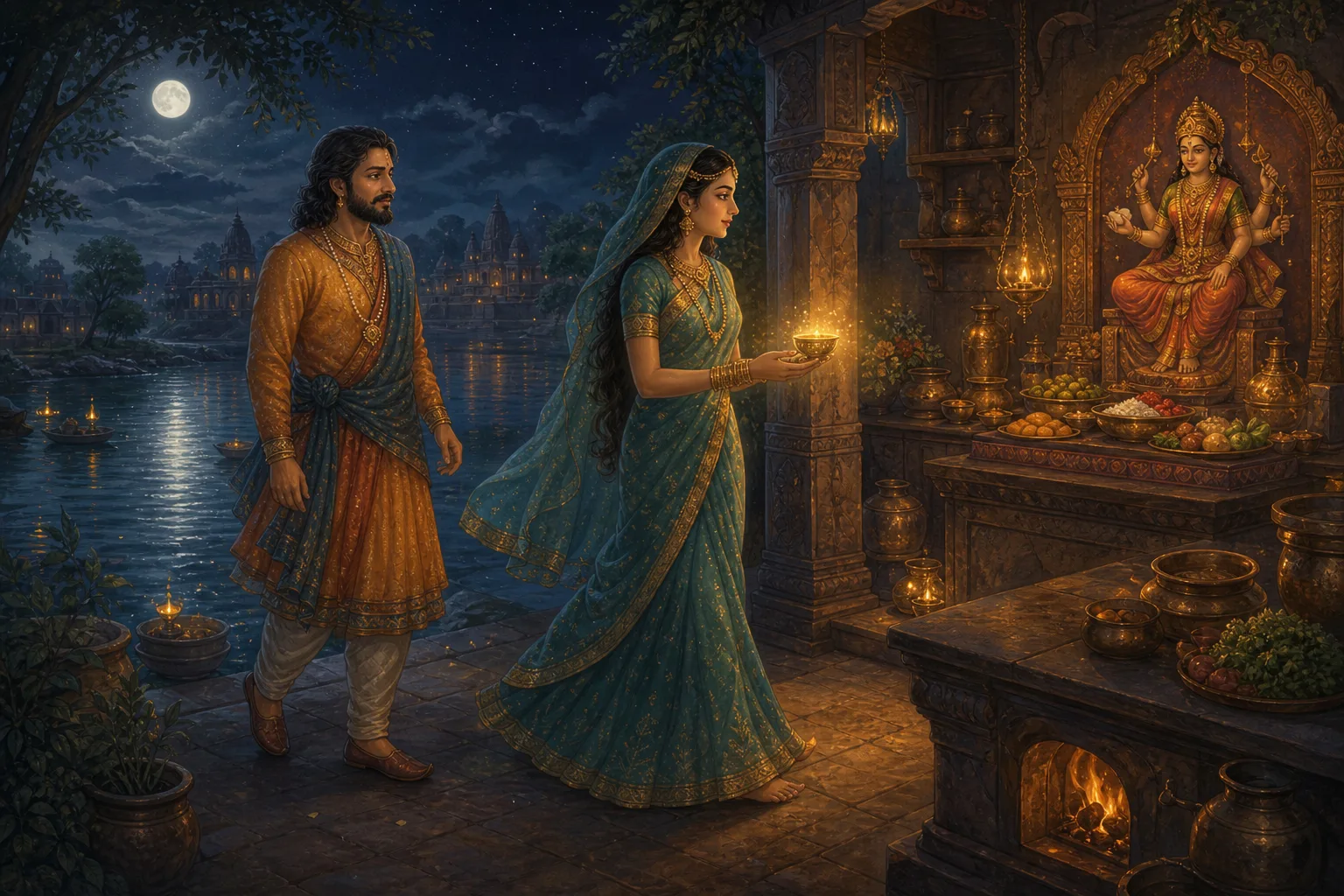
Vikram thanked both sisters and returned to the riverbank. After bathing and offering his morning prayer, he saw a weary Brahmin traveller approaching. Dust covered the man's feet, and hunger had weakened his voice.
"Would you like something to eat?" Vikram asked.
"I have travelled since yesterday with almost nothing," the man replied. "If you can spare a meal, I will be grateful."
Vikram asked what food would restore him. The traveller named a complete warm meal. Vikram placed his hand over the bowl and made the request. To his delight, the food appeared fresh and plentiful. He served the traveller and waited until he had eaten his fill.
When the meal was finished, Vikram said, "A host should also offer an honourable gift. What would help you on your journey?"
The traveller looked at the bowl. "Give me this vessel. One meal will carry me through today. With the bowl I could feed myself—and others—on many difficult roads."
The request came only moments after Vikram had received the wonder. He had imagined it feeding visitors at the palace, supplying travellers during drought, and ensuring that no petitioner left his court hungry. It would have been easy to say that a king could use it for more people.
But the hungry man had no royal kitchen, storehouse, or servants. His need travelled with him every day. Vikram placed the bowl in his hands.
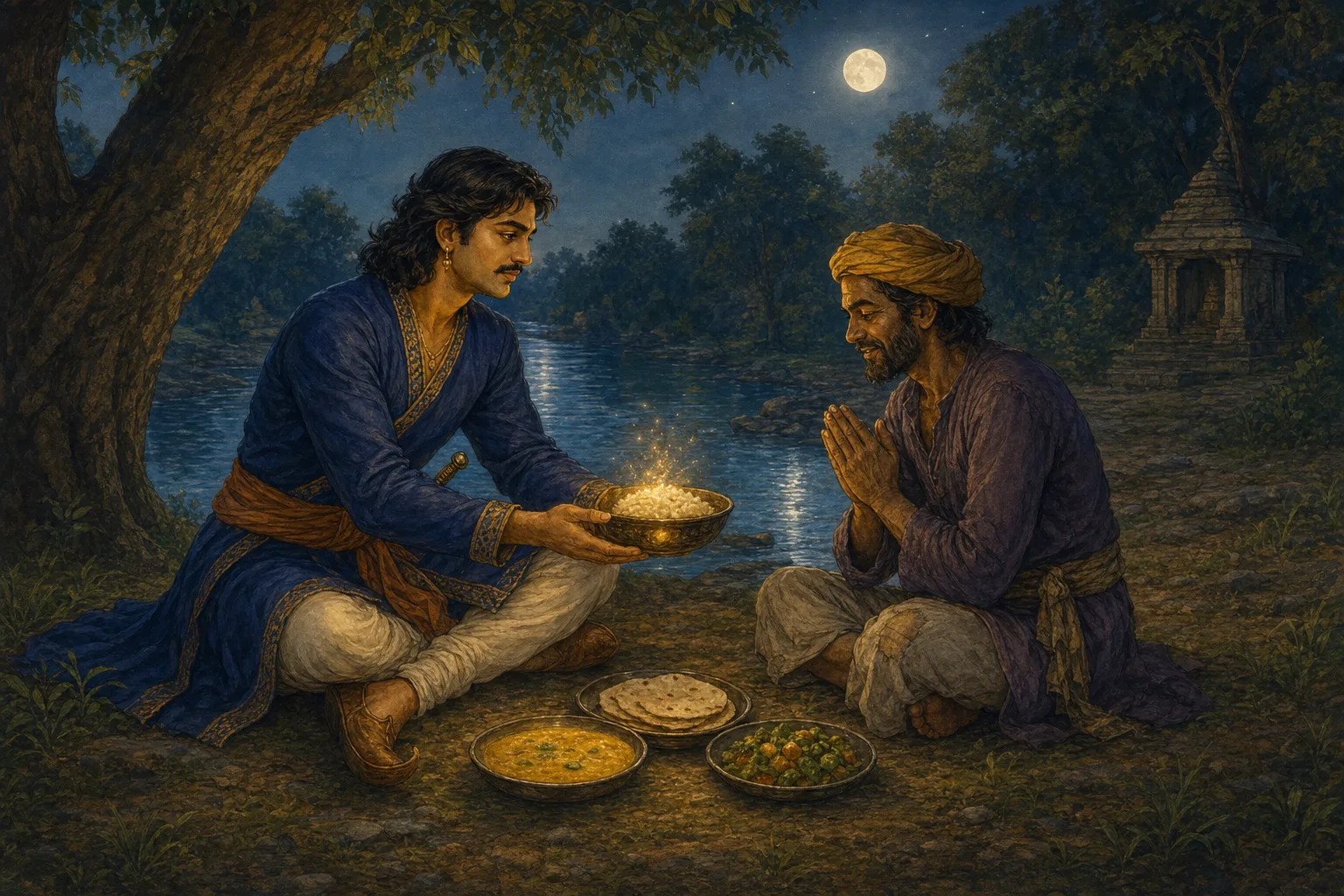
"Use it with care," Vikram said. "A gift that ends hunger should not become an ornament locked inside a treasury."
The traveller blessed him and continued on his way. Vikram returned to Ujjain carrying no magical object. Yet the very first meal from Annapurna's bowl had revealed its true purpose: not to increase the king's collection, but to reach the person whose need was closest.
Kamodi faced King Bhoj. "Would you give away a power you had just received if another person could use it more directly—or would you begin listing reasons why it belonged in your palace?"
King Bhoj withdrew his foot.
Moral: A useful gift has greatest value in the hands of someone who truly needs it.
“A useful gift has greatest value in the hands of someone who truly needs it.”
New stories in your inbox
One story every week, and a special tale on festivals. Free, always.
Your email goes to our newsletter provider (beehiiv) so we can send you stories. It is not linked to any child's reading on this site. Unsubscribe any time from the email footer.