Ruparekha: The Guardian of Living Imagination
Singhasan Battisi
King Bhoj had found the golden throne of Vikramaditya beneath an old mound, and each of its thirty-two carved guardians stopped him with a story before he could sit.
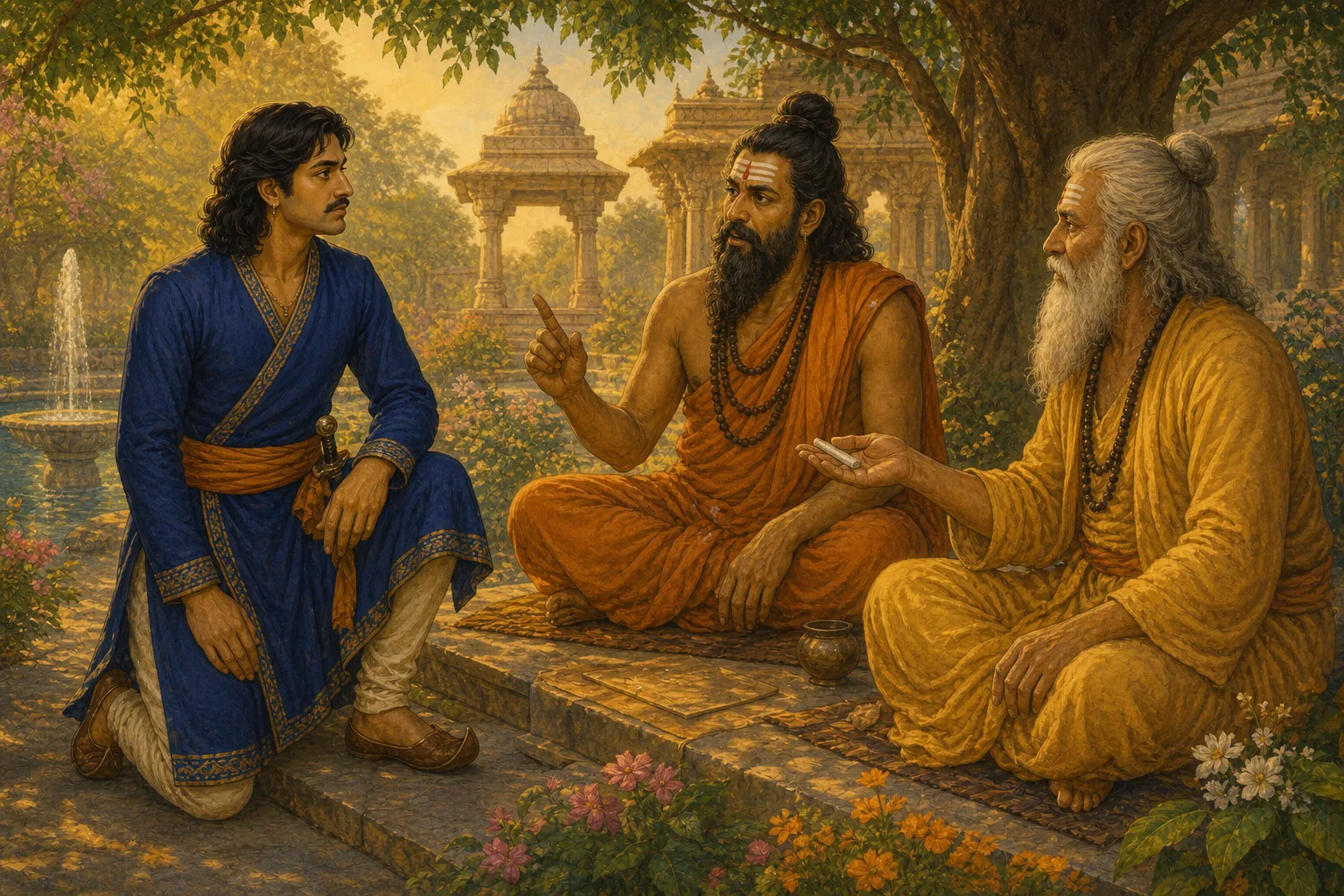
Ruparekha awoke on the eighteenth step. Two travelling yogis came to Vikram after a long debate. One said the mind commanded the senses and therefore ruled the person; the other said disciplined knowledge could command the restless mind. Neither could persuade the other, so they asked Vikram to judge.
Vikram listened before answering. Fire, water, air, and earth compose the body, he said, while the mind directs its senses and limbs. Yet an untrained mind can ruin what it governs. Knowledge and practice can check its impulses; mastery begins only when understanding guides both mind and senses. The yogis abandoned their pride and accepted this balanced answer. In gratitude they gave Vikram magical chalk: whatever he drew by day would appear vividly at night.
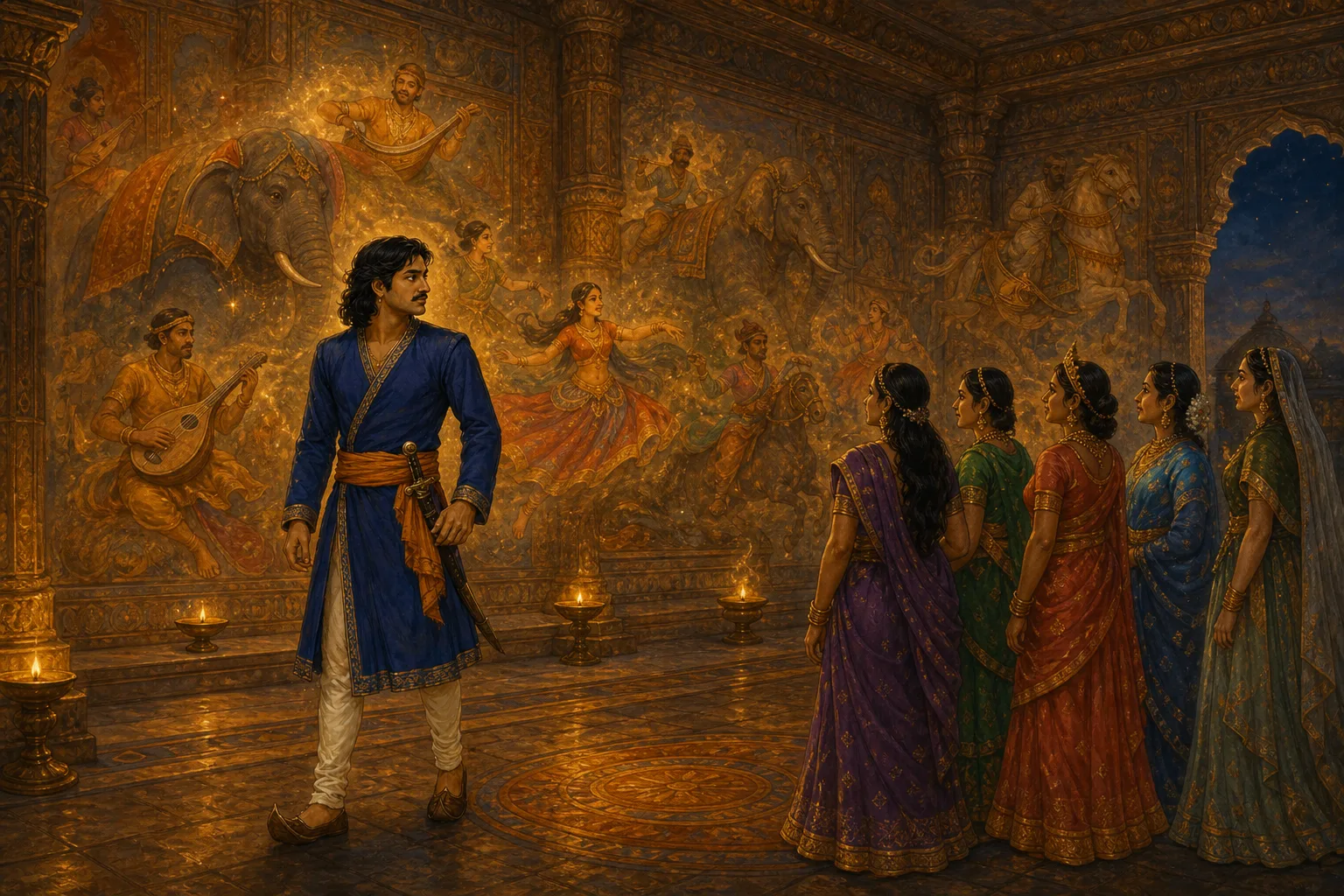
Vikram cleared and freshly plastered a quiet hall. First he drew Krishna, Saraswati, and other divine figures. At dusk the hall rang with a joyful greeting, and the painted figures seemed present, speaking gently until dawn returned them to the wall. The next day he drew temples, elephants, horses, palanquins, chariots, and a full procession. On another wall he drew musicians, dancers, drums, veena, flute, cymbals, and many instruments. That evening colour, rhythm, and graceful movement filled the room.
Night after night Vikram stayed there, absorbed in the wonder. Four queens went to the hall and spoke plainly: the magic was beautiful, but real people who loved and depended on him were being neglected.
Vikram did not dismiss their concern. He promised to restore the balance and asked what would reassure them. When they requested the chalk itself, he gave it freely. The marvel had been a gift, not a master. He returned to family and public duties, keeping the lesson that imagination should enrich life rather than replace it.
Ruparekha asked Bhoj, "Can you enjoy power without letting wonder rule your judgment?" Bhoj stepped back.
Moral: Imagination becomes wisdom when wonder is guided by understanding and shared responsibly.
“Imagination becomes wisdom when wonder is guided by understanding and shared responsibly.”
New stories in your inbox
One story every week, and a special tale on festivals. Free, always.
Your email goes to our newsletter provider (beehiiv) so we can send you stories. It is not linked to any child's reading on this site. Unsubscribe any time from the email footer.