Chitrakala: The Guardian of the Night Investigation
Singhasan Battisi
King Bhoj had found the golden throne of Vikramaditya beneath an old mound, and each of its thirty-two carved guardians stopped him with a story before he could sit.
At the twenty-fourth step, Chitrakala told of a strange exchange Vikram observed beside a river. A woman drying her hair and a merchant's son on the opposite bank seemed to speak through gestures—a loosened veil, a hand to the heart, and a signal about darkness. Vikram did not accuse them from a distance. He asked a trusted scout to identify the house and interpret only what could be supported by evidence.
That evening Vikram asked a scholar whether anyone could know every secret of another person. The scholar answered that appearances were unreliable and even wise people must investigate. After nightfall Vikram dressed plainly, took the scout to guide him, and then continued alone to the rear window the pair had indicated.
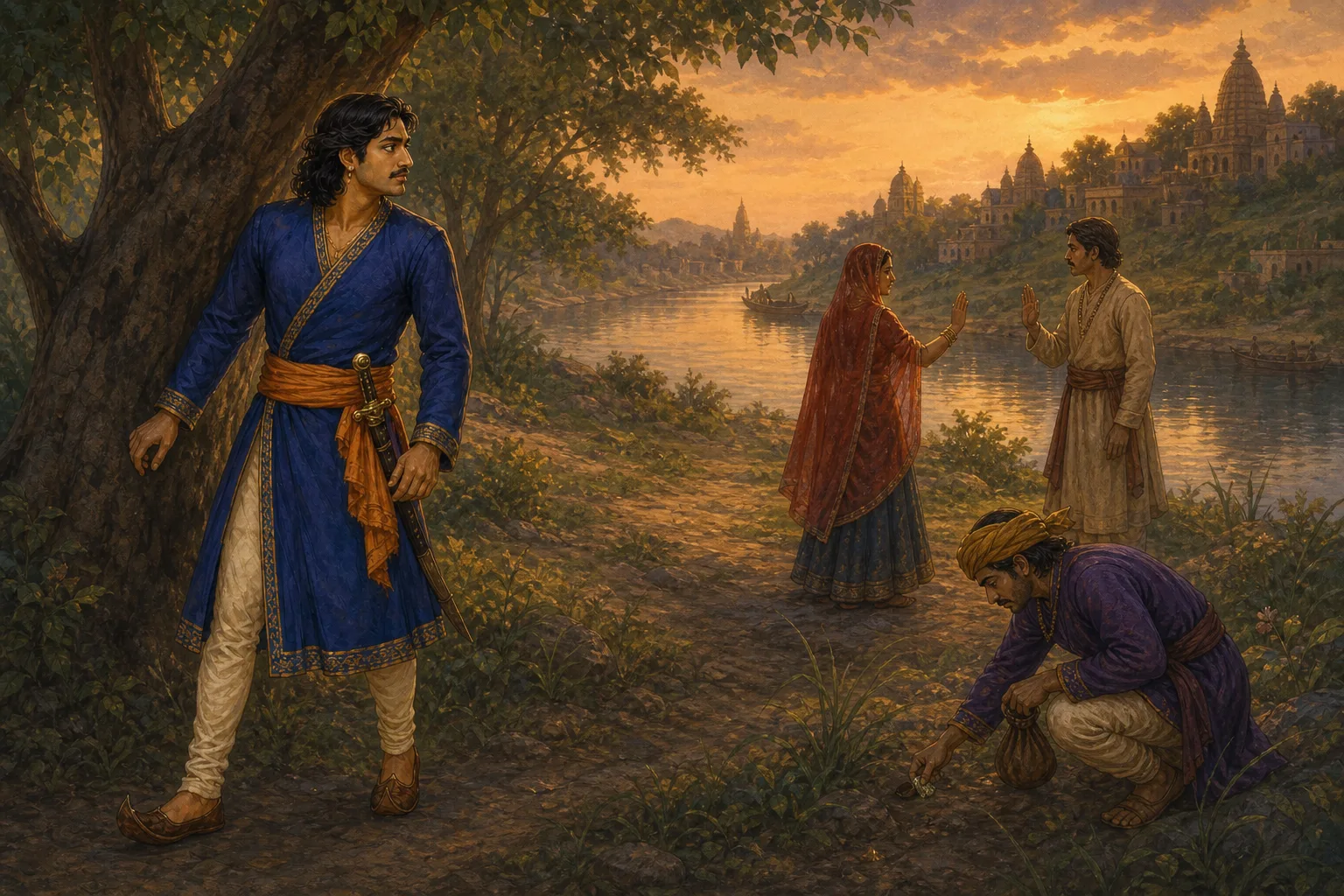
The woman mistook Vikram for her expected companion. She brought a box of household jewels and urged him to help her escape after attacking her husband. Vikram refused to become part of further harm. He carried the evidence across the river, alerted trustworthy members of the household, and ensured that the injured merchant received care. When the woman later staged a public display to hide what had happened, Vikram intervened before more life was endangered.
She bitterly warned him that deception could also exist inside a palace. Vikram did not accept the accusation as proof, but neither did he ignore it. He stayed hidden and watched the palace garden on the following night.
Six women from the royal household carried food to a secluded monastery, where a corrupt ascetic used supernatural display and secrecy to manipulate them. Vikram observed before confronting him. He compelled the ascetic to reveal the trick by which one appearance became six and then ended his access to the household and the court.
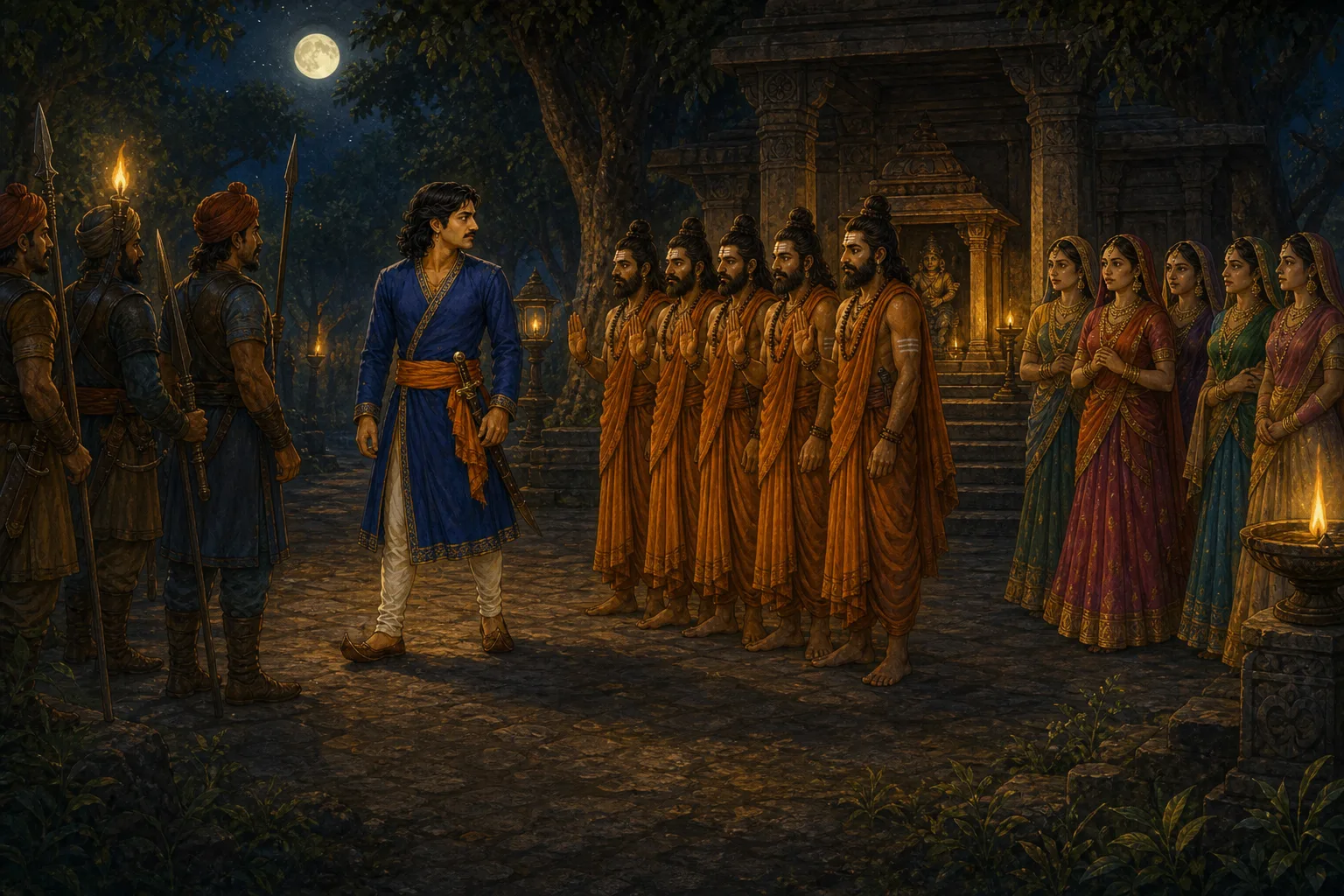
Vikram stripped the ascetic of his influence and confined him to await judgment. The people he had manipulated were moved out of danger, questioned one by one, and asked to face honestly the harm that had been done. Property taken through deceit was returned or used to support families in need.
He did not let anger replace justice. Continuing dangers were restrained; those manipulated received protection and a chance to rebuild trust.
Chitrakala asked Bhoj, "Will you investigate wrongdoing even when the truth reaches your own home?" Bhoj stepped back.
Moral: Good judgment gathers evidence, protects the vulnerable, and stops harm without becoming cruel.
“Good judgment gathers evidence, protects the vulnerable, and stops harm without becoming cruel.”
New stories in your inbox
One story every week, and a special tale on festivals. Free, always.
Your email goes to our newsletter provider (beehiiv) so we can send you stories. It is not linked to any child's reading on this site. Unsubscribe any time from the email footer.