Sundaravati: The Guardian of the Wedding Road
Singhasan Battisi
King Bhoj had found the golden throne of Vikramaditya beneath an old mound, and each of its thirty-two carved guardians stopped him with a story before he could sit.
Sundaravati awoke on the sixteenth step and asked Bhoj to hear how Vikram protected a promise that was not his own.
In Ujjain lived a prosperous merchant whose son, Satsen, was learned, courteous, and devoted to his parents. When the time came to seek a bride, the merchant sent trustworthy scholars to distant regions. One crossed the sea and found a merchant's daughter whose family was also seeking a worthy match. Both families made careful inquiries, the young people consented, and the wedding day was fixed.
Preparations filled Ujjain with music. Clothes were stitched, relatives invited, and gifts packed. Then the merchant calculated the journey again and grew pale: ordinary ships could not carry the wedding party across the sea before the appointed day. Missing it would embarrass both households and break a solemn promise.
Someone remembered a wondrous travelling platform recently brought to Vikram by a gifted carpenter. It could travel wherever its rider wished. Vikram had rewarded the maker with two hundred thousand coins and kept the invention safely. The merchant went to court, explained every difficulty, and asked only to borrow it.
Vikram immediately ordered that the platform be given to him and offered any other supplies he required. Because it could carry only a few travellers, the merchant, Satsen, and the family priest went ahead while the larger party followed by ship.
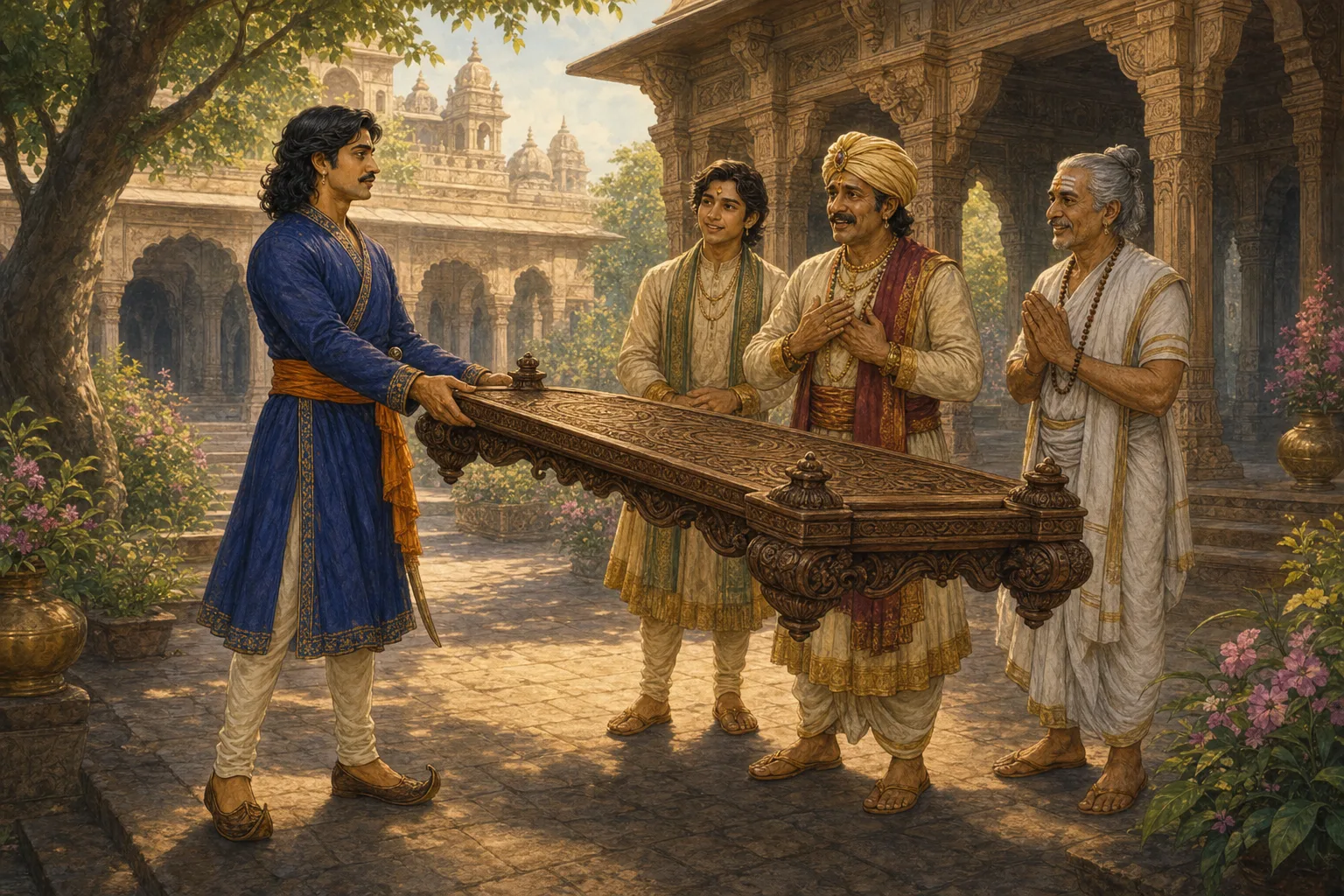
They arrived to find the bride's city decorated but anxious. Her father was surprised to see only three guests until he heard how they had crossed the sea. He gathered relatives and townspeople at once. The ceremonies were celebrated with dignity, and the bride's family sent the couple home with household goods, animals, ornaments, and blessings. The merchant placed the heavier gifts aboard a ship and returned by the travelling platform.
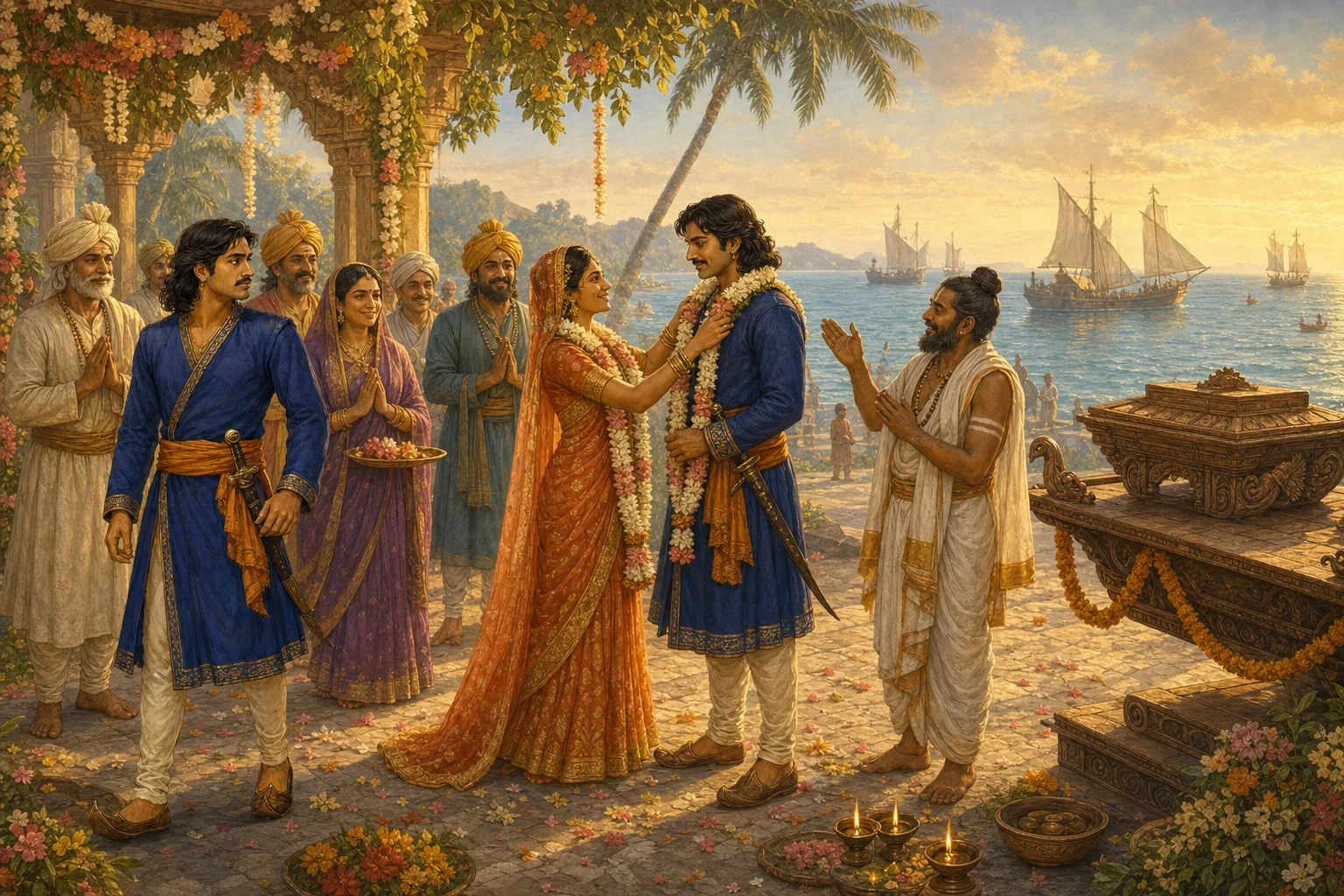
At Vikram's gate the merchant returned the platform and offered four fine horses, jewels, and ceremonial cloth in gratitude. Vikram accepted neither repayment nor praise.
"What I give, I do not take back," he said. He presented the platform permanently to the family and added one hundred thousand coins for the newly married couple. "Distance should not keep either of you from your parents, and a new household should begin in security."
Sundaravati asked Bhoj, "Would you lend a royal wonder for another family's promise?" Bhoj stepped back.
Moral: Keeping a promise sometimes means lending another person the means to fulfil it.
“Keeping a promise sometimes means lending another person the means to fulfil it.”
New stories in your inbox
One story every week, and a special tale on festivals. Free, always.
Your email goes to our newsletter provider (beehiiv) so we can send you stories. It is not linked to any child's reading on this site. Unsubscribe any time from the email footer.