Jagajjyoti: The Guardian of Indra's Blessing
Singhasan Battisi
King Bhoj had found the golden throne of Vikramaditya beneath an old mound, and each of its thirty-two carved guardians stopped him with a story before he could sit.
Jagajjyoti awoke on the twenty-seventh step. During a court discussion someone declared that no sovereign could equal Indra, ruler of heaven. Vikram did not punish the comparison or demand praise for himself. He became curious about the responsibilities behind Indra's greatness and wished to meet him rather than compete.
With the betals' help, Vikram crossed the distance to Indra's assembly. He dismissed his guides, entered respectfully, and bowed. Asked his name, country, and purpose, he said simply that he was Vikram of Ujjain and had come for the honour of seeing Indra's court. Indra had heard of his courage and generosity and welcomed him warmly.
Indra offered any desired gift. Vikram replied that good counsel and the meeting itself were enough; whatever a ruler truly needed should first be earned through service. Pleased by his restraint, Indra gave him a radiant emblem and a celestial vehicle, then blessed the golden throne so that anyone grasping it with hostile greed would lose clear sight until remembering Vikram with respect.
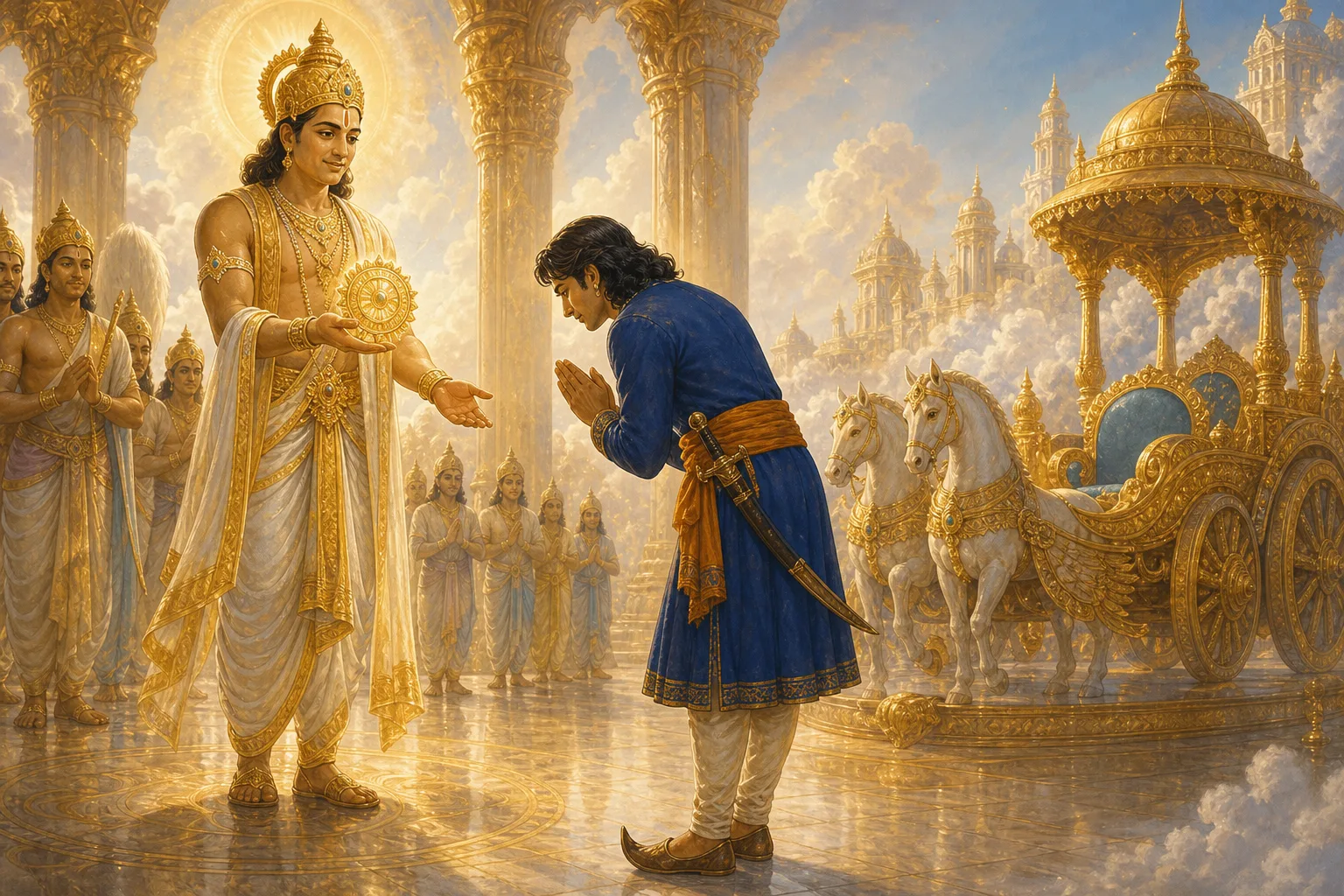
Back in Ujjain, Vikram celebrated with gratitude but treated the blessing as protection for public trust, not a weapon against criticism. Jagajjyoti then warned Bhoj not to test a sacred inheritance carelessly. Bhoj touched it before hearing her fully; his hand seemed fixed and his sight clouded. Only when he set pride aside and invoked Vikram with respect did the fear pass. He had experienced the difference between seeking responsibility and seizing prestige.
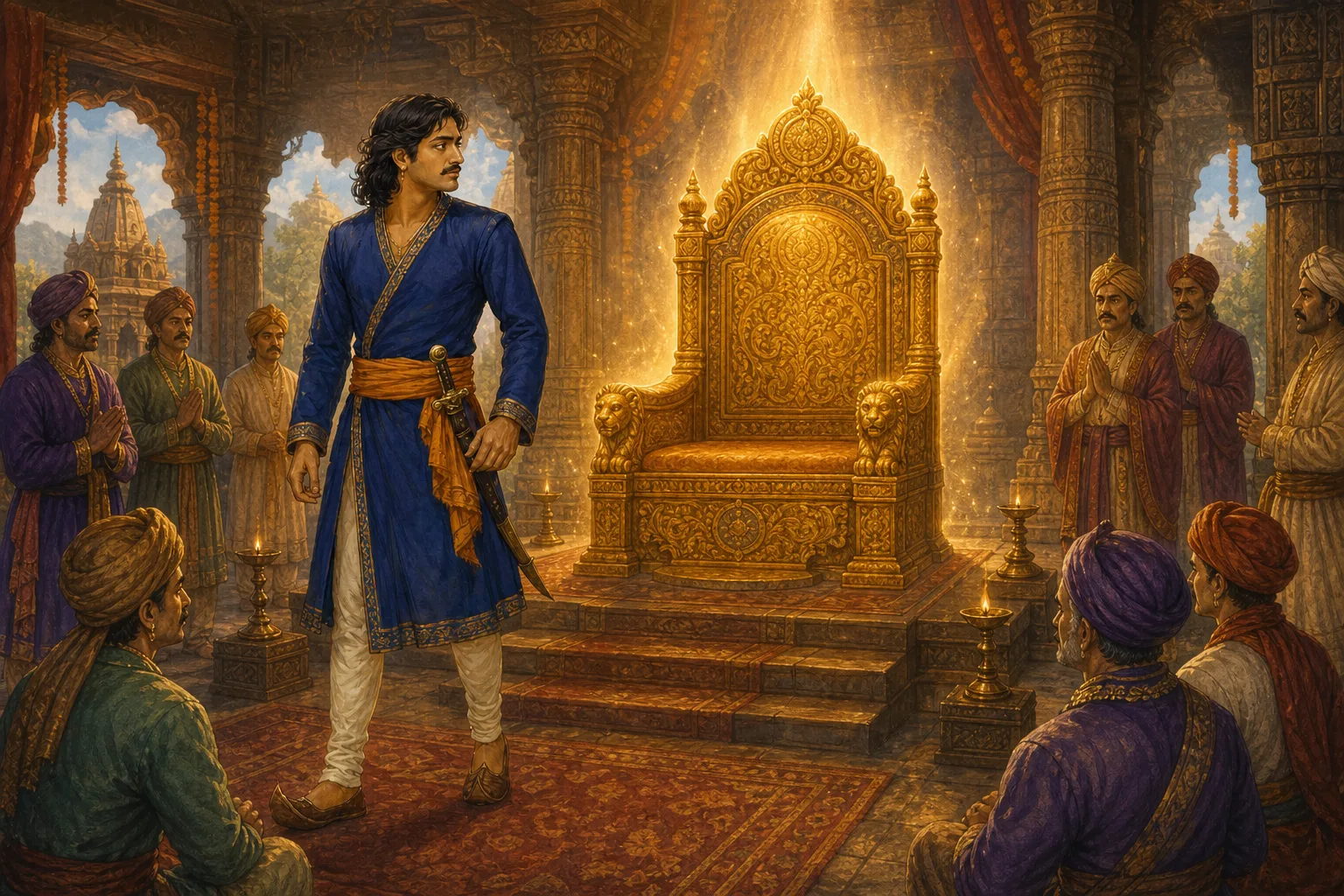
Jagajjyoti asked Bhoj, "Will a great gift make you more careful rather than more proud?" Bhoj stepped back.
Moral: A worthy ruler seeks wisdom before gifts and treats every blessing as a responsibility.
“A worthy ruler seeks wisdom before gifts and treats every blessing as a responsibility.”
New stories in your inbox
One story every week, and a special tale on festivals. Free, always.
Your email goes to our newsletter provider (beehiiv) so we can send you stories. It is not linked to any child's reading on this site. Unsubscribe any time from the email footer.