Trilochani: The Guardian of Fair Exchange
Singhasan Battisi
King Bhoj had found the golden throne of Vikramaditya beneath an old mound, and each of its thirty-two carved guardians stopped him with a story before he could sit.
The thirteenth guardian, Trilochani, awoke in forest-green robes.
"Judgment is easy when the judge loses nothing," she said. "Vikram once settled a quarrel by contributing more than words."
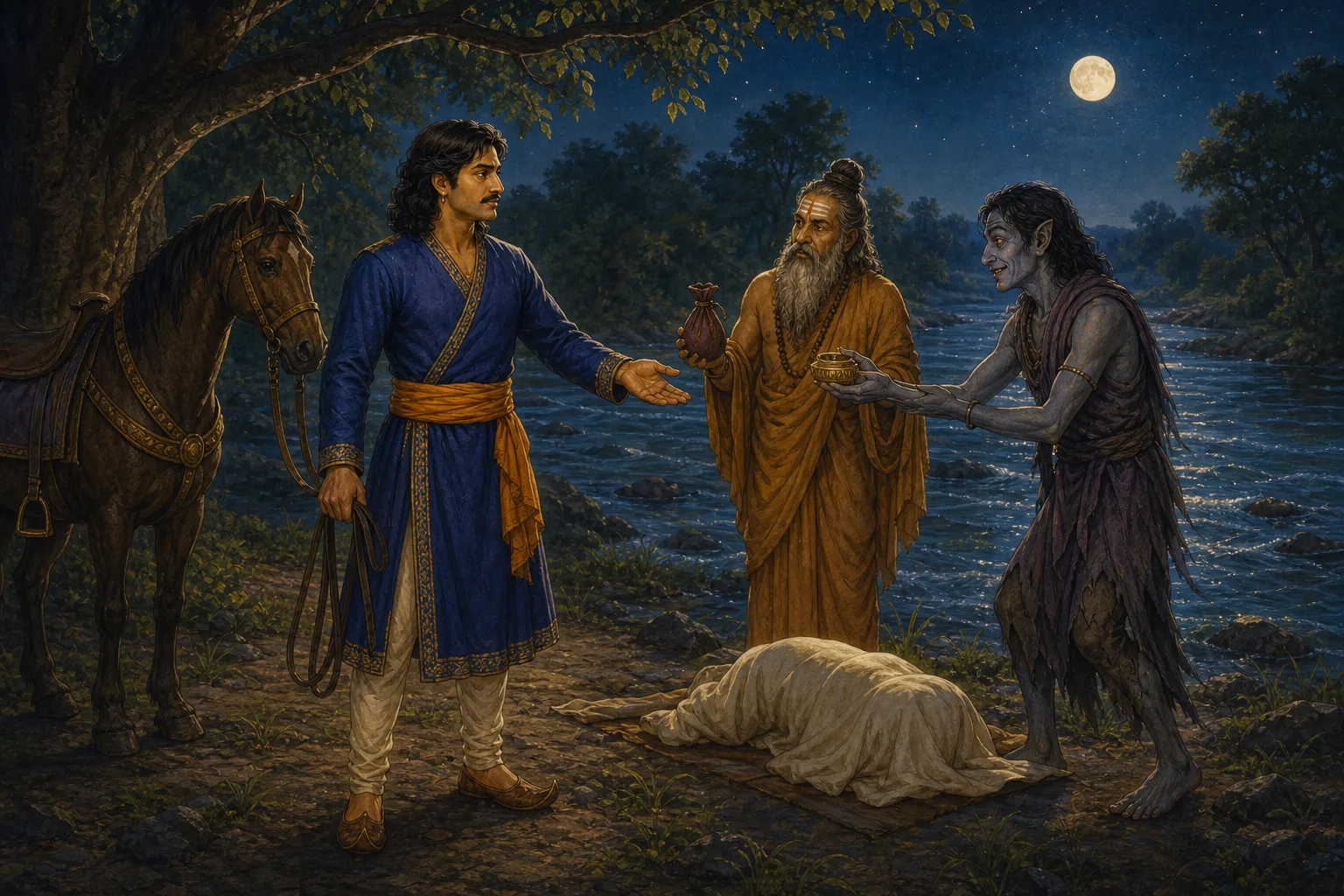
Vikram had gone hunting with a large party. Following a swift deer, he travelled far beyond his companions. Evening came, rain swelled the river, and no safe crossing remained. Vikram tied his horse beneath a tree and waited for daylight.
Through the darkness he heard two voices arguing in the water. A yogi and a betal reached the bank carrying an abandoned body that the flooded current had brought downstream.
"I found it first," said the yogi. "I require it for a difficult rite through which I hope to gain knowledge."
"I carried it out of the river," replied the hungry betal. "It is the food I have earned."
They recognized Vikram and asked him to judge. Vikram questioned them carefully. Neither claim was invented, and neither need would disappear merely because the other spoke louder.
"A judge receives a fee before hearing a dispute," Vikram said, partly to test whether each claimant truly valued his case.
The yogi gave him a magical pouch. "Ask it for whatever resources you genuinely need, and it will provide them."
The betal gave him a small enchanted tilak. "Touch this to your forehead and you may pass unseen."
Vikram then gave his decision. The abandoned body would go to the yogi for his rite, because it was the particular thing his work required. But the betal's hunger was also real. Vikram offered his own horse as food.
The betal was astonished. The horse was Vikram's only easy way home, yet the king would not satisfy one claimant by ignoring the other. Both accepted the judgment and departed without further quarrel.
Vikram was now alone in the wet forest. Using the pouch, he requested a simple meal. After eating, he applied the tilak so that wild creatures and thieves would not trouble him. He walked through the night and reached Ujjain safely.
Near the city he met a poor traveller whose family lacked food and working tools. The man did not ask for luxury; he wanted a dependable way to rebuild his household.
Vikram could have kept the pouch for every future royal need. Instead, he placed it in the traveller's hands and explained that its power should be used responsibly.
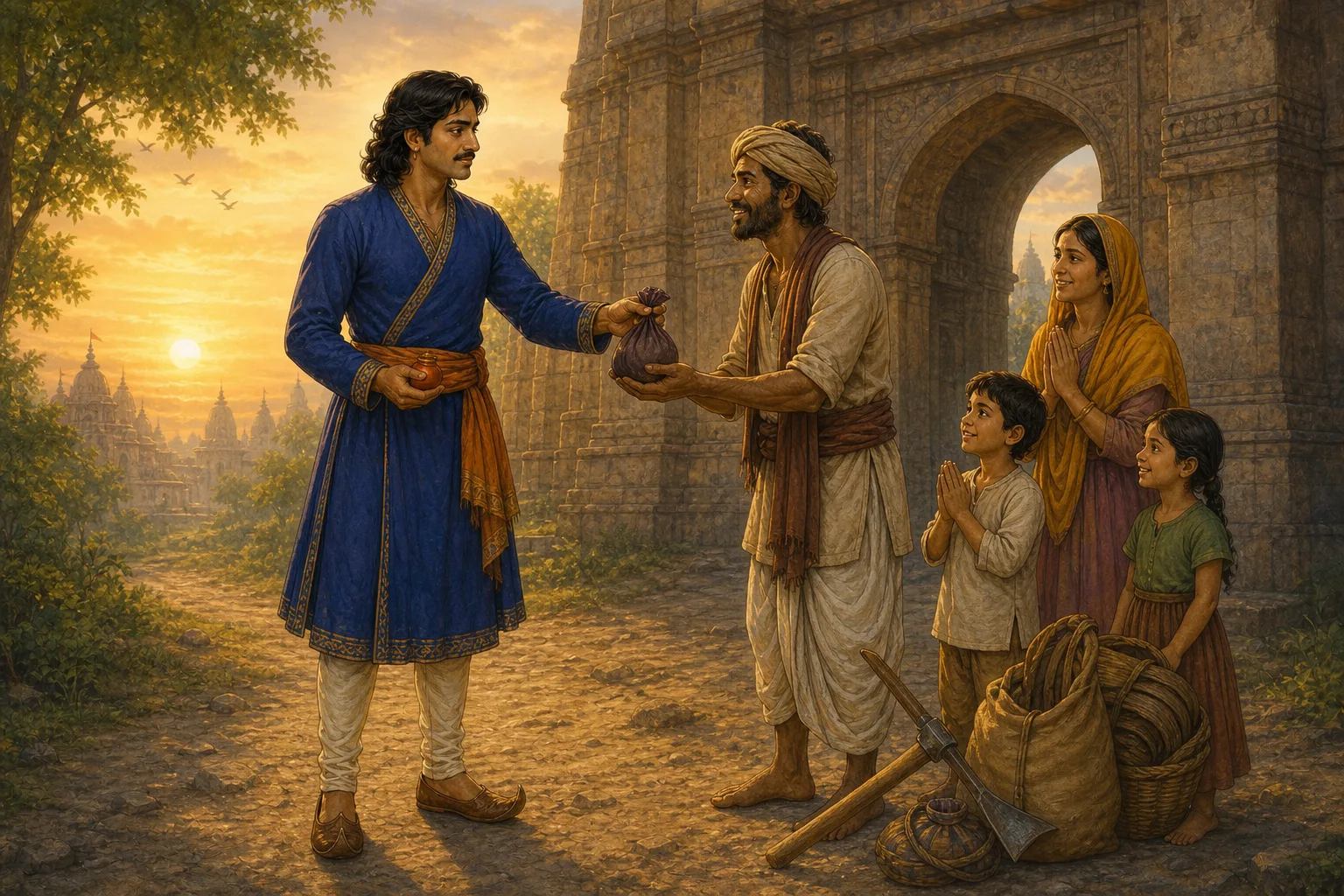
He kept the tilak, not as an ornament, but as a reminder that a fair judgment sometimes requires a ruler to see what pride and possession make invisible.
Trilochani asked King Bhoj, "Would you settle two honest claims by surrendering your own comfort, and then give away the reward that could have enriched you?"
King Bhoj stepped back.
Moral: Fair judgment respects every genuine need and asks what the judge can contribute to the solution.
“Fair judgment finds a solution that respects each real need instead of choosing a loud winner.”
New stories in your inbox
One story every week, and a special tale on festivals. Free, always.
Your email goes to our newsletter provider (beehiiv) so we can send you stories. It is not linked to any child's reading on this site. Unsubscribe any time from the email footer.