Madhumalati: The Guardian of Lasting Generosity
Singhasan Battisi
King Bhoj came to the ninth step in a cheerful mood. Madhumalati awakened and said, "It is pleasant to give a grand gift. It is harder to listen when the receiver explains that the gift will not solve the problem."
During Vikramaditya's reign, a great sacred ceremony was arranged in Ujjain. Invitations travelled throughout the kingdom. Scholars came to recite and teach, rulers brought their attendants, merchants offered supplies, artists and poets arrived, and people in need gathered because the king had promised that no sincere visitor would be ignored.
Vikram did not treat the ceremony only as a display of wealth. He asked that travellers receive water and shade, that kitchens serve everyone without judging their clothing, and that elderly visitors be seated where they could hear. He also told his ministers to record what different communities needed after the festival ended.
On the principal day, Vikram sat near the sacred fire, carefully reading the required verses. An elderly Brahmin scholar entered quietly. Seeing the king's concentration, he did not push through the gathering or loudly announce himself. From a respectful distance he raised his hand and blessed Vikram with long life and wise rule.
Vikram looked up from the text. He noticed that the scholar had offered a blessing before receiving a formal welcome or gift.
"You have done something generous," Vikram said when the reading was complete. "You wished me well without first asking what you would receive."
He ordered that the scholar be given one hundred thousand rupees. Courtiers murmured at the size of the gift. The scholar accepted it but did not leave. He stood thoughtfully, as though choosing honest words.
"Maharaj," he said, "your gift is magnificent, and I do not speak from ingratitude. But a single amount will be spent. I support students, preserve manuscripts, and provide food for travellers who come to study. If the money ends, the work ends with it. Please consider support that can continue."
Some in the assembly expected Vikram to take offence. A king might say that the receiver should praise whatever was offered. Vikram instead asked questions: How many students lived with the scholar? What did grain, lamps, writing materials, and repairs cost? Did the school own land whose harvest could support it?
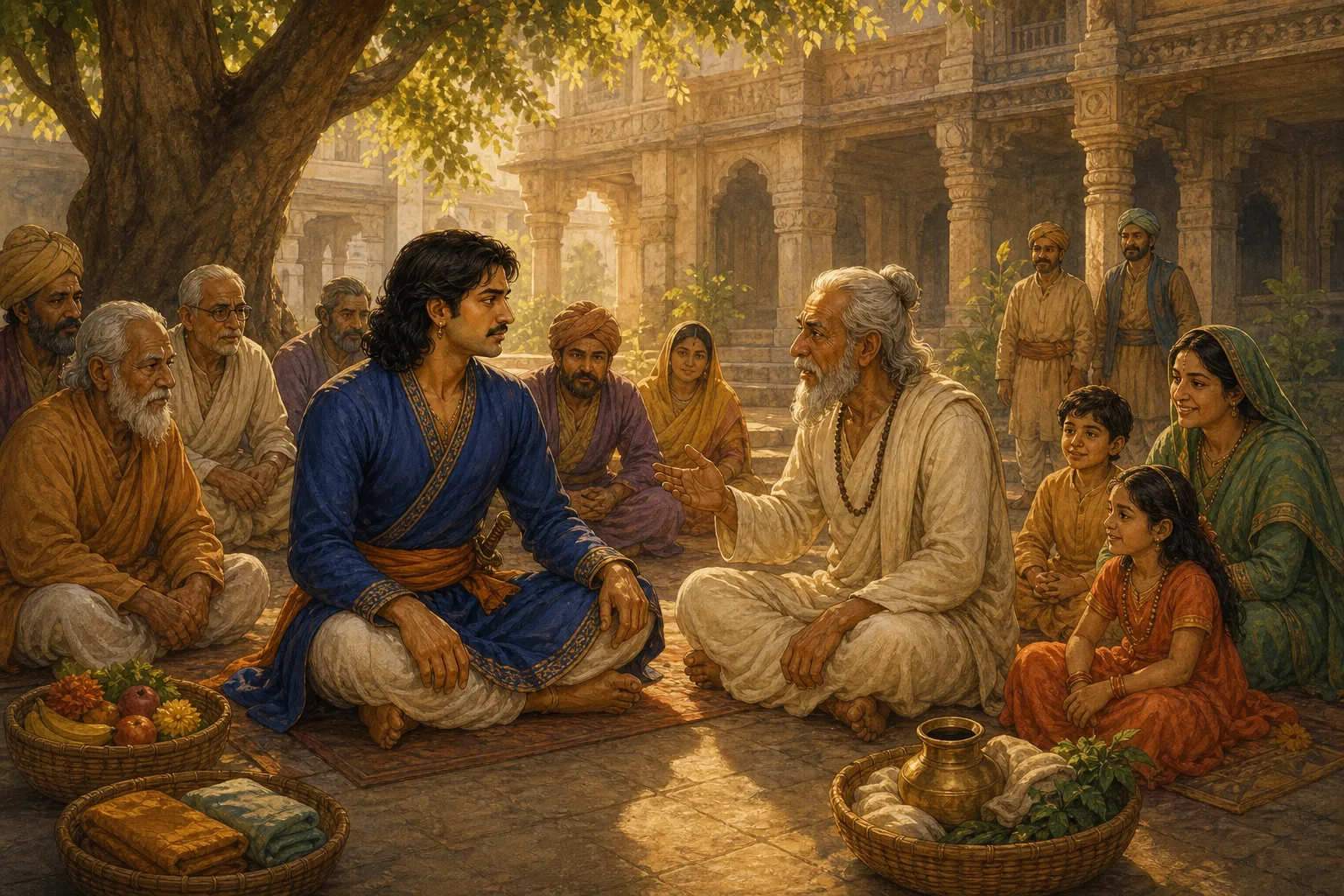
After hearing the answers, Vikram increased the gift to five hundred thousand rupees and arranged for part of it to establish a dependable source of income for the school. The rest could repair the building, replace damaged manuscripts, and meet immediate needs.
The scholar bowed. "Now your generosity will continue working even when neither of us stands in this hall."
Other scholars had watched the exchange. Some had been afraid to speak because they did not want to appear greedy. Vikram invited them forward one by one. He did not give everyone the same amount merely because equality looked simple. He listened to their circumstances and provided appropriate help—grain for a small school, copying materials for a library, travel support for a teacher, and regular assistance for an elderly scholar with no family.
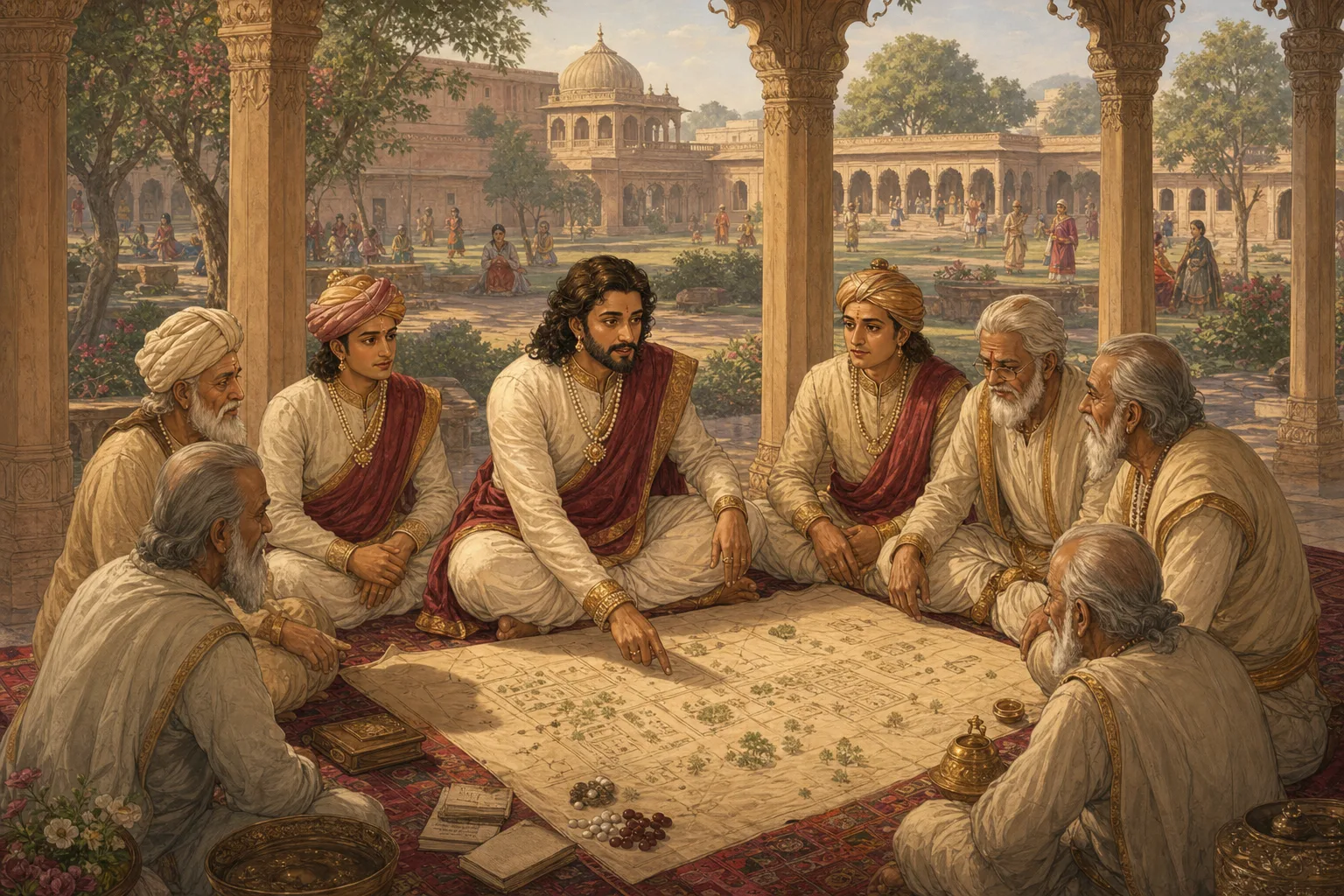
The festival therefore left more than music, decorations, and stories of a wealthy king. Months afterward, students still had food, teachers still had lamps and paper, travellers still found shelter, and manuscripts continued to be copied.
Madhumalati looked at King Bhoj. "Vikram did not think, 'I have given enough, so no one may question me.' He allowed the receiver's knowledge to improve the gift. Can you listen after your generosity has already been praised?"
King Bhoj lowered his foot from the ninth step.
Moral: Generosity listens carefully and gives in a way that creates lasting security.
“Generosity listens carefully and gives in a way that creates lasting security.”
New stories in your inbox
One story every week, and a special tale on festivals. Free, always.
Your email goes to our newsletter provider (beehiiv) so we can send you stories. It is not linked to any child's reading on this site. Unsubscribe any time from the email footer.