The Throne Beneath the Mound
Singhasan Battisi
King Bhoj ruled from the busy city of Ujjain. People knew him as a thoughtful ruler who listened carefully before making a decision.
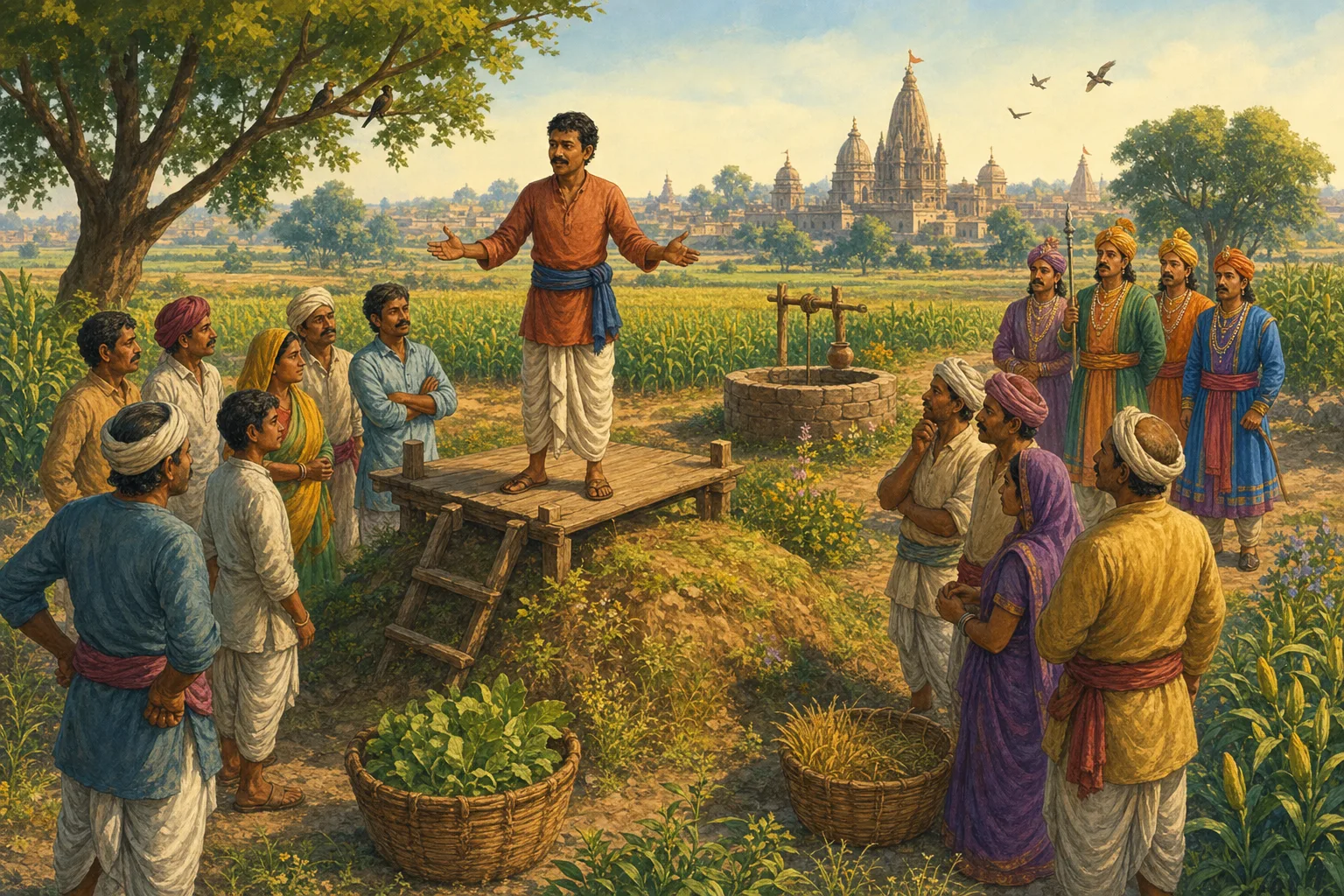
Beyond the city walls lay gardens, wells, fields, and grazing land. On one farm stood an old raised mound. A worker had built a small platform on top of it so he could watch over the crops.
One afternoon, four royal messengers passed the farm. The worker climbed onto the platform and suddenly called out like a king holding court.
"Bring King Bhoj before me!" he declared. "I will hear whether he has governed fairly."
The messengers stared at him. But the moment the worker climbed down, his proud manner vanished.
"Did I say something foolish?" he asked, embarrassed.
The messengers did not punish or mock him. They returned to the palace and told King Bhoj exactly what they had seen.
King Bhoj was curious. The next day he went to the farm quietly and watched from a distance.
Once again, the worker stepped onto the mound. His back straightened, his voice became calm and commanding, and he began settling small disagreements among the other workers. His judgments were so balanced that both sides felt heard.
When he stepped down, he remembered almost nothing.
"The change comes from that place," King Bhoj said. "There may be something beneath the mound."
He invited scholars and experienced builders to examine the ground. They agreed that the mound showed signs of hiding an ancient structure. King Bhoj ordered a careful excavation, warning everyone not to damage whatever they might find.
The workers dug through layer after layer of soil. At last, their tools struck something solid.
Beneath the mound stood a magnificent golden throne. Jewels shimmered along its steps, and thirty-two carved guardians surrounded its seat. Each guardian held a lotus and seemed almost ready to speak.
Many people tried to lift the throne, but it would not move.
One scholar said, "Perhaps this is not an object to be dragged away by force. Let us first honour its history."
King Bhoj agreed. Food and gifts were distributed, musicians played, and the throne was raised with ceremony and care. This time it moved easily.
Craftworkers cleaned it without changing its ancient design. When the dust was gone, the throne shone so brightly that everyone in the hall fell silent.
King Bhoj wished to sit upon it. Still, he did not rush. He asked the scholars to choose an auspicious day and invited the people of the kingdom to witness the occasion.
On the chosen day, the hall filled with music. King Bhoj approached the first step.
He lifted his foot.
Before it touched the throne, all thirty-two guardians burst into laughter.
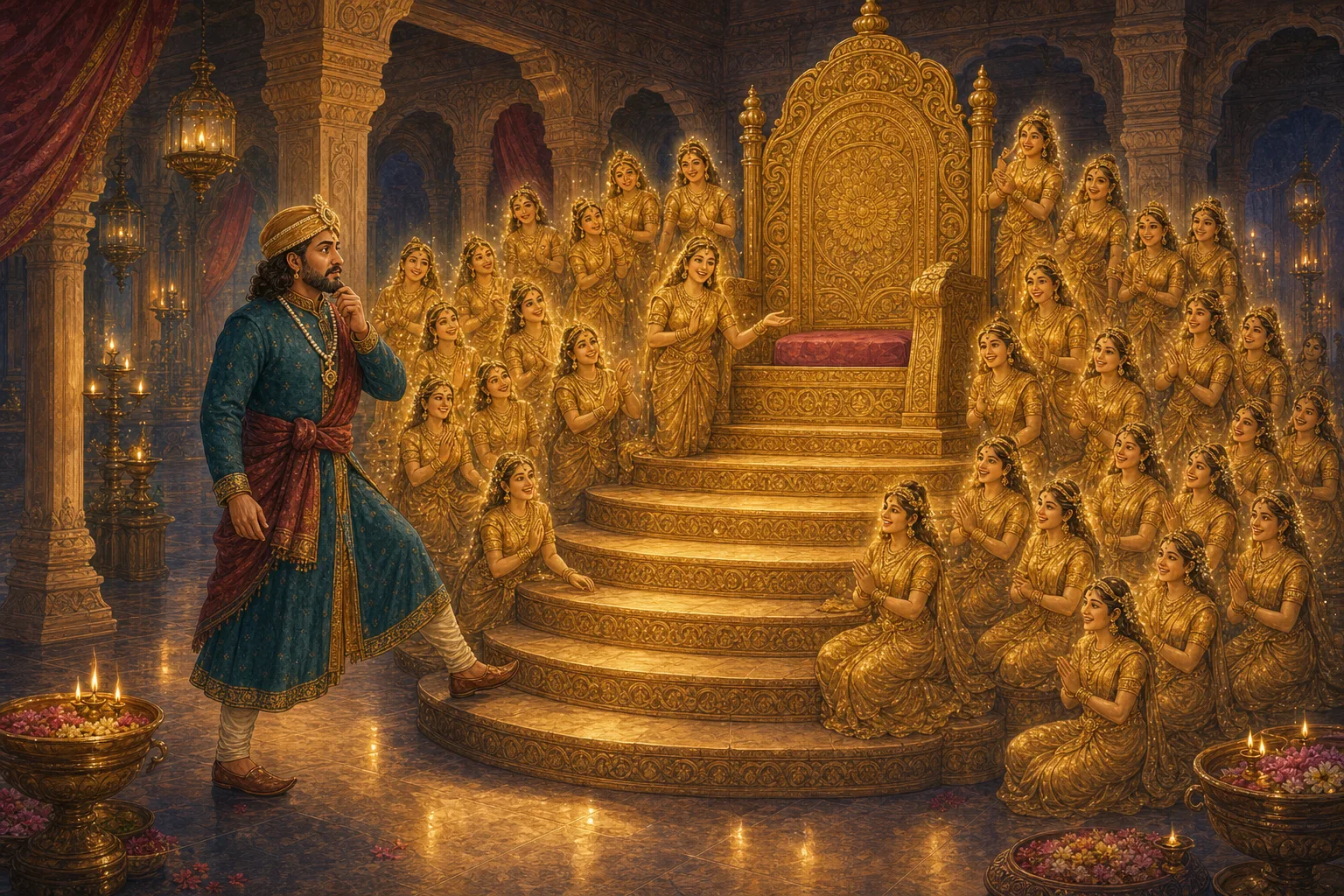
King Bhoj stopped.
The first guardian opened her eyes.
And that is where the thirty-two stories of the golden throne begin.
Moral: True authority is shown through fair judgment, not through riches or rank.
“True authority is shown through fair judgment, not through riches or rank.”
New stories in your inbox
One story every week, and a special tale on festivals. Free, always.
Your email goes to our newsletter provider (beehiiv) so we can send you stories. It is not linked to any child's reading on this site. Unsubscribe any time from the email footer.