Manmohini: The Guardian of Wise Determination
Singhasan Battisi
King Bhoj had found the golden throne of Vikramaditya beneath an old mound, and each of its thirty-two carved guardians stopped him with a story before he could sit.
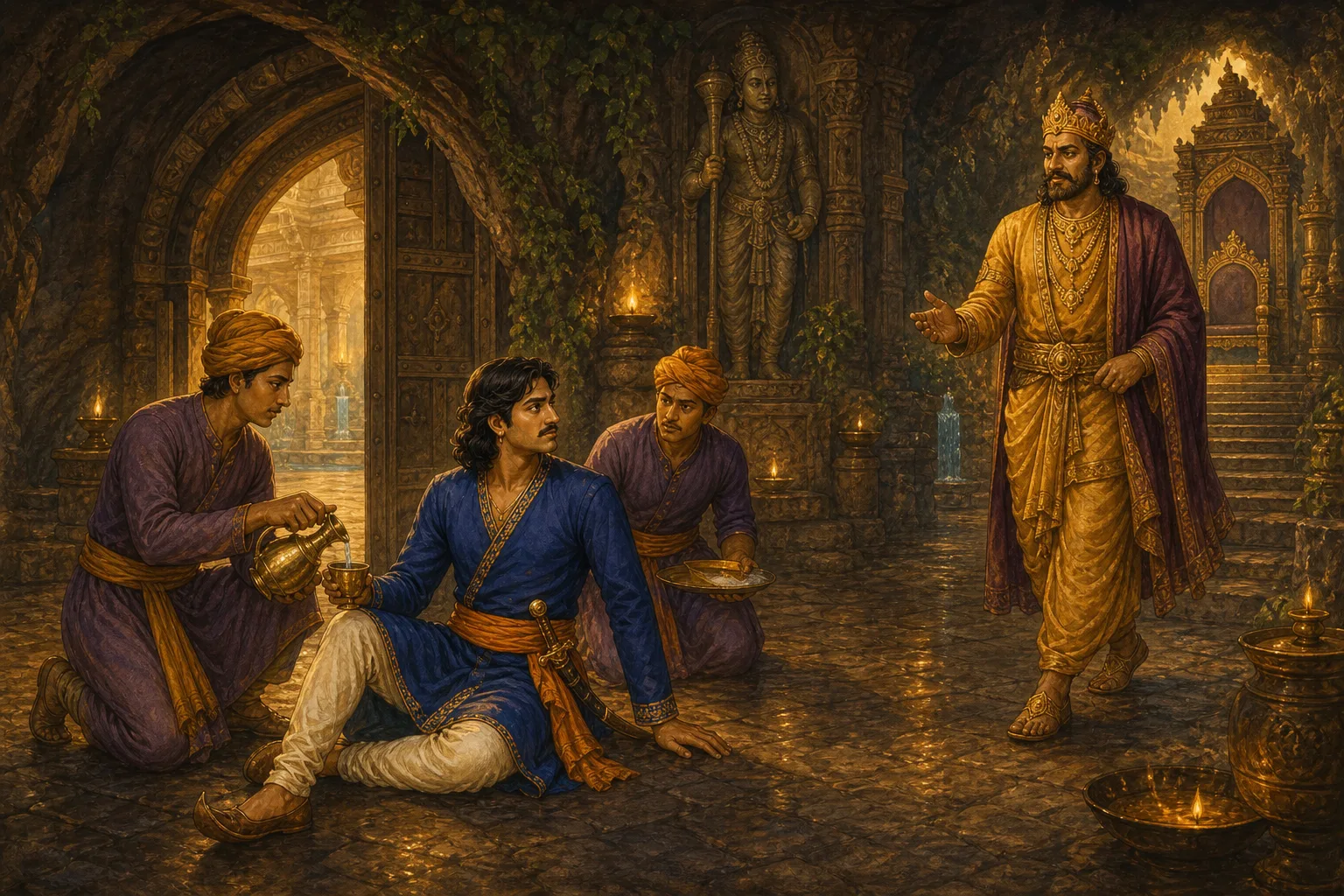
At the twenty-eighth step, Manmohini told how Vikram heard that the ancient King Bali's generosity surpassed that of ordinary rulers. Rather than reject the comparison, he asked the betals to carry him to Bali's magnificent underground realm, where he respectfully announced himself at the gate.
Bali declined to meet him and asked that he return at the festival of Shivaratri. Vikram mistook delay for rejection. His admiration hardened into a dangerous stubbornness. Rather than turn back, he offered up his own life at the gate, and when Bali's nectar restored him, he did it a second time. The guards were alarmed. Bali sent the nectar again, with a message begging him to stop.
Bali's advisers pleaded that such desperate determination not be ignored, so Bali came to the gate. Vikram bowed and asked what fault had kept him outside. Bali explained that even famous kings had sought this meeting; a visitor was not entitled to immediate access. Vikram's courage had brought him far, but patience and respect for another's boundary were also virtues. Vikram admitted that perseverance without wisdom can become pride.
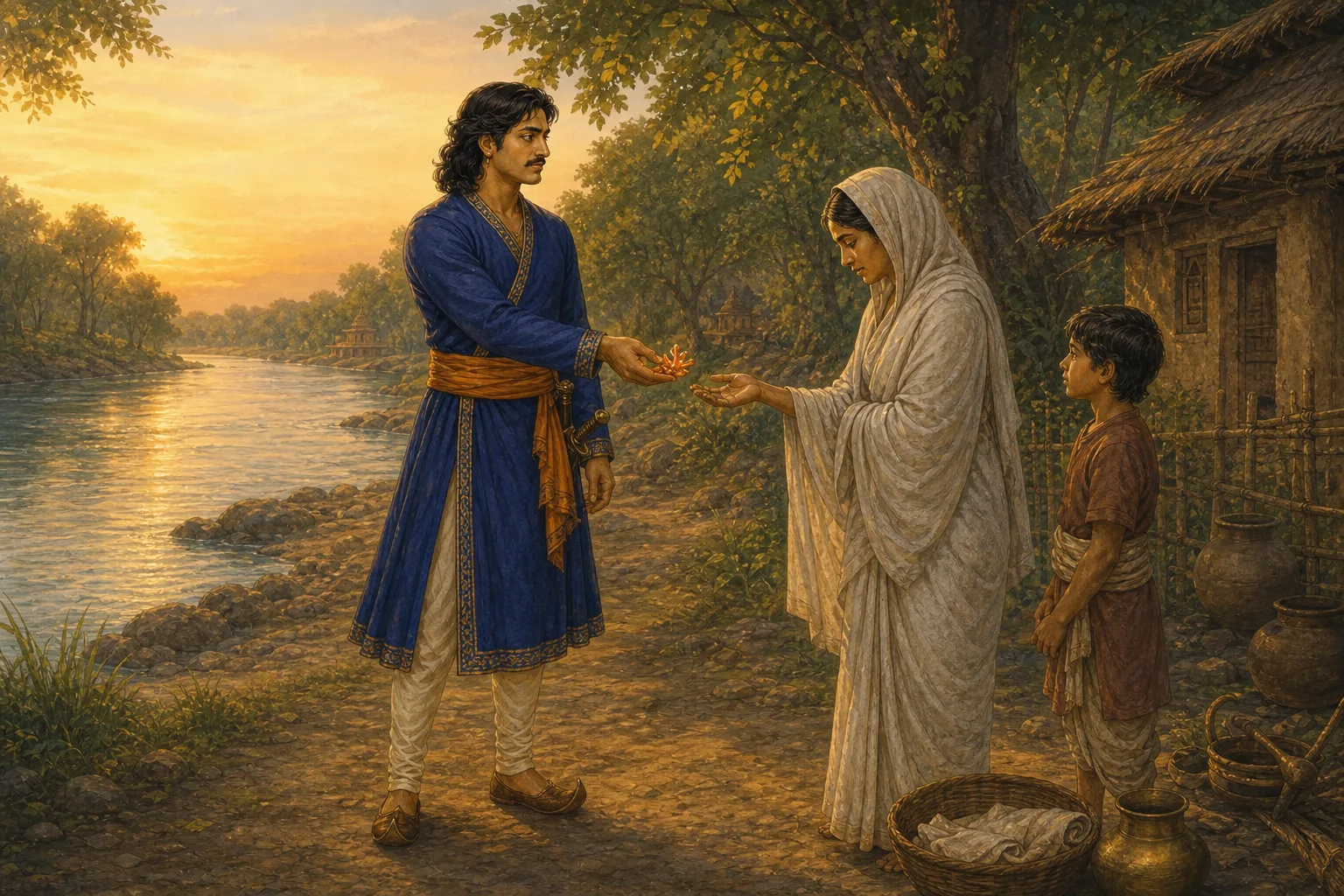
Bali accepted the answer and gave Vikram a coral charm that could provide whatever was sincerely needed, even restoring a life that had been lost. On the journey home Vikram found a widow grieving beside the river, worried about funeral duties and survival. He gave her the charm without conditions so her household could regain security, rather than keeping it as proof that he had met Bali.
Manmohini asked Bhoj, "Can you change course when determination becomes harm?" Bhoj stepped back.
Moral: Determination needs wisdom; a worthy goal does not make needless self-harm courageous.
“Determination needs wisdom; a worthy goal does not make needless self-harm courageous.”
New stories in your inbox
One story every week, and a special tale on festivals. Free, always.
Your email goes to our newsletter provider (beehiiv) so we can send you stories. It is not linked to any child's reading on this site. Unsubscribe any time from the email footer.