Tara: The Guardian Beyond Signs
Singhasan Battisi
King Bhoj had found the golden throne of Vikramaditya beneath an old mound, and each of its thirty-two carved guardians stopped him with a story before he could sit.
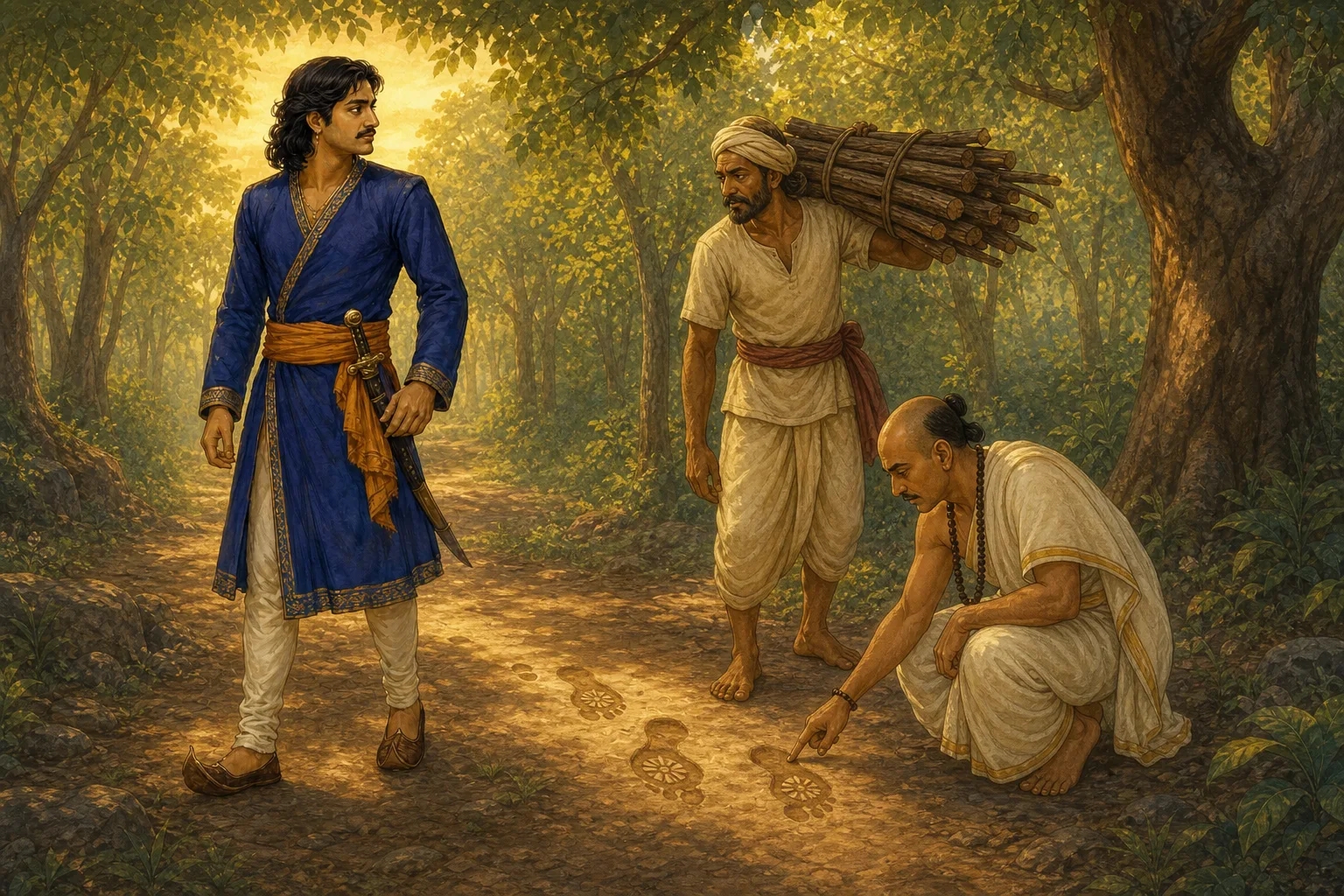
Tara awoke on the nineteenth step. A celebrated scholar of bodily signs noticed bare footprints marked, according to his books, with symbols of royalty. Certain that a king had passed, he followed them through the forest. Instead he found a poor woodcutter tying a bundle of branches.
The woodcutter had been alone since before dawn. When the scholar examined his feet, every expected royal sign seemed present. Yet the man had cut wood since childhood. He spoke without bitterness: fortune raises one person and tests another, while honest work remains his own duty. The scholar, who had treated signs as fixed promises, decided to inspect Vikram before abandoning his learning.
Vikram welcomed the troubled guest and let him inspect his feet. At first the scholar found none of the expected marks and declared his books useless. Vikram calmly removed a thin covering from one sole; beneath it lay the signs the scholar knew. The king had concealed them to test whether the scholar would investigate or surrender to despair.
Vikram explained that a clue may be hidden, altered by labour, inherited without its expected result, or understood too narrowly. A mark suggests a possibility; it cannot replace conduct, circumstance, and choice. The woodcutter's dignity was no less because he lacked a crown, and a crowned man would not be worthy merely because of his feet.
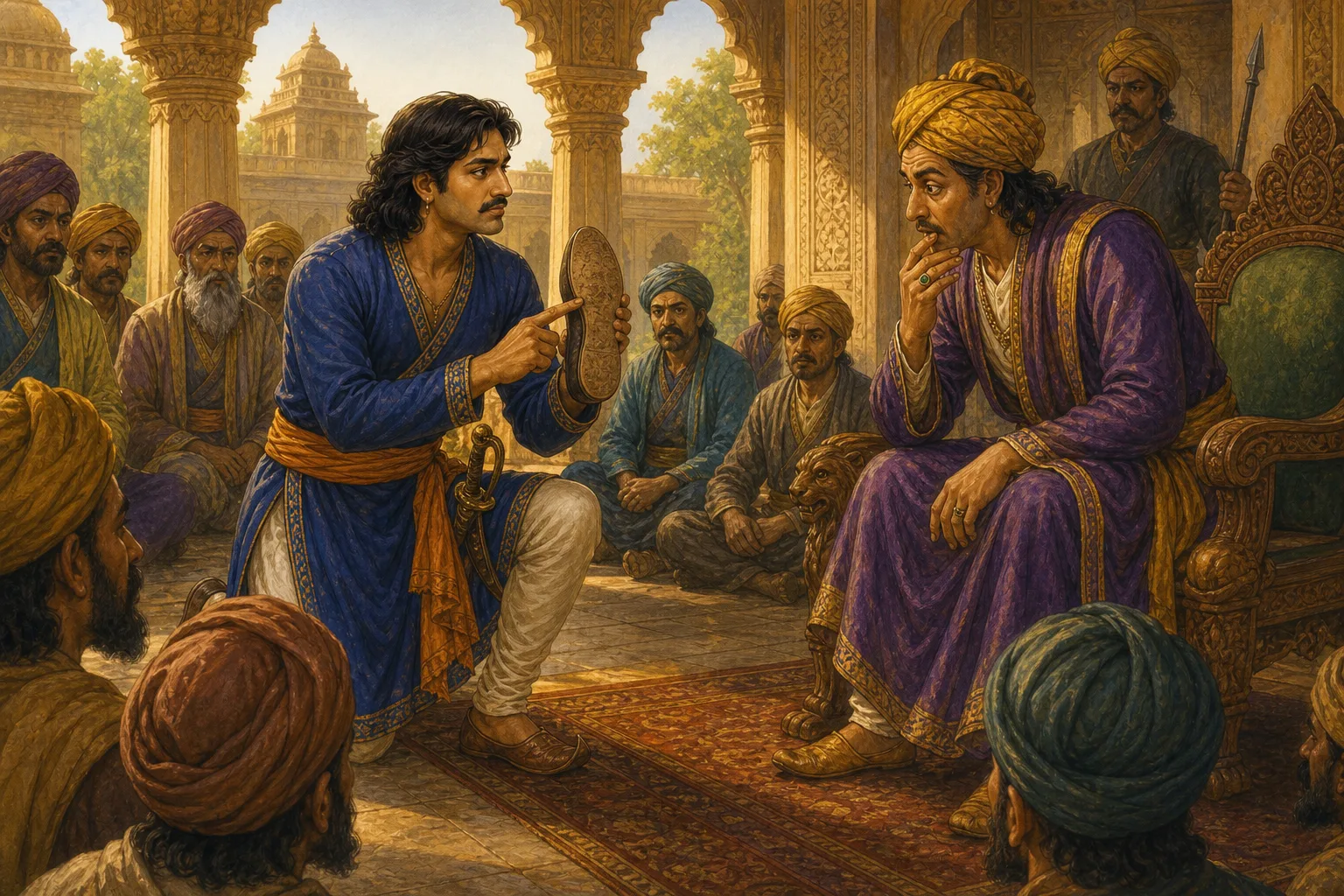
The scholar realized he had treated possibilities as certainty. He continued studying, but now asked about people's actions, circumstances, and choices before drawing conclusions.
Tara asked Bhoj, "Will you judge a person by a mark, a birth, or a prediction—or by how they live?" Bhoj lowered his foot.
Moral: No mark or prediction is more important than character and lived choices.
“No mark or prediction is more important than character and lived choices.”
New stories in your inbox
One story every week, and a special tale on festivals. Free, always.
Your email goes to our newsletter provider (beehiiv) so we can send you stories. It is not linked to any child's reading on this site. Unsubscribe any time from the email footer.