Rama Faces Parashurama
Adbhuta Ramayana
The wedding procession travelled from Mithila toward Ayodhya with music, bright cloth, and the happy conversation of two families newly joined. Rama and Sita rode among their brothers and sisters while elders spoke of the welcome awaiting them.
Then the wind changed. Birds rose suddenly from the trees, and the road ahead seemed to tighten around a powerful figure.
Parashurama stood before the procession carrying a great bow. He had heard that Rama had lifted and broken Shiva's bow at Sita's svayamvara. To him, the report sounded less like wedding news and more like a challenge to his own reputation.
“If your strength is what people claim,” he said, “take this bow and string it.”
King Dasharatha tried to calm him. “This is a wedding journey. My son did not break the bow to insult you.”
Parashurama did not move. The celebration had gone silent.
Rama stepped forward without boasting. He accepted the bow, strung it, and fitted an arrow with effortless control. The weapon that had seemed to fill the road now rested steadily in his hands.
Parashurama's anger gave way to attention. In the Adbhuta telling, Rama allowed him to perceive more than a young prince. For a moment Parashurama glimpsed the vast reality expressed through Rama. The earth trembled, the sky seemed to open, and the certainty that had brought him to the road fell apart.
Rama did not use that moment to humiliate him. “An arrow prepared with sacred power cannot be released without consequence,” he said. “Tell me where its force should go.”
Parashurama understood that the contest was over. He surrendered the fruit of the power he had accumulated through austerity and asked Rama to direct the arrow without needless destruction.
Then he bowed. His bow was not an admission that he had no worth; it was recognition that pride had prevented him from seeing clearly.
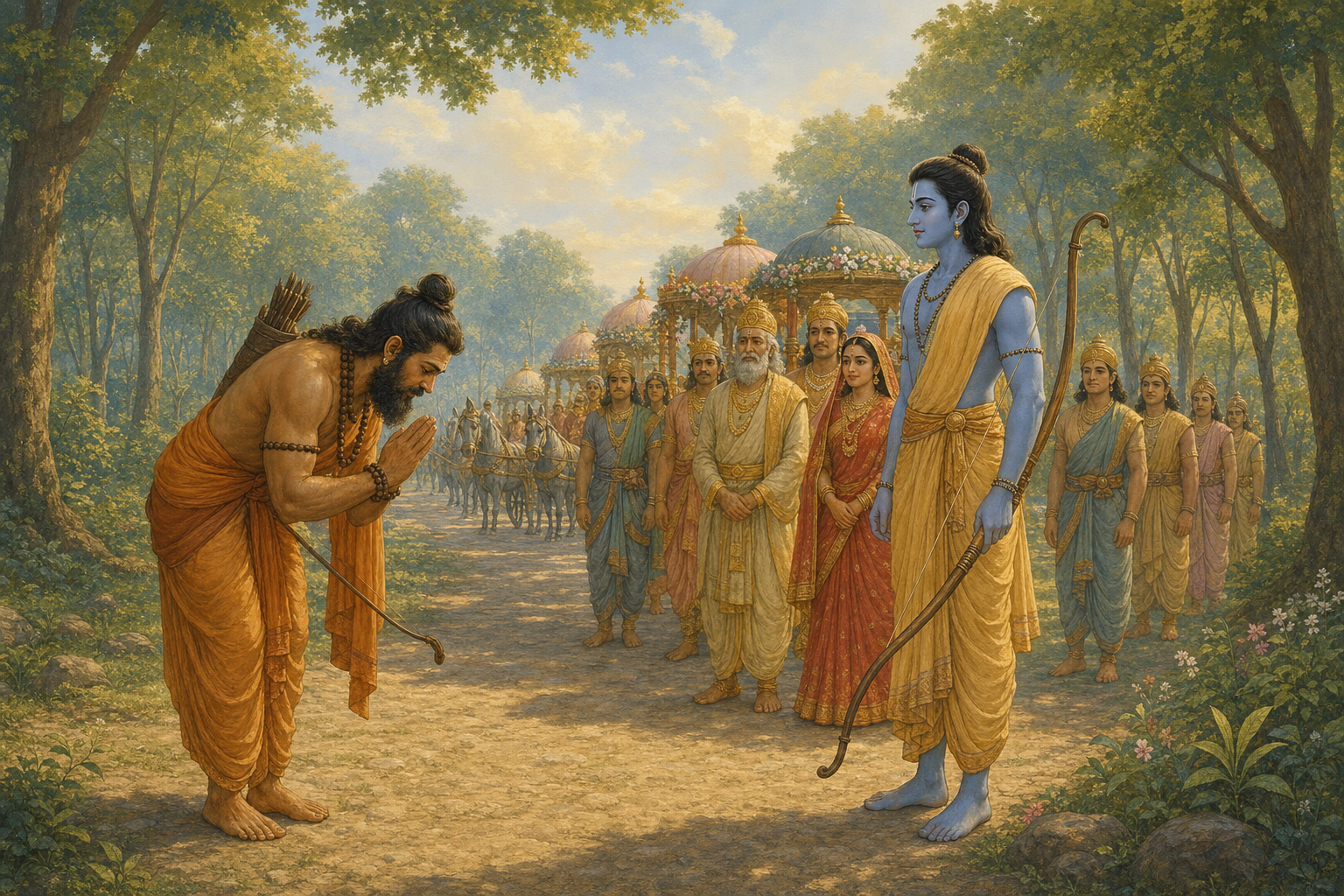
Sita had watched the entire encounter. She saw Rama answer aggression with steadiness and leave space for an opponent to change. Restraint had not made him weak. It had kept victory from becoming cruelty.
Parashurama withdrew toward Mount Mahendra to continue his spiritual discipline. The road opened again, and the wedding music slowly returned.
As the procession moved on, Dasharatha released the breath he had been holding. Rama placed the bow aside and returned to his family without demanding praise.
Sometimes strength ends a danger by defeating an enemy. Sometimes it does something more difficult: it allows rivalry to become recognition and lets a proud person leave with the possibility of wisdom.
“True strength does not need anger to prove itself.”