The Wind Weapon
Adbhuta Ramayana
Sahasra Ravana entered the battle and surveyed the forces pressing against his army. Rather than meet each group, he raised a weapon carrying the force of a world-shaking wind—the vayavastra.
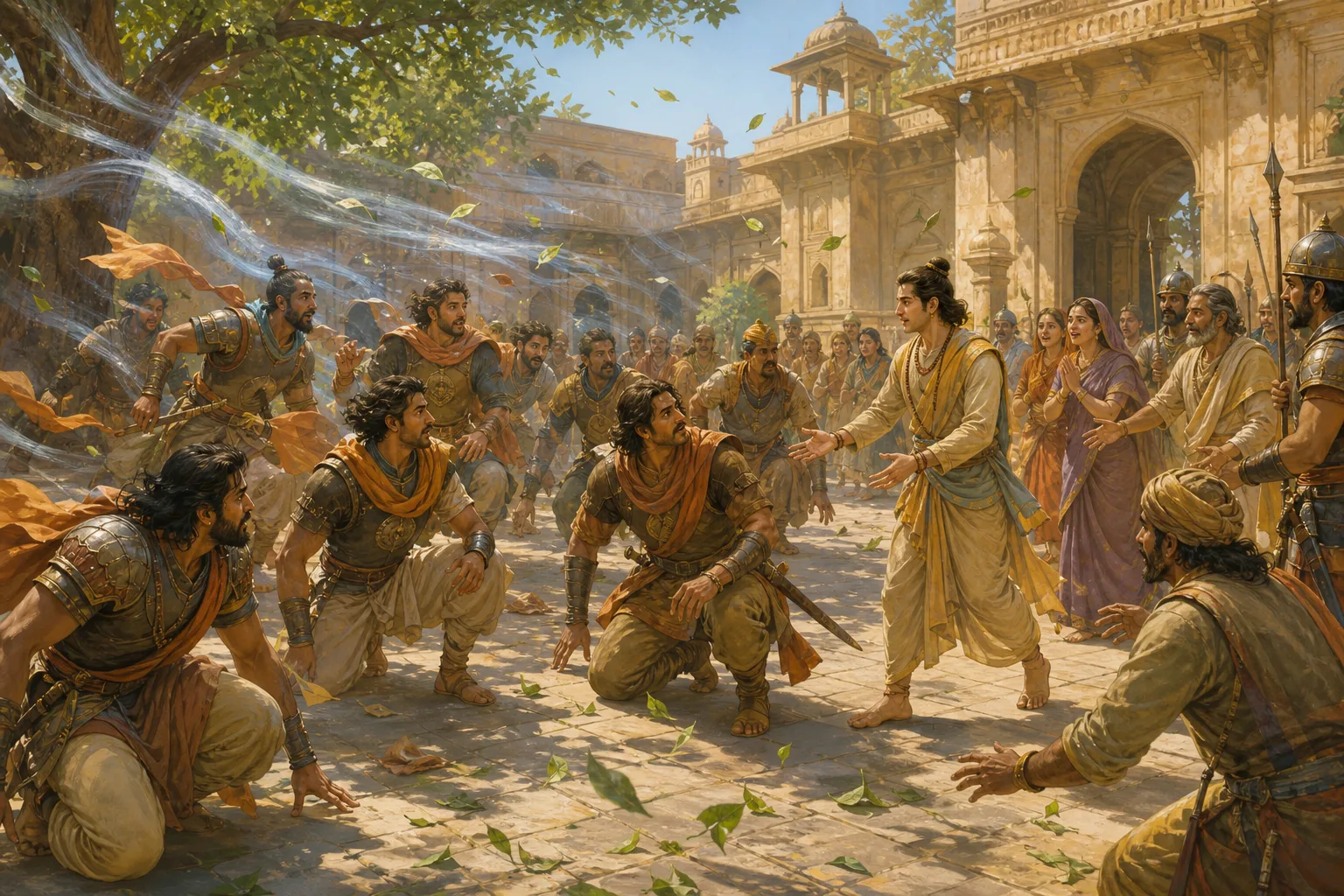
The air began to turn. Dust rose in spirals, standards bent, and warriors reached for one another. Then the gale did something more astonishing than throwing them across the field.
Vanaras found themselves back in Kishkindha. Vibhishana's rakshasa companions appeared in Lanka. Human warriors were returned to Ayodhya. One moment they had faced Pushkara; the next they stood among startled families and guards.
The weapon scattered allies according to their homelands, making their sudden absence feel almost like the battle had been erased.
Sugriva looked around Kishkindha in disbelief. His first thought was for the companions left behind. In Ayodhya, Bharat immediately began asking how the army might return. Their inability to reach Ram did not erase loyalty, but distance made that loyalty painful.
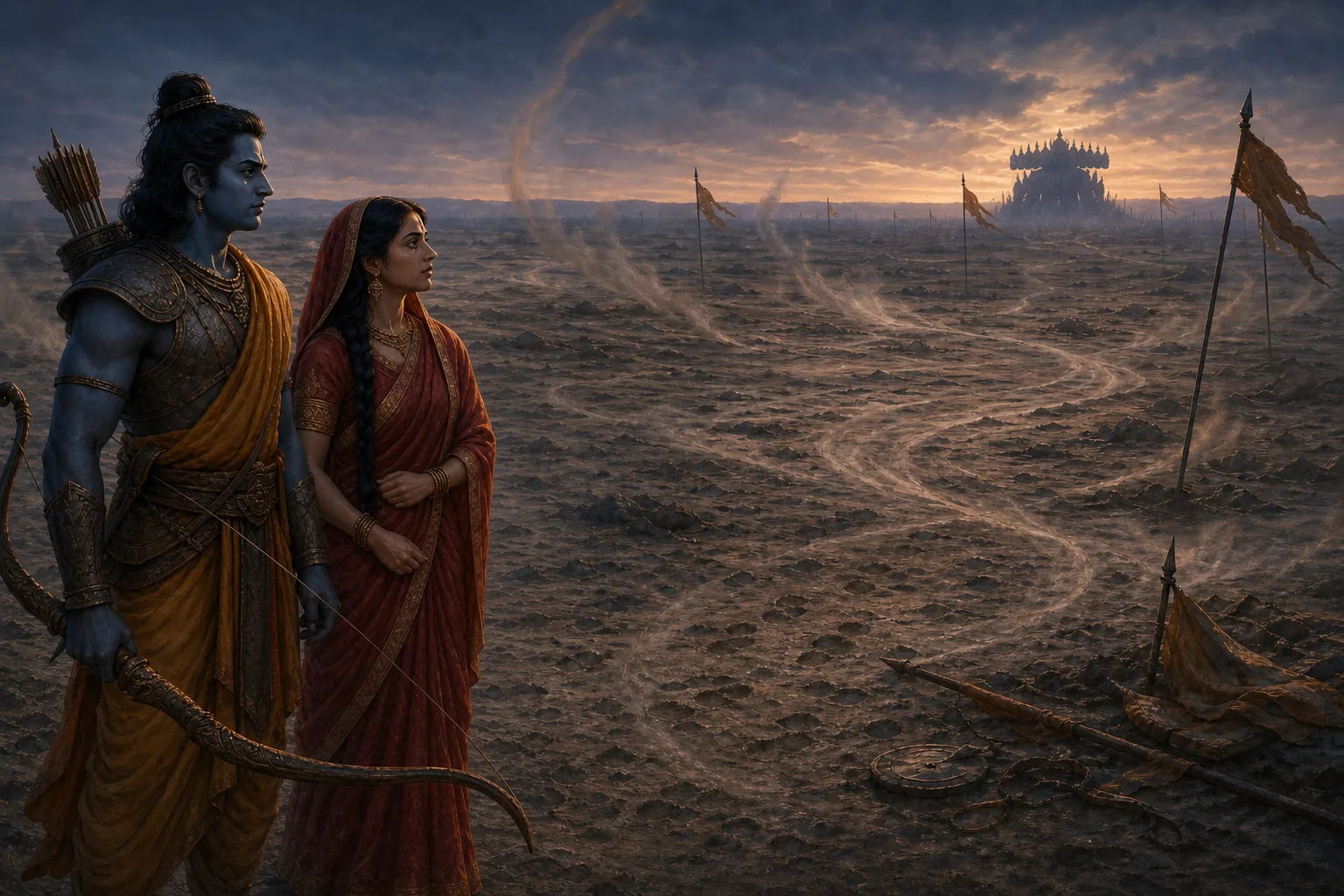
On Pushkara's field, the sudden emptiness rang louder than the armies had. Sahasra Ravana wanted Ram to believe that every friendship and alliance could be removed with one gesture.
Ram saw the places where his companions had stood. Anger rose within him. He had trusted their presence, but his purpose could not depend only upon having a vast force behind him.
Sita remained near the unfolding confrontation. Everything now came down to this: the ruler celebrated as Ravana's conqueror would face an enemy who treated his allies and greatest expectations lightly.
Ram steadied his breathing. Pride whispered that he must win quickly, before anyone could say his earlier victory had depended upon others. Duty asked for something harder—to see the danger accurately.
Sita said, "Their removal does not make their contribution unreal. Do not fight to prove you never needed them."
Ram heard the truth in her warning. Courage did not require rewriting shared victory as solitary greatness.
Across the quiet ground Sahasra Ravana smiled, certain that isolation had already won half the battle.
Ram raised his bow. Far away, the scattered allies worked desperately to return. On Pushkara, one terrible duel began under a sky still turning with the memory of wind.
“When support disappears, purpose must remain clearer than pride.”
New stories in your inbox
One story every week, and a special tale on festivals. Free, always.
Your email goes to our newsletter provider (beehiiv) so we can send you stories. It is not linked to any child's reading on this site. Unsubscribe any time from the email footer.