The Gods Appeal to Sita
Adbhuta Ramayana
Sahasra Ravana had fallen, but Sita's Mahakali form still filled Pushkara with fierce energy. Her dance shook the ground, and the gods understood that the danger to the worlds had changed rather than simply vanished.
They approached carefully. Their praise named her as Shakti, the power without which intention cannot become action. Yet Sita did not turn from the battlefield merely because they had begun to speak respectfully.
She pointed toward Ram. He remained unconscious.
The worlds could not ask her to behave as though relationship and grief no longer mattered. The one joined with her lay unresponsive while the gods hurried toward a convenient conclusion.
Brahma came near Ram and restored his consciousness. Ram opened his eyes expecting the battlefield he knew. Instead he saw the aftermath of a struggle greater than his own and Mahakali standing within it.
For a moment he felt fear. The form before him did not fit the limited picture through which he had known Sita.
"Who is this?" Ram asked.
Brahma answered that this was Sita herself—not a stranger who had replaced her. He explained that creation, preservation, protection, and every action attributed to Ram were possible only in association with Shakti.
This did not make Ram meaningless, nor did it reduce Sita to an assistant. Consciousness and power belonged together, as a flame belongs with its light. Now the battlefield had made that impossible to overlook.
Ram looked again. He saw that Sita had not become less herself by becoming fierce. The one who had endured exile and captivity had also ended the danger he could not defeat.
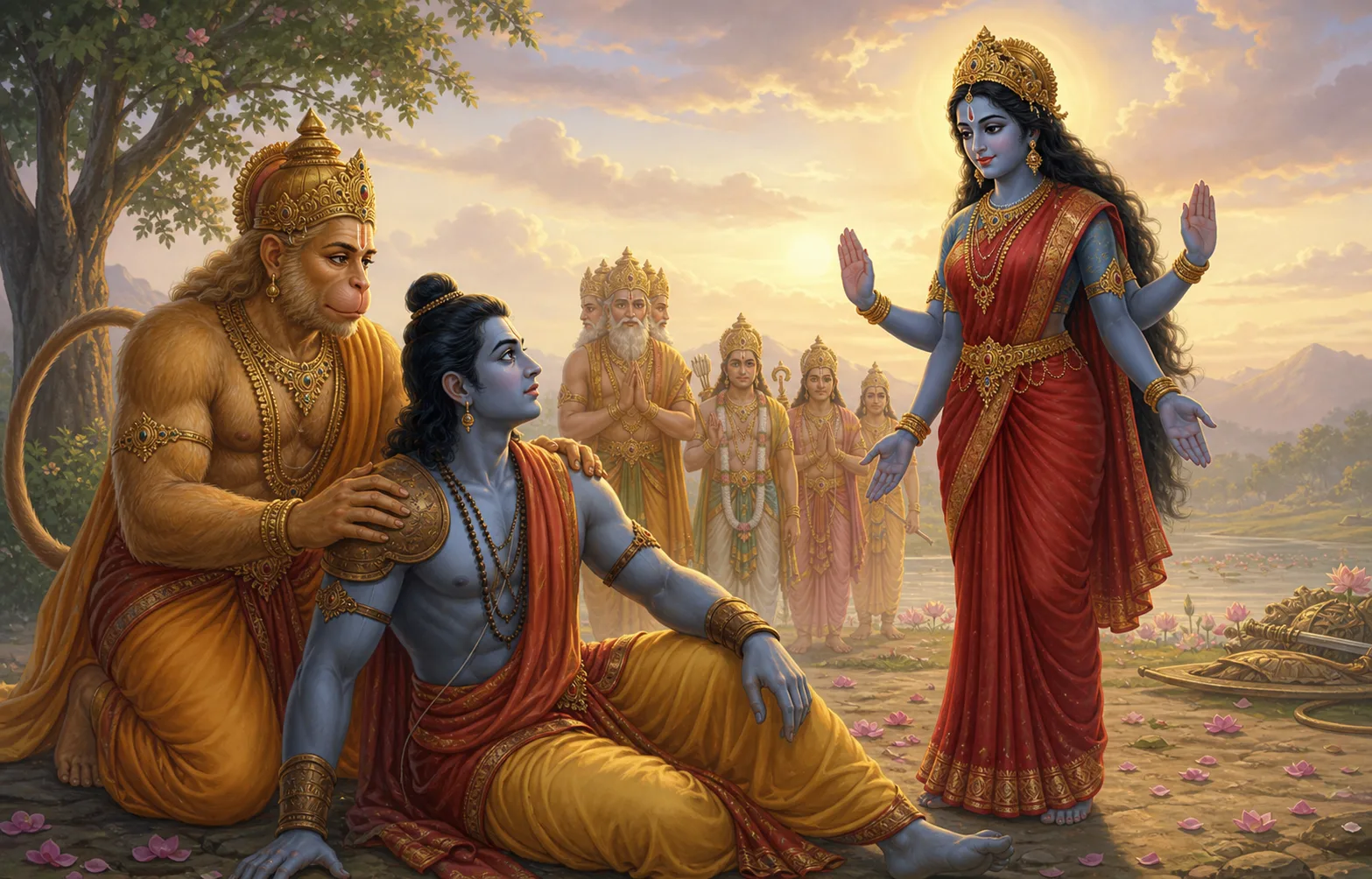
The gods' appeal therefore could not be reduced to "calm down." First came recognition. They named her power, acknowledged her victory, restored Ram, and addressed the relationship that held her attention.
Ram's fear began to become wonder. He bowed and asked Sita to reveal who she truly was.
Ordinary sight had failed him. To understand the answer, he would need vision granted by Sita herself—and the humility to let his knowledge of the person closest to him become much larger.
“Power deserves recognition, relationship, and responsible understanding.”
New stories in your inbox
One story every week, and a special tale on festivals. Free, always.
Your email goes to our newsletter provider (beehiiv) so we can send you stories. It is not linked to any child's reading on this site. Unsubscribe any time from the email footer.