The Warriors of Pushkara
Adbhuta Ramayana
The armies gathered at Pushkara, warrior after warrior arriving to take a place in the ranks — captains, chieftains, and champions enough to fill the plain from end to end.
Sahasra Ravana's commanders displayed unusual forms, weapons, and strength. Some boasted that they could uproot mountains. Others drove chariots or led formations that covered the plain. Their ruler encouraged confidence that left little room for honest warning.
Across the field, Ram's alliance was diverse. Vanaras brought speed and the ability to move across rough ground. Ayodhya's warriors brought disciplined formations. Vibhishana's rakshasa companions understood strategies the opposing army might use.
Sugriva refused to arrange everyone as though they possessed the same abilities. "A good formation does not make every fighter identical," he said. "It allows different strengths to protect one another."
Vibhishana studied the enemy standards and movement. He identified patterns that others missed and warned that some apparent gaps might be traps.
Ram reminded the commanders that a list of fearsome names was not destiny. Great size did not guarantee wisdom, and feeling afraid did not mean a person was incapable of acting.
Sita observed both sides. Each person in the catalogue represented a choice: obey, question, boast, protect, retreat, or reconsider. Each name belonged to a life, not a decoration for some famous duel.
Messengers carried final offers and warnings across the space between the armies. Sahasra Ravana rejected any suggestion that his conduct could be judged. To him, power itself was proof of right.
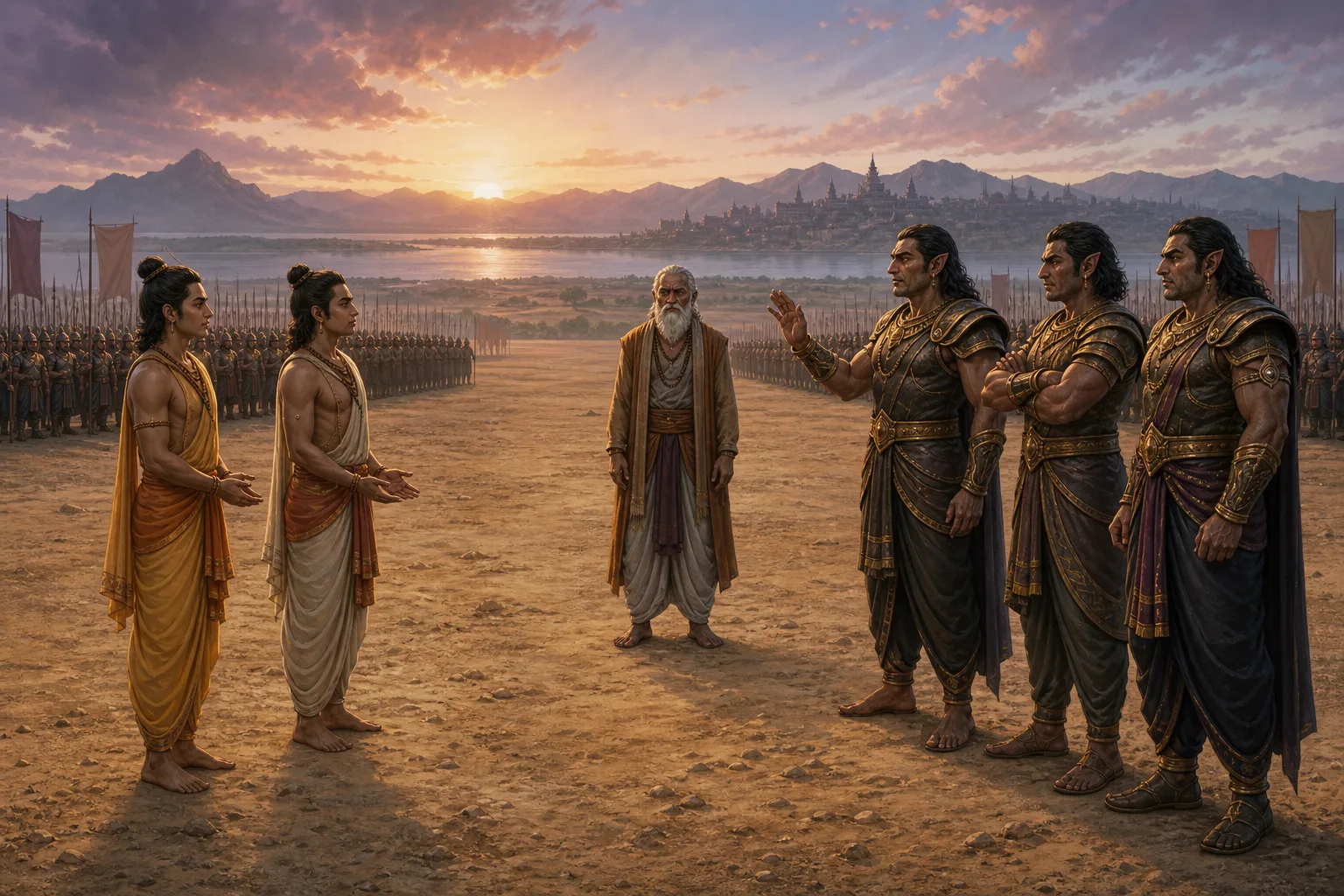
That belief shaped his preparations. Commanders who wished to impress him exaggerated certainty. Few dared to tell him that Ram's alliance had already defeated a ruler who also believed fear would last forever.
Ram's leaders, by contrast, changed positions when new information arrived. They repeated routes for carrying the injured away and signals for regrouping.
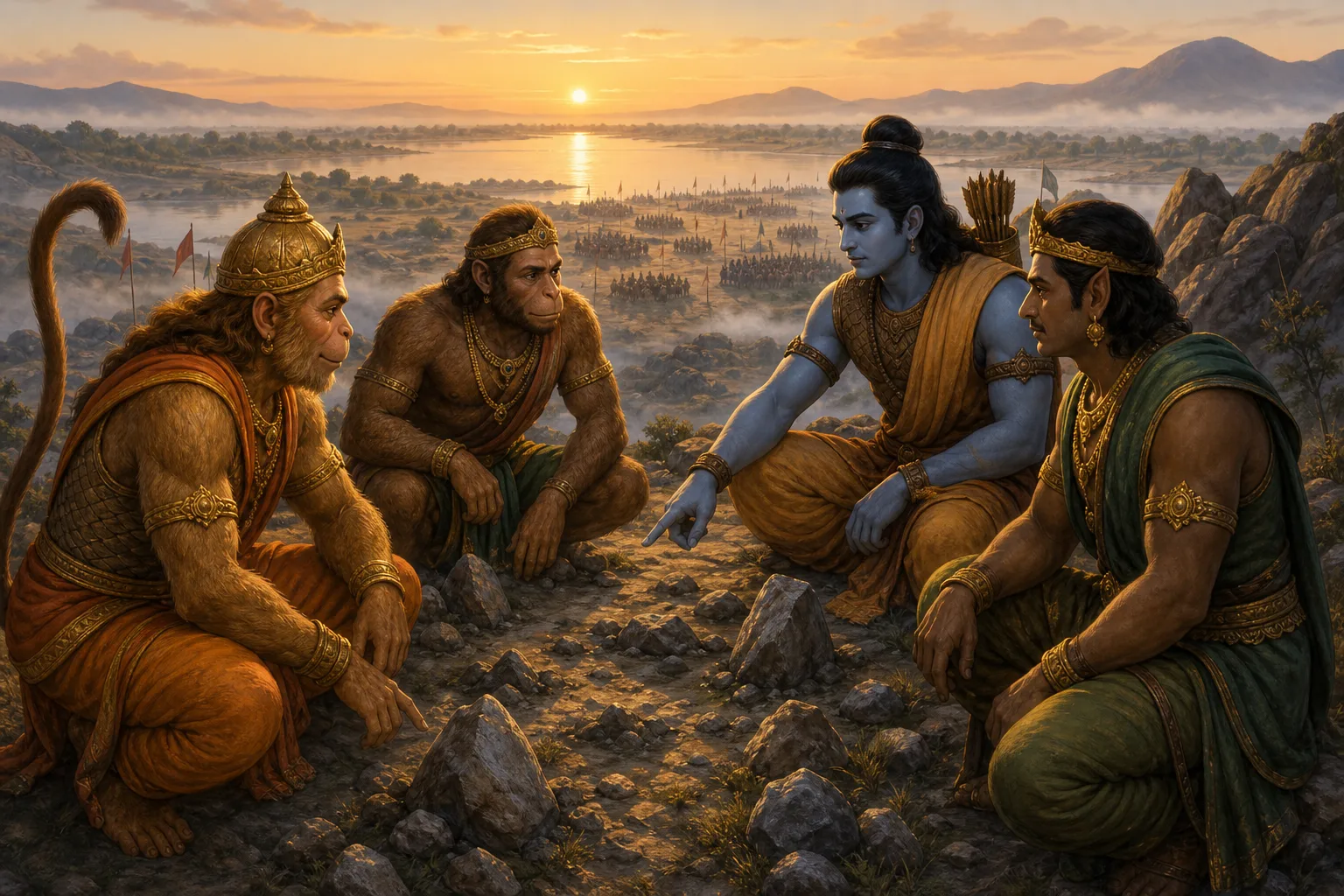
At dawn, conches sounded. The catalogue ended, and every warrior stepped out from behind reputation.
The battle would reveal physical strength, but also something less visible: whether leaders had prepared their followers with truth, whether companions would protect one another, and whether anyone could recognize a wrong command before it was too late.
“Every name in an army belongs to a life, not merely a number.”
New stories in your inbox
One story every week, and a special tale on festivals. Free, always.
Your email goes to our newsletter provider (beehiiv) so we can send you stories. It is not linked to any child's reading on this site. Unsubscribe any time from the email footer.