The Journey to Pushkara
Adbhuta Ramayana
Once Ram resolved to confront Sahasra Ravana, messages travelled swiftly. Bharat and Shatrughna prepared Ayodhya's forces. Sugriva gathered vanara allies. Vibhishana brought rakshasa warriors who had chosen a different path from Lanka's fallen ruler.
Sita would travel with them. She was the one who knew why Pushkara mattered, and she would not be reduced to a silent passenger in a journey opened by her own knowledge.
The Pushpaka aerial car carried the leaders across astonishing distances. Below them, rivers narrowed into silver threads and mountains rose through clouds. The familiar lands disappeared behind the horizon.
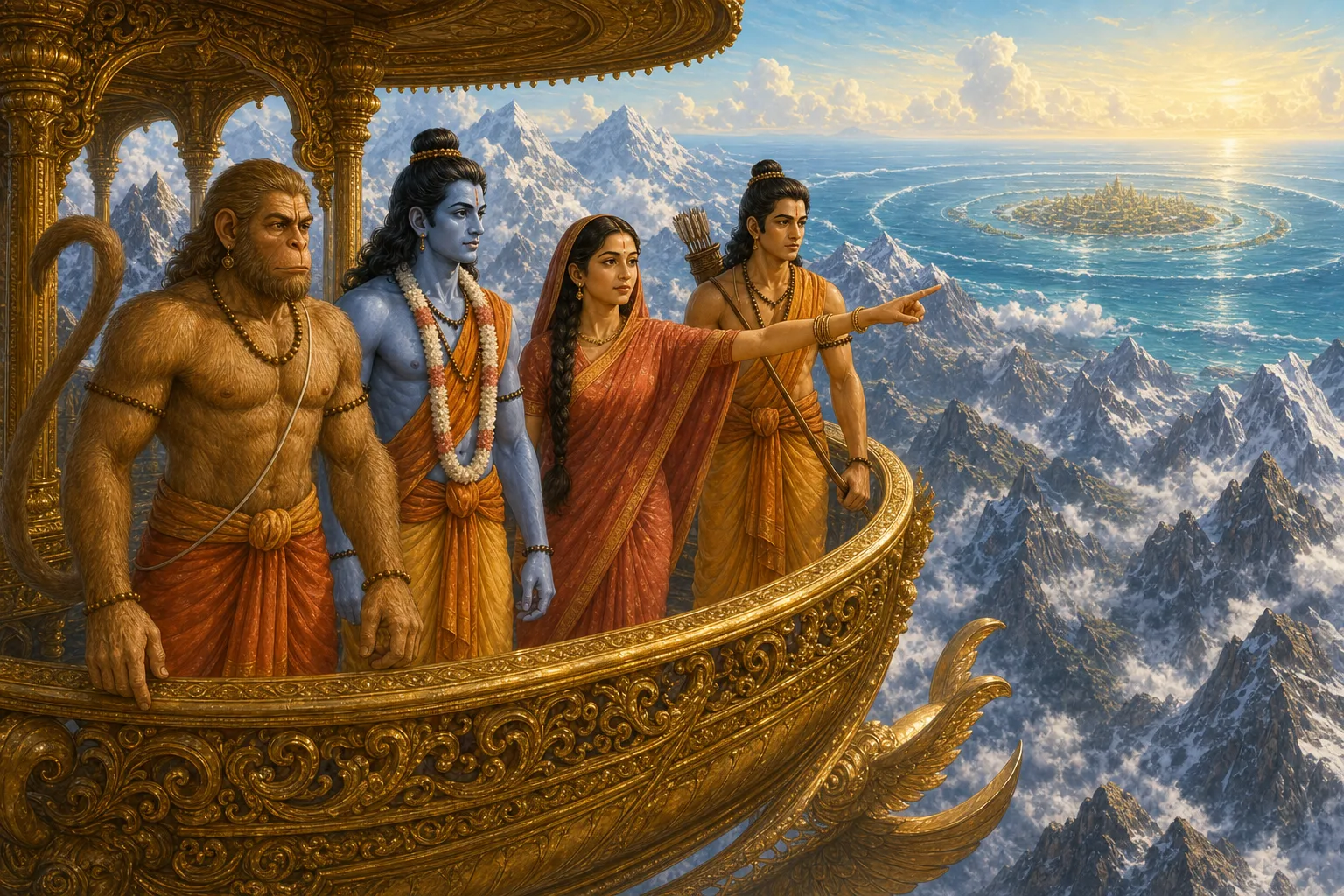
As they travelled, Vibhishana described how armies with great size often depended upon fear and rigid command. Sugriva considered how speed and cooperation could answer opponents too large to match directly. Human commanders discussed supplies, signals, and ways to protect those who could not fight.
Ram listened, though impatience sometimes tugged at him. Victory in Lanka made it tempting to believe that courage and one great weapon would be enough.
Sita reminded the council, "We know Sahasra Ravana's reputation, not every part of his strength. Let uncertainty make us observant, not ashamed."
At last Pushkara Dvipa appeared, ringed by shining waters and strange landscapes. Its beauty did not erase the fear imposed by its ruler. Settlements stood under watch, and signs of the enormous army covered the approaches.
Sahasra Ravana's scouts spotted the visitors. Word moved toward his palace that Ram, conqueror of the younger Ravana, had arrived with Sita and a combined force.
The thousand-headed ruler laughed. He believed the fame of Lanka had made Ram careless. He ordered his commanders to assemble and expected the invaders to be crushed before he needed to enter battle.
Ram's allies established their position rather than rushing forward. They marked safe routes, agreed on signals, and repeated the purpose of the journey: oppose a ruler who used power to terrorize, while avoiding needless harm.
At sunset the two forces could see one another across the great plain. The distance was filled with standards, chariots, vanaras, human warriors, and rakshasa formations.
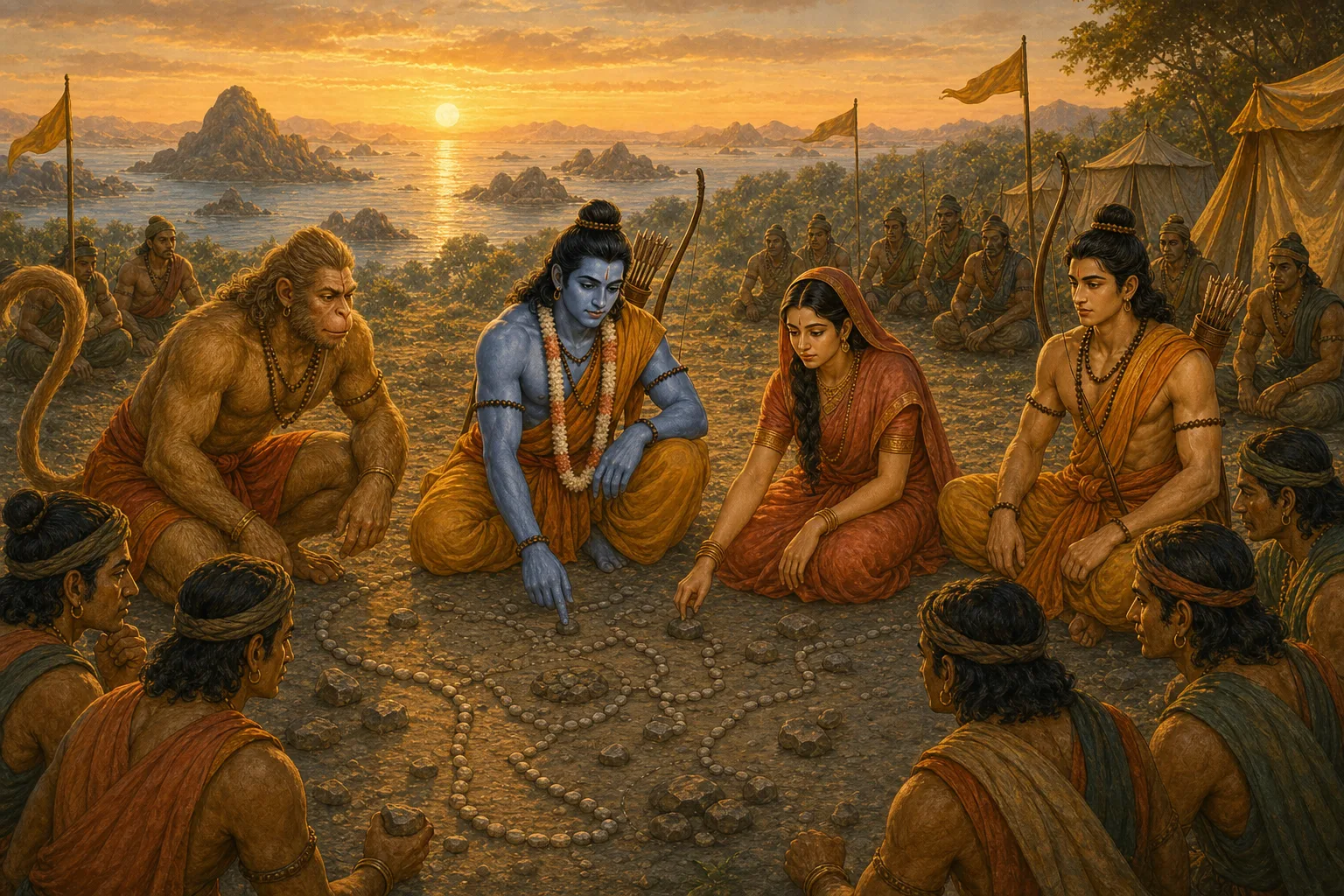
Sita looked toward the city she had known only through a traveller's words. Childhood memory had become a living horizon.
The journey was complete, but arrival was not victory. Every plan would now be tested against a danger far larger than the court in Ayodhya had imagined.
“Before entering a conflict, understand its purpose, risks, and cost.”
New stories in your inbox
One story every week, and a special tale on festivals. Free, always.
Your email goes to our newsletter provider (beehiiv) so we can send you stories. It is not linked to any child's reading on this site. Unsubscribe any time from the email footer.