The Hidden Beginning of Sita
Adbhuta Ramayana
Ravana had performed severe austerities and received great protections from Brahma. Instead of allowing those gifts to deepen his responsibility, he trusted them more than wisdom. He began to terrorize sages and seize what did not belong to him.
A vessel connected with the blood and sacred power of the sages came into Ravana's household. He ordered Mandodari not to touch it, but gave her neither honest explanation nor safety from the violence surrounding his rule.
Mandodari lived in a palace filled with riches but shadowed by fear. Isolated and distressed, she drank from the forbidden vessel. By a strange and sacred working, she discovered that she was carrying a child.
Fear followed the discovery. Ravana's own boon contained a warning connected with wrongful desire toward a daughter. Mandodari also feared what he might do if he learned of the birth.
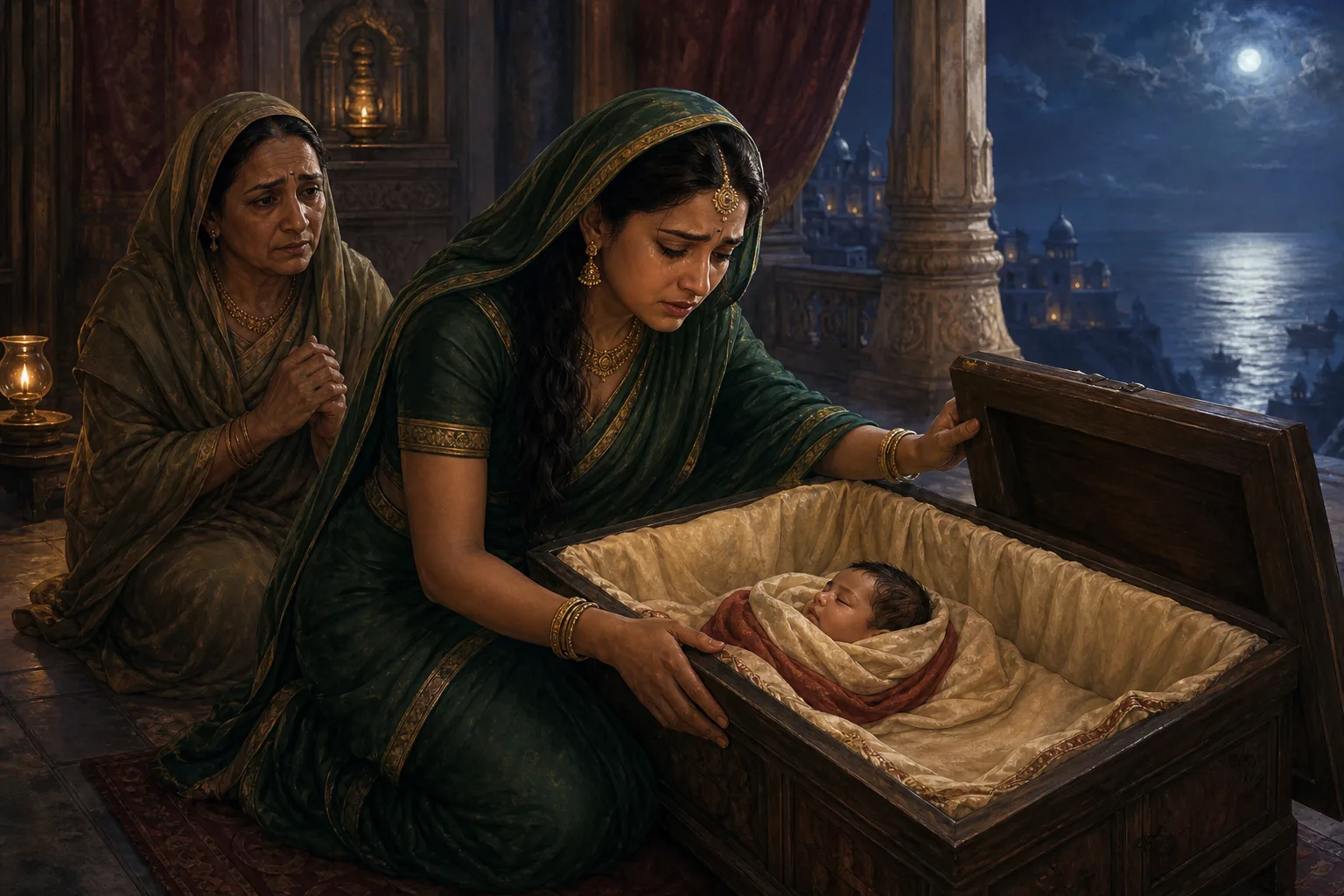
When a baby girl was born, Mandodari held her and faced a terrible choice. She could not promise that the palace of Lanka would be safe. She placed the infant carefully in a protected container and sent her away from the island.
It was an abandonment, though fear for the child's safety drove it more than anything else. No fault attached to the baby for what the adults around her had done.
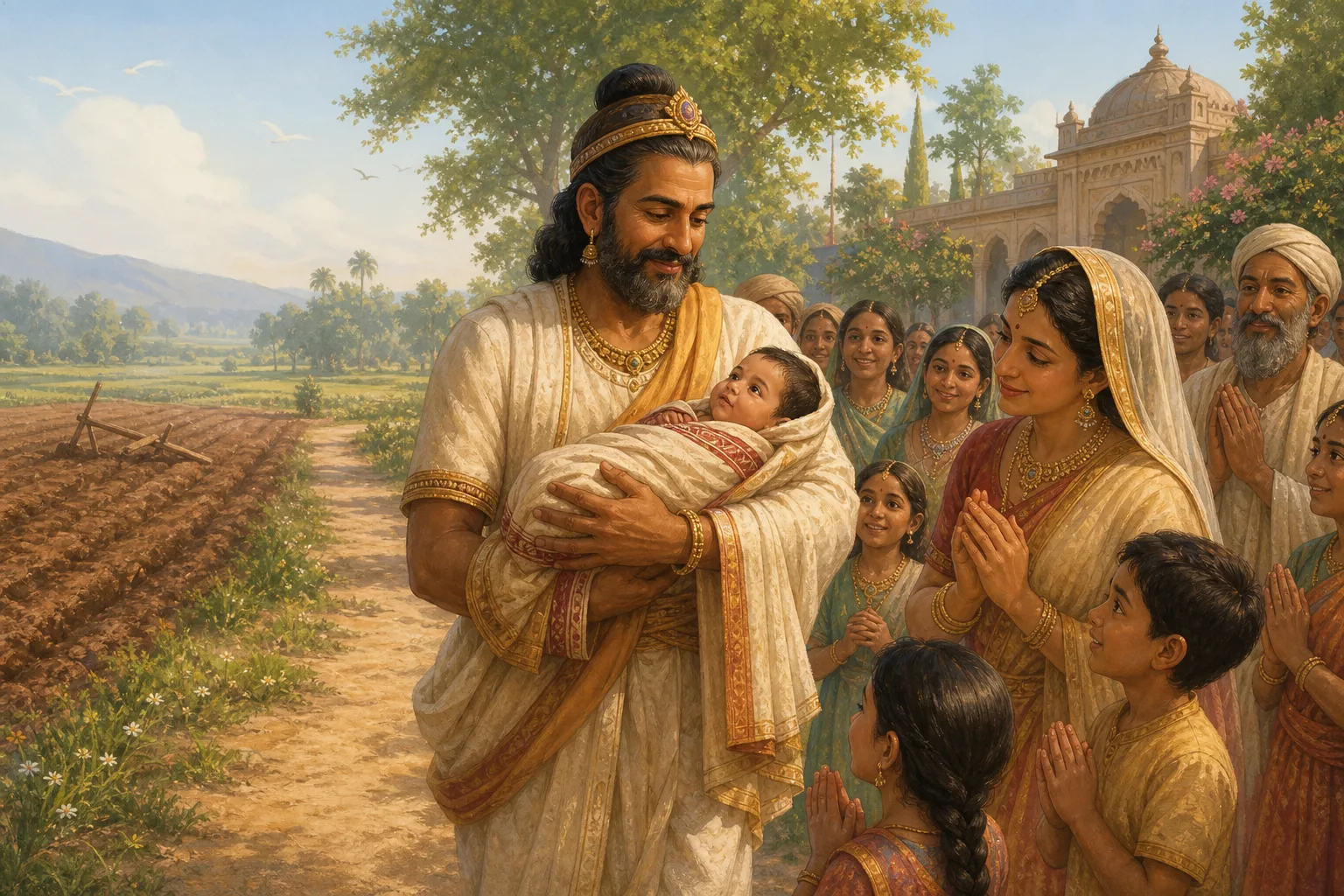
Far away in Mithila, King Janaka was preparing a field for a sacred ceremony. He guided a plough through the earth, treating the work itself as an offering. The blade opened a furrow, and there he discovered the infant alive and radiant.
Janaka lifted her gently. He did not ask whether an unknown beginning made the child worthy of love. He called her Sita, a name connected with the furrow, and welcomed her as his daughter.
In Mithila, Sita grew among affection, learning, gardens, and the duties of a royal household. Her beginning in fear did not determine the direction of her life.
She had passed briefly through the shadow of Ravana's household, but neither he nor his violence could claim the power that would one day overcome his tyranny.
“A child's worth is never determined by the fear surrounding her birth.”
New stories in your inbox
One story every week, and a special tale on festivals. Free, always.
Your email goes to our newsletter provider (beehiiv) so we can send you stories. It is not linked to any child's reading on this site. Unsubscribe any time from the email footer.